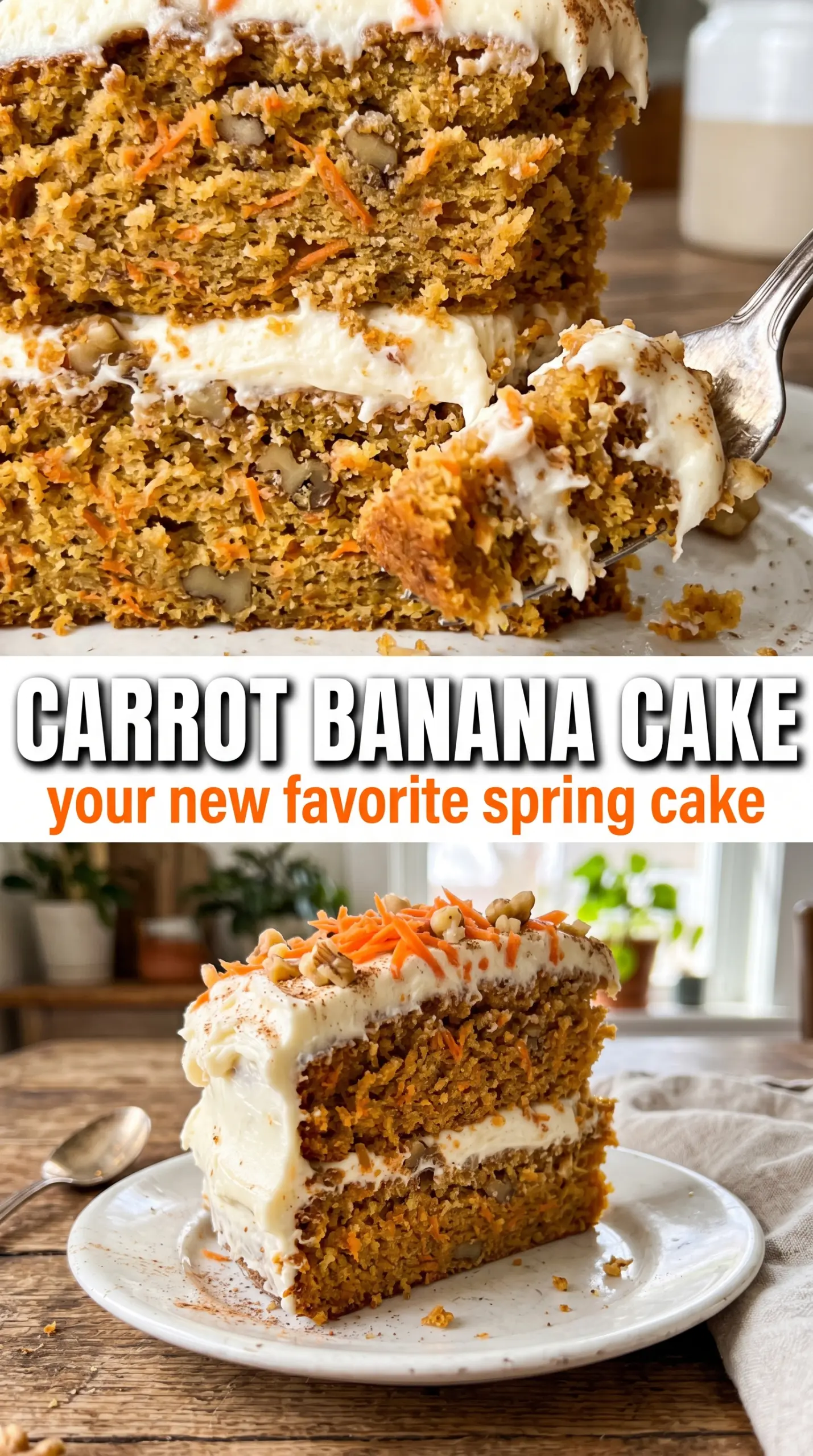
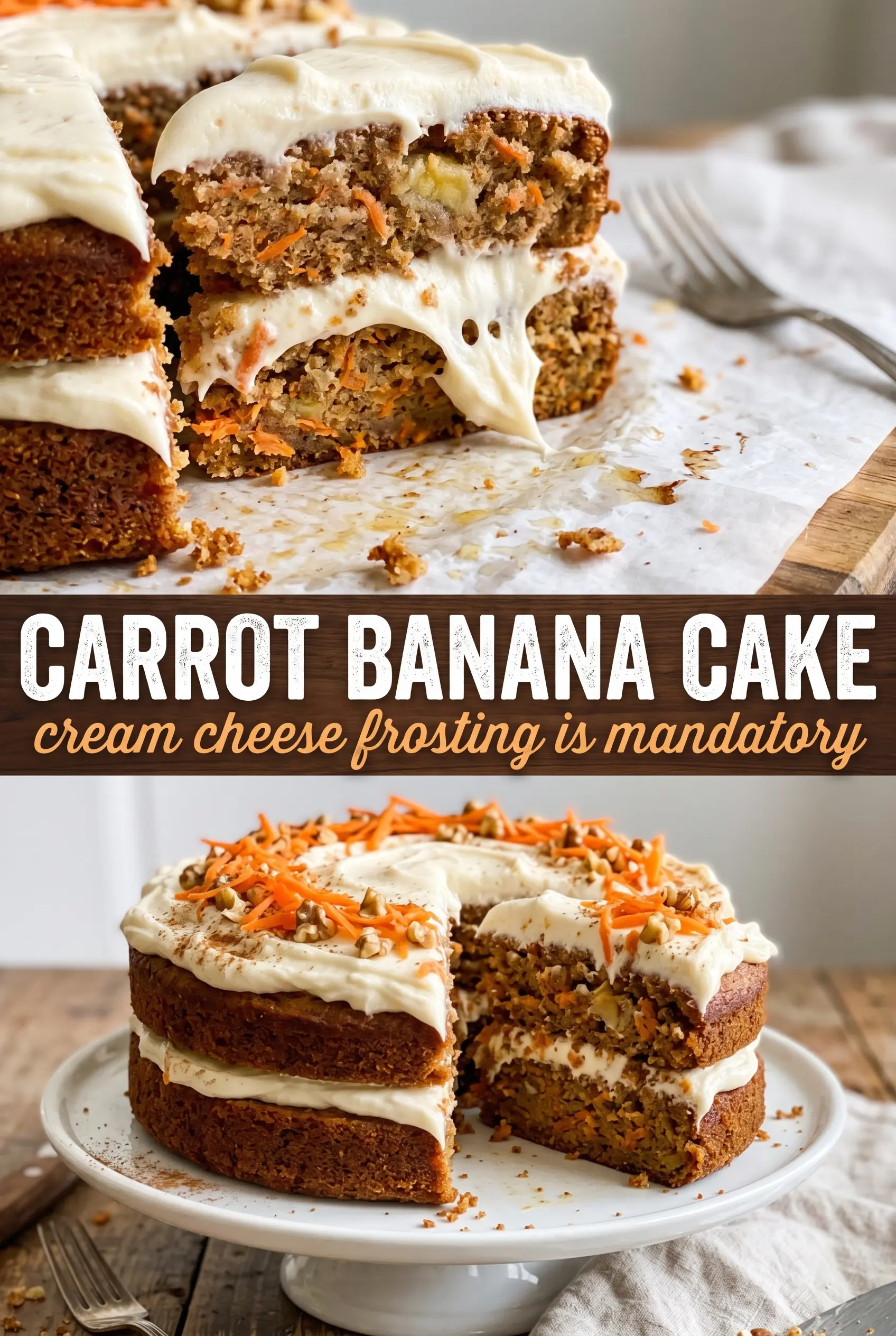
Carrot banana cake bakes into a soft, tender crumb that stays moist for days without turning heavy or greasy. The bananas bring sweetness and body, the carrots keep the cake light on its feet, and the warm spice mix gives every slice that familiar carrot cake comfort with a little extra depth. Finished with a thick layer of cream cheese frosting, it cuts cleanly and eats like a bakery cake, not a quick loaf dressed up as dessert.
What makes this version work is the balance. Too much banana and the cake turns gummy; too much carrot and it can feel stringy or wet. Here, the bananas are mashed fine and the carrots are shredded small, so they melt into the batter instead of fighting it. Brown sugar adds a little molasses note that plays nicely with the cinnamon, nutmeg, and ginger, while oil keeps the crumb soft even after chilling.
Below, I’ve included the one timing detail that keeps the frosting from sliding, plus a few smart swaps if you want to skip the nuts or bake this as a sheet cake instead of layers.
The cake was unbelievably moist, and the banana flavor didn’t disappear under the spices. I baked it in two pans and the layers came out even, then the frosting set up perfectly after chilling for a bit.
Save this carrot banana cake for when you want a moist layer cake with cream cheese frosting and no dry crumb in sight.
The Reason This Cake Stays Soft Instead of Dense
Banana cakes can go heavy fast, especially when the batter is overloaded with fruit or overmixed after the flour goes in. This one avoids that by using enough banana for moisture without drowning the structure, and by keeping the carrots shredded fine so they soften right into the crumb. The batter should look thick but still spoonable. If it starts looking loose or glossy like pancake batter, something has gone off balance.
The other detail that matters is the fat choice. Vegetable oil gives a softer texture than butter here because it stays liquid after baking, which keeps the cake tender even after a night in the fridge. The eggs add lift and help the frosting-ready crumb hold together, but once the dry ingredients go in, stop as soon as you no longer see streaks of flour. Overmixing is the fastest way to turn this from plush to chewy.
What Each Ingredient Is Doing In The Batter And Frosting
- Bananas — Use ripe bananas with plenty of brown speckles. They bring sweetness, moisture, and that soft banana flavor that makes this cake taste fuller than plain carrot cake. If yours are only lightly ripe, the cake will still work, but it won’t be as fragrant or tender.
- Carrots — Shred them finely so they disappear into the crumb instead of creating stringy bits. Pre-shredded carrots are usually too dry and too thick for this cake. Freshly grated carrots release just enough moisture and soften during baking.
- Brown sugar — This adds a deeper sweetness than white sugar and helps the cake stay moist. Light brown sugar is fine. Dark brown sugar will give the cake a richer molasses note, which works well if you like a bolder spice flavor.
- Vegetable oil — Oil keeps the cake softer than butter and makes it stay tender after chilling. Neutral oil is best here because it doesn’t compete with the banana and spice. Melted coconut oil can work, but it sets firmer once cool and changes the texture.
- Cream cheese and butter — Softened, not warm. If either one is too cold, the frosting turns lumpy. If they’re too soft, the frosting gets loose and won’t hold on the cake. Beat them until smooth before adding the powdered sugar so you don’t end up chasing lumps later.
Building The Batter And Frosting Without Losing The Texture
Mix The Wet Ingredients First
Whisk the oil, brown sugar, eggs, and vanilla until the mixture looks glossy and the sugar starts to dissolve into the oil. Stir in the mashed bananas and shredded carrots next. The batter will look a little uneven at this point, and that’s fine. What you don’t want is a watery mixture with visible pools of liquid, which usually means the bananas were overmashed into puree or the carrots were too wet.
Fold In The Dry Ingredients Gently
Add the flour, baking soda, baking powder, spices, and salt, then fold just until the streaks disappear. Stop there. The batter should still look a little rough, and that’s the sign you haven’t overworked the gluten. If you beat it smooth, the cake bakes up tighter and loses that soft, slightly plush crumb that makes it worth making.
Bake Until The Center Springs Back
Divide the batter evenly between the pans or spread it in the 9×13 dish, then bake until a toothpick comes out clean and the center springs back lightly when touched. Start checking at the low end of the bake time, because overbaking dries out the edges before the center has a chance to finish. If you’re using darker pans, the cake may bake a few minutes faster and the edges will color more quickly.
Cool Completely Before Frosting
Let the cake cool all the way to room temperature before you touch the frosting. If the layers are even slightly warm, the cream cheese frosting softens and slides instead of setting up in thick swirls. A cool cake also slices cleaner, especially if you’re building a layer cake. For the smoothest finish, chill the frosted cake for about 20 minutes before cutting.
Make It A Single 9×13 Cake
Bake the batter in a greased 9×13 dish for a simpler dessert with the same moist crumb and spice. It usually needs a few extra minutes in the oven, and the center should still spring back before you pull it out. This version is easier to serve for a crowd, but you lose the layer-cake look and a little frosting-to-cake drama.
Skip The Walnuts For A Smoother Slice
Leave out the walnuts if you want a softer, cleaner crumb or need a nut-free cake. The cake still holds its shape and stays moist without them. You lose the little crunch that breaks up the sweetness, so if you want contrast, scatter a few chopped nuts over the frosting instead of folding them into the batter.
Dairy-Free Frosting Swap
For a dairy-free version, use a plant-based cream cheese and vegan butter that can be beaten smooth. The frosting will taste a little less tangy and may soften faster at room temperature, so chill it before serving. The cake itself is already dairy-free, which makes this an easy swap without changing the batter.
Storage and Reheating
- Refrigerator: Store covered for up to 5 days. The crumb actually holds up well in the fridge because of the oil and banana, though the frosting will firm up.
- Freezer: Freeze unfrosted layers tightly wrapped for up to 2 months, or freeze frosted slices on a tray before wrapping. Full frosted cakes can freeze, but the frosting may lose some of its smooth look after thawing.
- Reheating: Let slices come to room temperature before serving. If you want a slightly softer bite, warm an unfrosted slice for 10 to 15 seconds in the microwave. Don’t heat frosted cake for long or the frosting will melt and slide.
Answers To The Questions Worth Asking
Carrot Banana Cake
Ingredients
Equipment
Method
- Preheat oven to 350°F and grease two 8-inch round pans or a 9x13 dish so the batter releases easily.
- Whisk vegetable oil, brown sugar, eggs, and vanilla extract together until smooth and glossy.
- Stir in mashed bananas and shredded carrots until evenly distributed.
- Fold in all-purpose flour, baking soda, baking powder, cinnamon, nutmeg, ginger, and salt until just combined; stop mixing as soon as no dry streaks remain.
- Fold in walnuts if using, then scrape the batter into the prepared pans.
- Divide batter between pans and bake for 30–35 minutes at 350°F until a toothpick comes out clean with no wet batter.
- Beat cream cheese and butter together until smooth, then beat in powdered sugar and vanilla extract until fluffy.
- Cool cakes completely before frosting generously, so the frosting stays thick and swirls on top without melting.