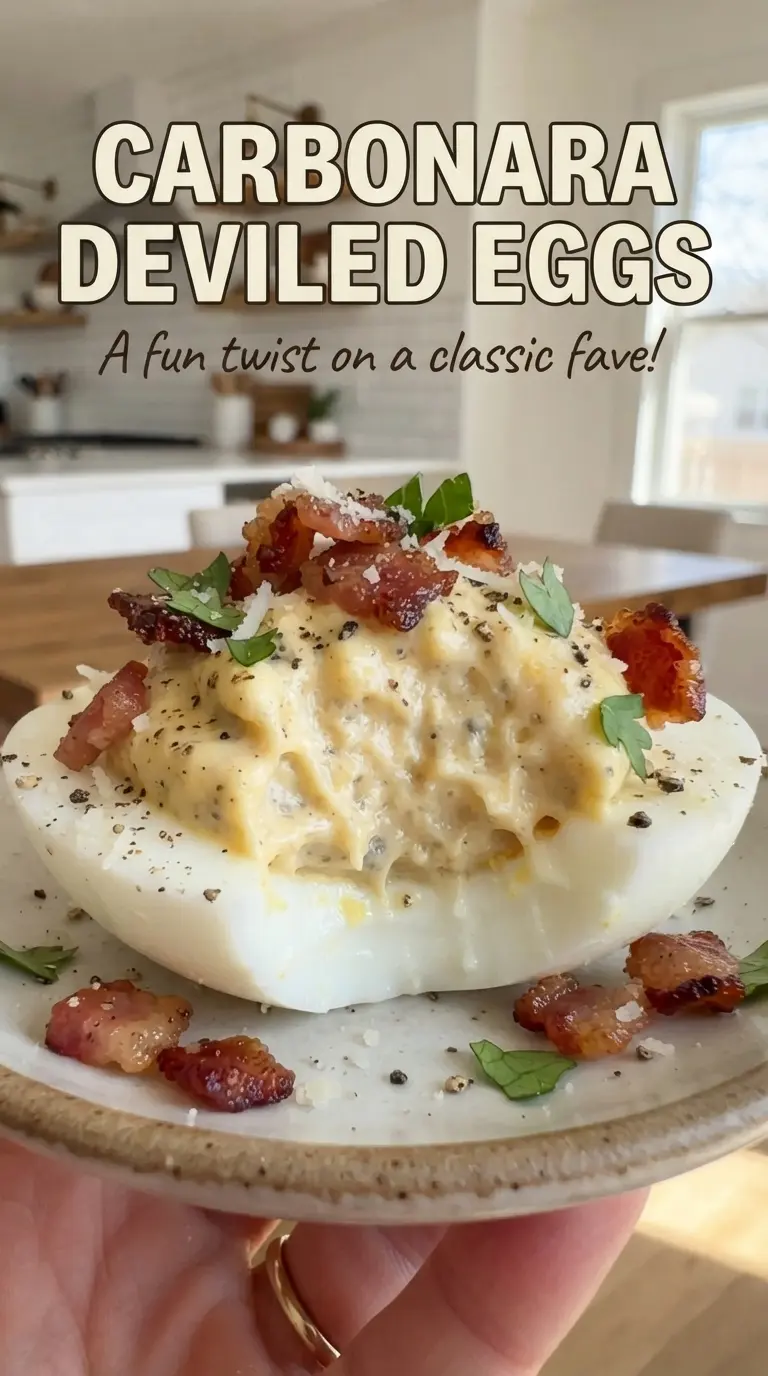
Carbonara deviled eggs bring the salty, creamy, peppery comfort of the pasta classic into a party bite that disappears fast. The filling stays rich and silky, but the pancetta on top keeps every egg from tasting flat or one-note. That little hit of crisp pork, sharp Pecorino, and black pepper is what makes these feel familiar and new at the same time.
The trick is treating the yolk filling like a sauce, not a mash. A spoonful of the rendered pancetta fat gives the mixture a deeper, more authentic carbonara edge, while the Pecorino and Dijon keep it from becoming heavy. The eggs need to be chilled well before peeling so the whites stay neat and the halves hold their shape for piping.
Below, you’ll find the small details that matter most: how to get clean-peeling eggs, how to keep the filling smooth, and what to change if you want to make these ahead for a party.
The filling was unbelievably smooth and the pancetta on top stayed crisp even after the eggs sat out for a while. I loved the little bit of garlic and pepper — it tasted like carbonara in appetizer form.
Save these Carbonara Deviled Eggs for the next party platter when you want creamy yolks, crispy pancetta, and sharp Pecorino in one bite.
The Reason Carbonara Deviled Eggs Stay Creamy Instead of Dry
Deviled eggs turn chalky fast when the yolks are mashed too aggressively or the filling leans too hard on dry cheese without enough fat. This version avoids that by borrowing from carbonara logic: fat, cheese, and yolk work together, and the tiny amount of reserved pancetta fat gives the filling a rounder texture and a deeper savory finish. You get richness without needing to pile on more mayonnaise.
The other place these eggs can go wrong is seasoning. Pecorino Romano is salty and sharp, so the filling needs black pepper for bite rather than more salt for impact. If the yolks seem stiff after mixing, a teaspoon more mayonnaise loosens them without making the filling loose enough to slide around in the whites.
What Each Ingredient Is Actually Doing Here
- Eggs — Large eggs give you enough white to hold a generous filling. Older eggs peel a little more cleanly than very fresh ones, which matters here because a ragged cut edge makes the tray look messy.
- Pancetta or guanciale — This is the carbonara part that people taste first. Pancetta is easier to find and works well; guanciale gives a deeper pork flavor and a silkier rendered fat, but either way you want the pieces crisp so they stay snappy on top.
- Pecorino Romano — Parmesan won’t taste the same here. Pecorino brings the salty, sheepy edge that makes the filling read as carbonara instead of just “savory deviled eggs.” Use the fine grate in the filling, then shave a little over the top for contrast.
- Mayonnaise — This keeps the filling smooth and pipeable. The mayonnaise doesn’t hide the yolks; it helps them spread evenly so the cheese and fat can blend instead of turning grainy.
- Dijon mustard and garlic — Dijon adds a light acidic backbone that keeps the filling from tasting heavy, and the grated garlic gives a sharp background note without overpowering the pork. Don’t add too much garlic or it will bulldoze the rest of the filling.
- Black pepper — This is the other carbonara signature. Use coarsely cracked pepper, not fine powder, so each bite has little bursts of heat instead of a muddy spice flavor.
Building the Filling So It Pipes Cleanly
Cooking the Eggs
Put the eggs in a pot, cover them with cold water, and bring the water to a boil before you cover the pan and pull it off the heat. That off-heat rest is what keeps the yolks tender and pale yellow instead of dry and chalky at the edges. The 12-minute stand gives you fully set yolks that still mash smoothly. After that, an ice bath for 10 minutes stops the carryover cooking and makes peeling easier.
Crisping the Pancetta
Cook the pancetta in a small skillet until the cubes are deeply golden and crisp, not just no longer pink. If you stop too early, the pieces soften again once they sit on the eggs. Drain the fat, but keep 1 teaspoon of it; that small amount is enough to carry flavor into the filling without making it greasy.
Making the Yolk Mixture
Mash the yolks with the mayonnaise, Pecorino, Dijon, garlic, pepper, and reserved fat until the mixture looks smooth and thick but still soft enough to spoon. If you see little dry bits, keep working the mixture with a fork or press it through a fine mesh sieve for a more polished texture. The filling should hold its shape when scooped, but it shouldn’t feel stiff or pasty.
Filling and Finishing
Pipe or spoon the filling into the egg whites, then top with the crisp pancetta, shaved Pecorino, more cracked pepper, and parsley. Don’t add the pancetta too early if you’re serving these later; the steam from the filling will soften it. The eggs taste best when the topping still has a little crunch against the creamy center.
How to Adapt These Without Losing the Carbonara Feel
Swap pancetta for bacon
Bacon works well if that’s what you have, but it brings a smokier, slightly sweeter flavor than pancetta. Use it sparingly on top so the smoke doesn’t take over the dish. Drain it well before topping the eggs, or the filling can slide around on the plate.
Make it gluten-free without changing the method
This recipe is naturally gluten-free as written, as long as your Dijon and cured pork don’t contain any unexpected fillers. The texture stays exactly the same because the structure comes from the yolks and mayonnaise, not from any starch. It’s one of the easiest appetizer swaps to serve without extra work.
Go lighter on the pork
If you want a less rich finish, use half the pancetta in the filling and keep the rest just for garnish. You’ll still get the carbonara cue from the fat, cheese, and pepper, but the bites will taste a little cleaner and less heavy. Don’t skip the reserved fat entirely unless you replace it with a little more mayonnaise.
Storage and Reheating
- Refrigerator: Store assembled deviled eggs for up to 2 days. The whites stay fine, but the pancetta will soften a bit over time.
- Freezer: Don’t freeze these. The whites turn rubbery and the filling gets watery after thawing.
- Reheating: These are meant to be served chilled or cool. If you’ve made the pancetta ahead, re-crisp it in a skillet before topping the eggs, but don’t warm the assembled eggs or the filling can loosen and separate.
Questions I Get Asked About This Recipe

Carbonara Deviled Eggs
Ingredients
Equipment
Method
- Place the eggs in a Dutch oven and cover with cold water, then bring to a boil. Cover, remove from heat, and let stand for 12 minutes.
- Chill the eggs in an ice bath for 10 minutes. Peel and halve lengthwise.
- Cook the pancetta 6-8 minutes until crispy. Drain, reserving 1 teaspoon of the pancetta fat.
- Mash the yolks with mayonnaise, Pecorino Romano, Dijon mustard, garlic, the filling pepper, and the reserved pancetta fat until smooth. Stop and scrape down as needed so the mixture pipes cleanly.
- Pipe the filling into the egg white halves. Top with crispy pancetta, shaved Pecorino Romano, additional cracked black pepper, and fresh parsley garnish.