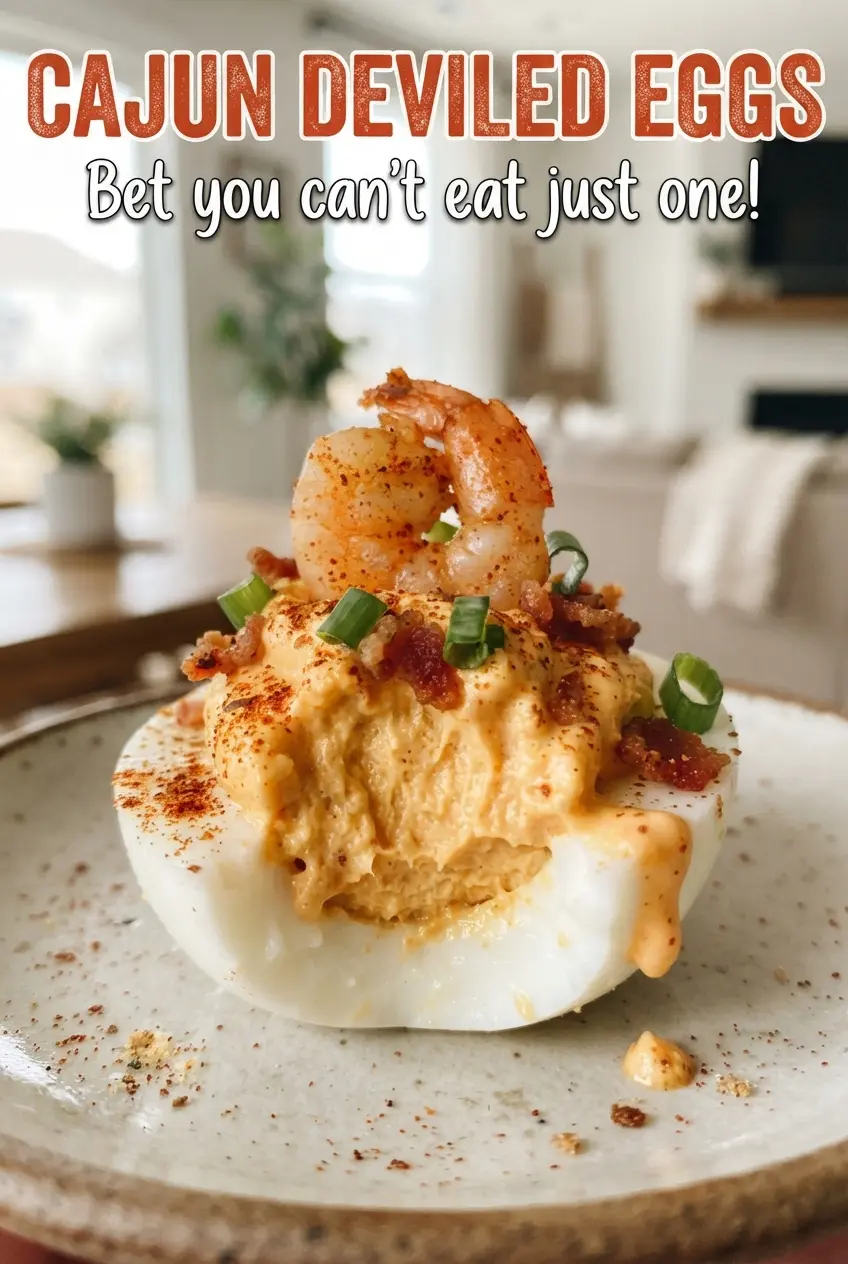
Cajun deviled eggs get their edge from the filling before the garnish ever hits the plate. The yolks turn silky with mayonnaise and Creole mustard, then the pickle relish and hot sauce bring enough tang and heat to keep every bite bright instead of heavy. Topped with a quick seared shrimp, they land somewhere between a classic appetizer and a little Southern-style showpiece.
The detail that makes this version work is balance. The eggs get fully chilled before peeling, which keeps the whites clean and the filling from turning lumpy with bits of shell or ragged edges. The shrimp are seasoned separately and seared fast in butter so they stay plump and lightly caramelized instead of rubbery. That contrast matters here, because the eggs are soft and rich and the shrimp need to bring a little snap.
Below, I’ve included the part most people skip: how to keep the filling smooth, how long to sear the shrimp without overcooking them, and a few smart variations if you want to change the heat level or make these ahead.
The yolk filling was smooth and piped beautifully, and the shrimp stayed tender with just enough Cajun kick. I made them a few hours ahead and they still tasted fresh when I put the toppings on right before serving.
Save these Cajun deviled eggs for the next time you want a creamy, spicy appetizer with seared shrimp on top.
The Trick to Smooth Filling and Shrimp That Stay Tender
Deviled eggs get ruined fast when the yolk mixture is dry, grainy, or overloaded with seasoning. The filling here stays smooth because the yolks are mashed while they’re still slightly warm from chilling and then loosened with just enough mayonnaise and mustard to make a pipeable paste. If the mixture looks stiff, it’ll mound instead of settling into the whites, and the finished eggs will taste heavy instead of creamy.
The shrimp matter just as much. They’re halved lengthwise so each egg gets a neat topping without crowding the filling, and they only need a minute or two per side in butter. If they curl tightly or turn opaque all the way through and firm, they’ve gone too far. Pull them when they’re pink and glossy; carryover heat finishes the job.
What Each Ingredient Is Doing in These Cajun Deviled Eggs
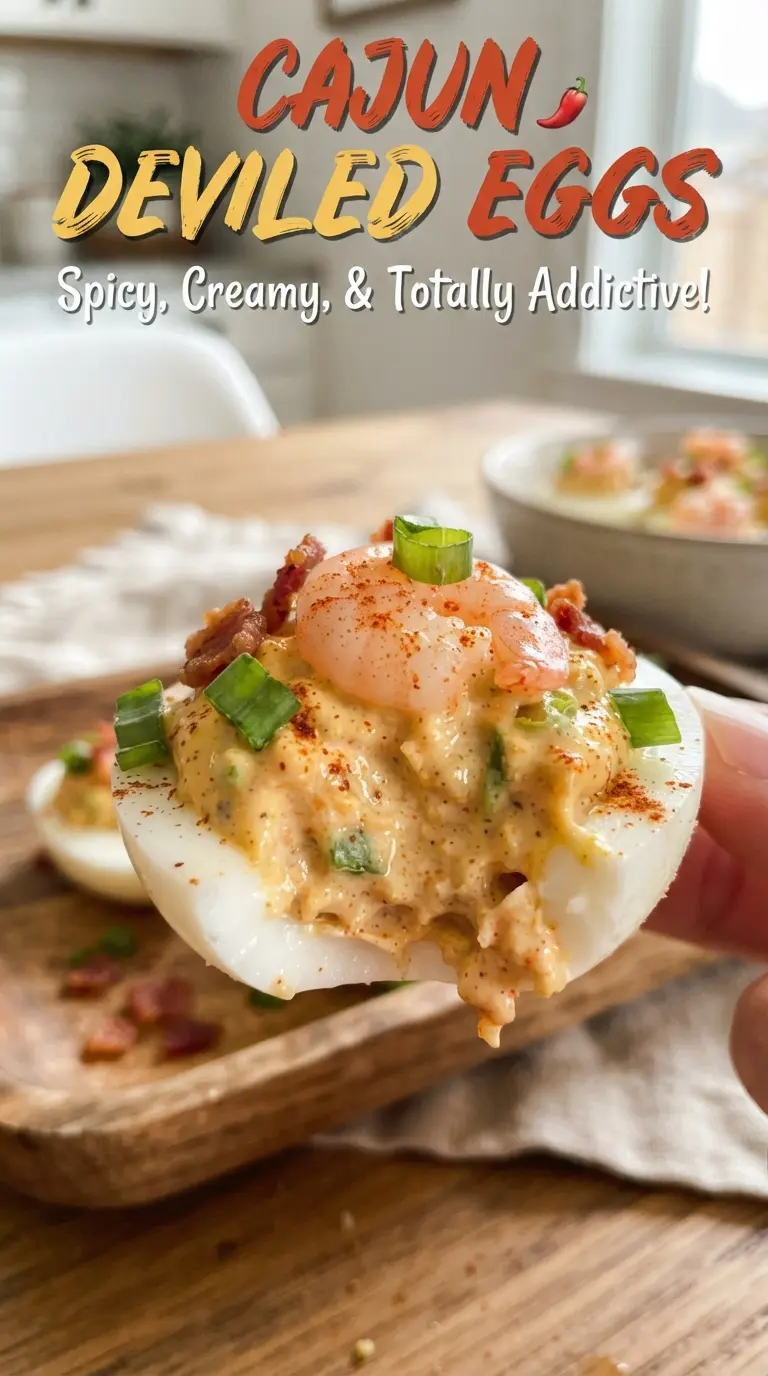
- Eggs — Large eggs give you enough yolk filling to pipe cleanly into 12 whites. Older eggs peel a little easier, but the ice bath matters more than age here.
- Mayonnaise — This is what turns the yolks into something silky. A standard full-fat mayo gives the best texture; light mayo can work, but the filling won’t taste as rich.
- Creole mustard — This brings sharpness and a little grainy texture that keeps the filling from tasting flat. Dijon will work in a pinch, but you’ll lose some of the Cajun-style bite.
- Hot sauce — It adds heat and acidity, not just spice. Use a sauce you already like on eggs, because a harsh vinegar note shows up fast in such a small filling.
- Cajun seasoning — Dividing it is important. A little goes into the filling for background heat, and the rest seasons the shrimp so the topping and filling taste connected.
- Sweet pickle relish — This softens the spice and adds a little sweetness that makes the whole bite taste finished. If you use chopped pickles instead, drain them well so the filling doesn’t get watery.
- Shrimp — They turn this from a classic deviled egg into a party bite with a little drama. Medium shrimp work best because they fit neatly on top without tipping the eggs over.
- Butter — Butter gives the shrimp a fast, savory sear and helps the seasoning bloom in the pan. Oil will cook them, but it won’t give the same rounded flavor.
- Green onions — These add a fresh bite and a little color right at the end. Don’t skip them if you want the eggs to taste as lively as they look.
Putting the Eggs Together Without Breaking the Filling
Boiling and Cooling the Eggs
Start the eggs in cold water, bring the pot to a boil, then cover it and pull it off the heat for the full 12 minutes. That gentler finish gives you yolks that are fully set without the chalky ring that shows up when eggs boil too hard. The ice bath matters because it stops the cooking and tightens the whites, which makes peeling much easier. If the shells cling, give the eggs a few more minutes in the ice water before you start peeling.
Mixing the Yolk Base
Break the yolks up until there are no dry chunks left, then stir in the mayonnaise, mustard, hot sauce, relish, and Cajun seasoning. The filling should look glossy and thick, but still soft enough to pipe without tearing the egg whites. If it looks pasty, add another small spoonful of mayo rather than forcing it through a piping bag. Taste it before filling the eggs; Cajun seasoning blends vary a lot in salt and heat, and this is the point where you can correct it.
Seared Shrimp on Top
Season the halved shrimp with the remaining Cajun seasoning, then sear them in butter just until they turn pink and opaque. A hot pan is fine, but the shrimp only need a brief cook, so don’t walk away. If they shrink into tight curls, they’ve stayed in the pan too long. Once they’re done, get them out immediately so the butter doesn’t keep cooking them while you finish the eggs.
Filling and Garnishing the Platter
Pipe or spoon the yolk mixture into the egg whites with a little height in the center. Top each one with a shrimp half, then finish with sliced green onion so the plate looks sharp and the flavors stay bright. If you’re making these for a party, hold back the shrimp and garnish until the last minute. That keeps the eggs neat and stops the tops from sliding once they’ve sat out a while.
How to Adjust the Heat, the Filling, or the Topping
Make Them Milder for a Mixed Crowd
Cut the hot sauce in half and use a mild Creole mustard if yours runs sharp. You’ll still get the Cajun backbone from the seasoning on the shrimp, but the filling will taste creamier and less aggressive. This is the safest route if kids or heat-sensitive guests are at the table.
Go Gluten-Free Without Changing the Texture
These are naturally gluten-free as written as long as your Cajun seasoning and hot sauce are certified gluten-free. Check the label on the seasoning blend, since some brands use anti-caking agents or additives that can include gluten. The texture and flavor stay the same.
Skip the Shrimp for a Vegetarian Version
Leave off the shrimp and top each egg with a little extra green onion and a light dusting of Cajun seasoning. You lose the buttery seared seafood contrast, but the filling still holds up on its own as a strong appetizer. If you want more substance, add a tiny slice of pimento or roasted red pepper on top.
Storage and Reheating
- Refrigerator: Store the filled egg whites and shrimp separately if you can. The eggs keep for 2 days, but the shrimp are best within 1 day so they stay tender and don’t pick up extra moisture.
- Freezer: Don’t freeze assembled deviled eggs. The whites turn rubbery and the filling can separate once thawed.
- Reheating: Don’t reheat the eggs. If the shrimp were made ahead, warm them gently in a skillet for a few seconds just until barely heated through, then top the eggs right before serving.
Questions I Get Asked About This Recipe
Cajun Deviled Eggs
Ingredients
Equipment
Method
- Place 12 large eggs in a pot, cover with cold water, and bring to a boil; cover, remove from heat, and let stand 12 minutes.
- Chill the eggs in an ice bath for 10 minutes, then peel and halve them lengthwise.
- Mash the yolks with mayonnaise, Creole mustard, hot sauce, sweet pickle relish, and 1 teaspoon Cajun seasoning until smooth.
- Toss the shrimp with the remaining Cajun seasoning, then sear in butter for 1-2 minutes per side until pink.
- Pipe the yolk mixture into the egg whites.
- Top each with a shrimp half and garnish with sliced green onions.