Blackened Cajun chicken over creamy orzo is the kind of skillet dinner that lands hard and disappears fast. The chicken gets a deep crust in the pan, then the orzo cooks in the same drippings so every bite carries that smoky, peppery heat. Bell peppers soften into the sauce, the Parmesan rounds out the spice, and the whole dish finishes with enough richness to feel complete without going heavy.
What makes this version work is the layering. The chicken is seasoned in two stages, so you get flavor on the meat itself and another hit in the vegetables and pasta. Toasting the orzo before the broth goes in keeps it from tasting flat, and simmering it uncovered lets the starches thicken the liquid into a creamy sauce instead of a soupy one. A squeeze of lemon at the end wakes everything up and keeps the cream from feeling dull.
Below you’ll find the part that matters most: how to keep the chicken blackened without drying it out, how to keep the orzo moving so it cooks evenly, and a few smart swaps if you need to work with what you already have.
The orzo turned out creamy without getting mushy, and the chicken had that blackened crust you usually only get at a restaurant. I added the lemon at the end like you suggested and it made the whole skillet taste brighter.
Save this Cajun Chicken Orzo for a skillet dinner with blackened chicken, creamy orzo, and just enough heat to keep every bite interesting.
The Reason the Orzo Stays Creamy Instead of Clumping
Orzo behaves more like risotto than regular pasta in this skillet, which means the liquid ratio and stirring matter more than people expect. If you dump in the broth and walk away, the pasta on the bottom softens first and the top layer dries out before the starch has a chance to turn the pan sauce creamy. Keeping it uncovered and stirring often gives the pasta a chance to release starch evenly while the liquid reduces at the same pace.
The second thing that keeps this dish in line is the timing on the cream and Parmesan. Add them after the orzo is tender, not before, or the dairy can slow down the pasta’s absorption and leave you with a thinner sauce than you want. The finish should look loose in the pan, not watery; it tightens as it sits for a minute off the heat.
- Toasting the orzo — That minute in the pan before the broth goes in gives the pasta a lightly nutty edge and helps it hold its shape. Skip it and the dish still works, but the sauce tastes flatter.
- Stirring often — This keeps the starch moving into the liquid instead of sticking in one spot. It also keeps the bottom from scorching once the broth starts getting low.
- Uncovered simmering — You need evaporation here. Covered orzo tends to turn soft before the sauce thickens enough.
What Each Ingredient Is Actually Doing in This Skillet
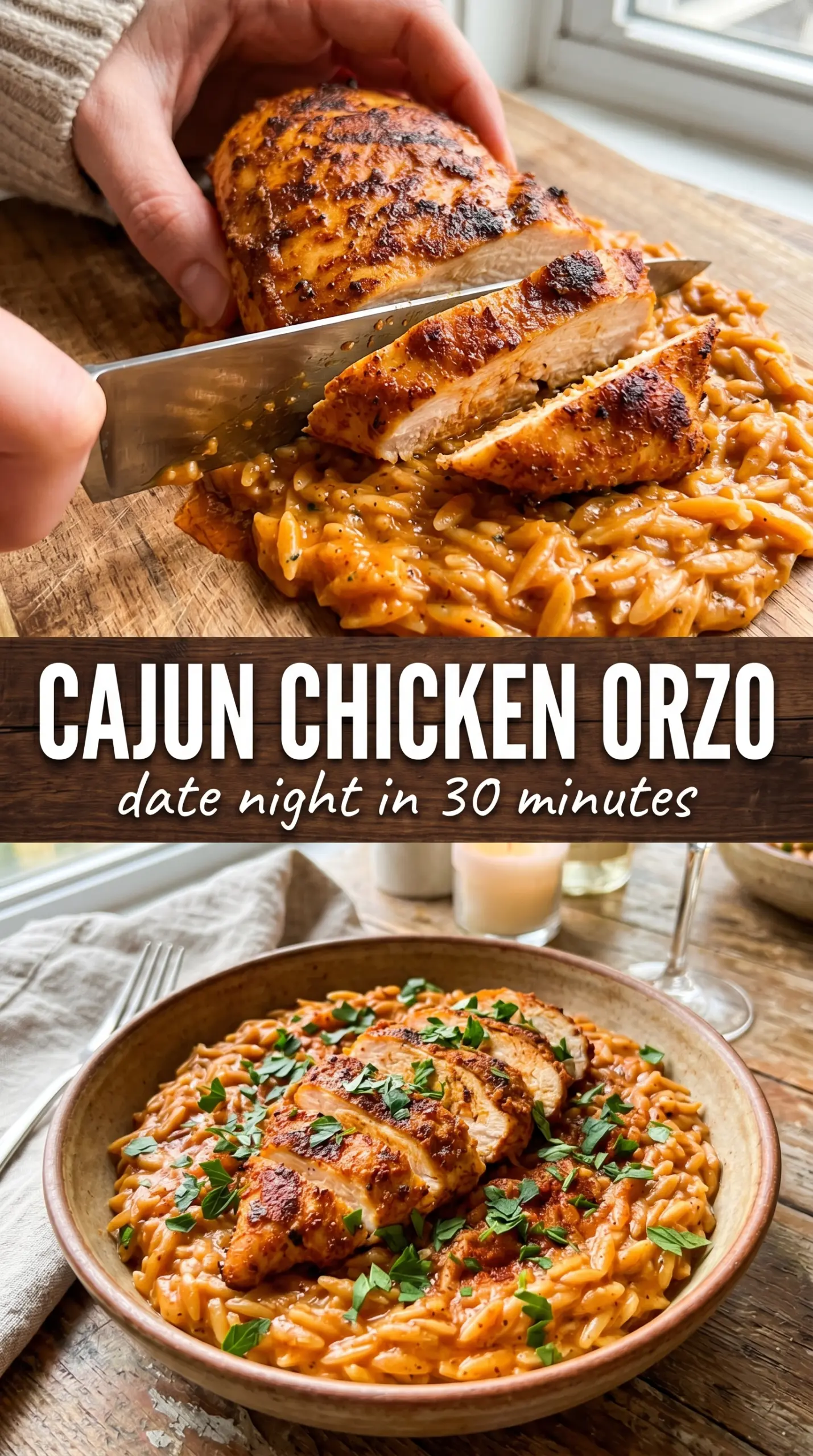
- Boneless skinless chicken thighs — Thighs stay juicy under high heat and give you a better blackened crust than lean chicken breast. Breast will work, but it cooks faster and dries out more easily, so watch the temperature closely.
- Cajun seasoning — This is the backbone of the dish, so use one you trust. Some blends are salt-heavy and some are mostly paprika, which changes both the seasoning and the color of the sauce; if yours is very salty, hold back a little and taste before adding more.
- Orzo — This small pasta thickens the skillet sauce as it cooks, which is why the dish turns creamy without needing a flour roux. Other small pastas can work in a pinch, but the texture won’t be quite as silky.
- Heavy cream and Parmesan — These finish the sauce and soften the heat from the Cajun spice. Half-and-half can be used, but the sauce will be looser; if you swap it in, let the orzo reduce a little longer before serving.
- Bell peppers, onion, and garlic — These build sweetness and depth under the spice. Dice them small so they melt into the sauce instead of sitting in chunky pieces.
- Smoked paprika — This pushes the smoky, blackened flavor without adding more salt. It’s worth keeping in the recipe even if your Cajun blend already has paprika.
Getting the Sear and the Cream Sauce in the Right Order
Blackening the Chicken First
Start by rubbing the chicken thighs with part of the Cajun seasoning, then sear them in hot olive oil over medium-high heat. You want a deep brown, almost charred crust on the outside and an internal temperature of 165°F. If the pan is too cool, the chicken steams and the spices never darken; if it’s too hot, the seasoning can burn before the thighs cook through. Pull the chicken out when it’s done and let it rest before slicing so the juices stay in the meat.
Building the Pepper Base
Use the same skillet and go straight into the peppers and onion. Those browned bits left behind from the chicken are part of the sauce, so don’t wipe the pan clean. Cook the vegetables until the onion softens and the peppers lose their raw edge, then stir in the garlic and the rest of the Cajun seasoning for just a minute. Garlic burns fast in a dry pan, so keep it moving and add the pasta before it turns bitter.
Cooking the Orzo Until It Turns Creamy
Add the dry orzo and toast it briefly before pouring in the broth. Once the liquid goes in, keep the heat at a steady simmer and stir often, especially as the pan starts to look dry. The orzo should turn tender with a little bite left in the center, and most of the broth should be absorbed by the time it’s ready. If the pan dries out before the pasta is tender, splash in a little more broth or water and keep stirring until it loosens.
Finishing with Cream and Parmesan
Stir in the heavy cream and Parmesan once the pasta has cooked through. The sauce should turn glossy and cling to the spoon without looking greasy. If the cheese clumps, the heat was too high when it went in, so pull the pan off the burner for a moment and stir until smooth. Finish with the sliced chicken on top, then add green onions and a squeeze of lemon right before serving.
How to Adapt This Cajun Chicken Orzo Without Losing the Point
Make It Dairy-Free
Use full-fat canned coconut milk or an unsweetened dairy-free creamer instead of heavy cream, and skip the Parmesan or use a dairy-free Parmesan substitute. The sauce will be a little softer and less sharp, but the Cajun spices still carry the dish. Keep the heat gentle when you stir in the replacement so it doesn’t separate.
Swap in Chicken Breasts
Chicken breasts work if that’s what you have, but they need less time in the pan and are less forgiving. Pound them to an even thickness so they cook at the same rate, then slice them after resting. The flavor stays the same, but the texture is a little leaner and the sear won’t be quite as juicy.
Make It Gluten-Free
Use a gluten-free orzo or another small gluten-free pasta with a similar cook time. Check the broth and Cajun seasoning too, since both can hide gluten depending on the brand. Stir more often than you would with wheat orzo, because gluten-free pasta can go from tender to soft faster.
Turn Up the Heat
Add a pinch of cayenne or a few dashes of hot sauce with the garlic if you want the skillet to hit harder. That keeps the heat in the sauce instead of only on the chicken crust. Go slowly, because the cream will soften the spice a little but not erase it.
Storage and Reheating
- Refrigerator: Store leftovers for up to 3 days. The orzo thickens as it sits, so expect a denser texture after chilling.
- Freezer: I don’t recommend freezing this one. Cream sauces and orzo both change texture after thawing, and the pasta can turn mealy.
- Reheating: Warm it gently on the stove or in the microwave with a splash of broth or water. High heat will tighten the sauce and dry out the chicken, so reheat slowly and stir once or twice as it loosens.
Answers to the Questions Worth Asking

Cajun Chicken Orzo
Ingredients
Equipment
Method
- Rub chicken thighs with 1 tablespoon Cajun seasoning. Sear in olive oil in a large deep skillet over medium-high heat for 4-5 minutes per side until blackened and cooked through to 165°F, then remove and slice.
- In the same skillet, cook bell peppers and onion over medium heat for 4 minutes. Add garlic and the remaining Cajun seasoning and cook 1 minute.
- Add orzo and toast for 1 minute. Pour in chicken broth and bring to a simmer, then cook uncovered for 10-12 minutes, stirring often, until orzo is tender.
- Stir in heavy cream and Parmesan, then simmer for 2 minutes until creamy.
- Top the orzo with the sliced Cajun chicken. Garnish with sliced green onions and serve with lemon wedges.