Butternut squash casserole lands right in that sweet spot between comforting side dish and near-dessert. The filling bakes up smooth and custardy, with enough warm cinnamon and brown sugar to make the squash taste full and round instead of flat, and the pecan topping brings the crunch that keeps each bite from feeling heavy.
What makes this version work is the contrast. The squash gets boiled until it’s truly tender, then drained well so the casserole doesn’t turn loose or watery in the oven. From there, the eggs and milk give the center a soft set, while the butter, flour, pecans, and brown sugar form a crumbly top that bakes into a crisp, golden cap instead of sinking into the filling.
If you’ve made squash casseroles before and ended up with something gummy or thin, the tips below will help. There’s a specific reason the squash needs to be drained hard, plus a few smart swaps if you want to lean this dish a little more savory or make it fit what you already have in the pantry.
The squash stayed creamy instead of watery, and that pecan topping turned out crisp even after sitting on the table for a bit. My sister asked for the recipe before dinner was over.
Save this butternut squash casserole for the kind of side dish that bakes up creamy underneath and crisp on top.
The Step That Keeps This Casserole Creamy Instead of Watery
The biggest mistake with butternut squash casserole is treating the squash like it can carry extra moisture and still bake up nicely. It can’t. Butternut squash holds a lot of water, and if you skip a thorough drain after boiling, the filling loosens in the oven and the topping can slide instead of sitting on a firm base.
The other thing worth respecting is the texture of the mash. You want it smooth, but not overworked into something glossy and gluey. Once the squash is tender, mash it while it’s still warm so the butter melts in cleanly, then stop as soon as the mixture looks even. The eggs go in to set the casserole, not to turn it into custard, so overmixing after they’re added only makes the texture heavier.
- Drain the squash hard — After boiling, let it sit in the colander for a minute or two, then press gently with a spoon. Extra water is the main reason casseroles like this turn loose.
- Use room-temperature eggs if you can — Cold eggs cool the mash and make the butter seize a little. That won’t ruin it, but warmer eggs blend more smoothly.
- Expect a soft set, not a firm slice — This bakes like a spoonable side dish, not a square-cut gratin. The center should settle and hold together without looking dry.
What the Butter, Pecans, and Brown Sugar Are Really Doing Here
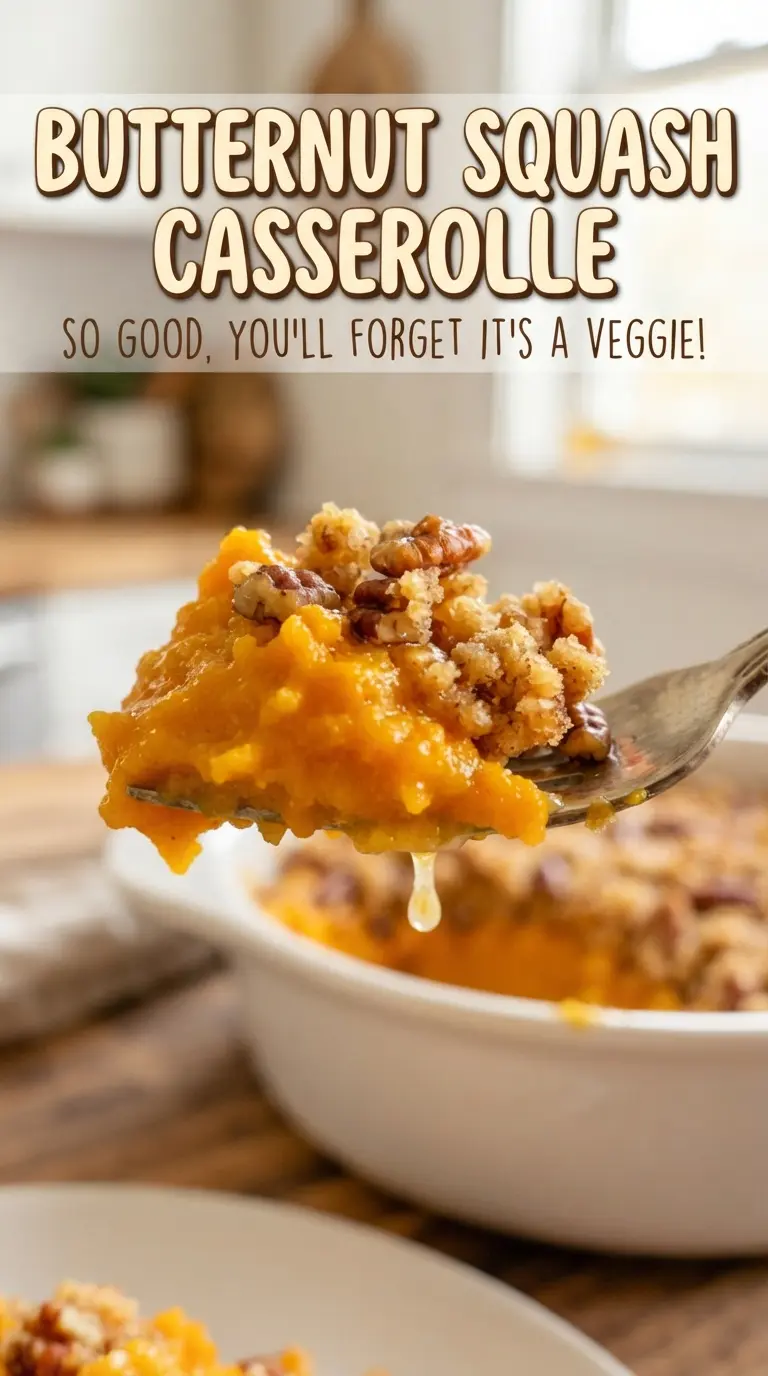
Butternut squash is the base flavor, so choose one that feels heavy for its size and isn’t overly stringy when you cut into it. Fresh squash gives the cleanest taste, but frozen cubes can work in a pinch if you cook off every bit of excess moisture after thawing.
Butter does two jobs here: it carries the sweetness in the filling and helps the topping crisp. You can cut the amount a little if needed, but the casserole will taste flatter and the topping won’t brown as deeply.
Brown sugar brings molasses depth that plain white sugar can’t match. If you want the dish a little less sweet, reduce it slightly in the filling, not the topping, because the crust needs that sugar to bake into crumbs.
Pecans are what make this dish feel Southern in the best way. They add structure and a toasted, buttery bite. Walnuts will work, but they taste sharper and less round.
Milk, eggs, and flour are the quiet builders. The milk loosens the mash just enough to spread, the eggs set the casserole, and the flour in the topping keeps it crumbly instead of pasty.
Building the Layers So the Topping Stays Crisp
Boil, Drain, and Dry the Squash
Cook the squash until it’s fork-tender all the way through, about 15 minutes, then drain it well before anything else happens. If there’s water pooling in the bottom of the bowl, the final casserole will bake up loose. Letting the squash sit in the colander briefly helps more than rushing straight to mashing.
Make the Filling Smooth but Not Loose
Mash the squash with the butter, brown sugar, eggs, milk, vanilla, cinnamon, and salt until the mixture looks even and creamy. A few small bits are fine, but big chunks make the casserole bake unevenly. Spread it into the dish while it’s still warm so the surface levels out without tearing.
Crumb the Topping by Hand
Mix the flour, pecans, melted butter, and remaining brown sugar until you get damp, sandy crumbs. If it turns into a paste, the butter was too hot or too much was worked in. Scatter the topping evenly over the squash, then bake until the top is golden and the edges are bubbling.
How to Change the Casserole Without Losing What Makes It Good
Make it less sweet for dinner
Cut the brown sugar in the filling by a couple of tablespoons and keep the topping as written. That keeps the casserole in side-dish territory without losing the caramel note that makes the squash taste rich.
Gluten-free version
Swap the all-purpose flour in the topping for a 1:1 gluten-free flour blend. The crumble will still bake up crisp, though it may be a little more delicate when you scoop it.
Dairy-free adjustment
Use melted plant-based butter and an unsweetened non-dairy milk with some body, like oat milk. The flavor stays close to the original, but the topping may brown a little faster, so watch the last 10 minutes closely.
Make it ahead
You can assemble the filling and topping separately up to a day in advance, then store them covered in the fridge. Add the topping right before baking so it stays crumbly instead of softening into the filling.
Storage and Reheating
- Refrigerator: Keep leftovers covered for up to 4 days. The topping softens a little, but the flavor holds up well.
- Freezer: This freezes best before baking. Wrap tightly and freeze for up to 2 months, then thaw in the fridge before baking as directed.
- Reheating: Warm in a 325F oven, covered loosely with foil, until heated through. The oven keeps the topping from turning soggy, which happens fast in the microwave.
Questions I Get Asked About This Recipe
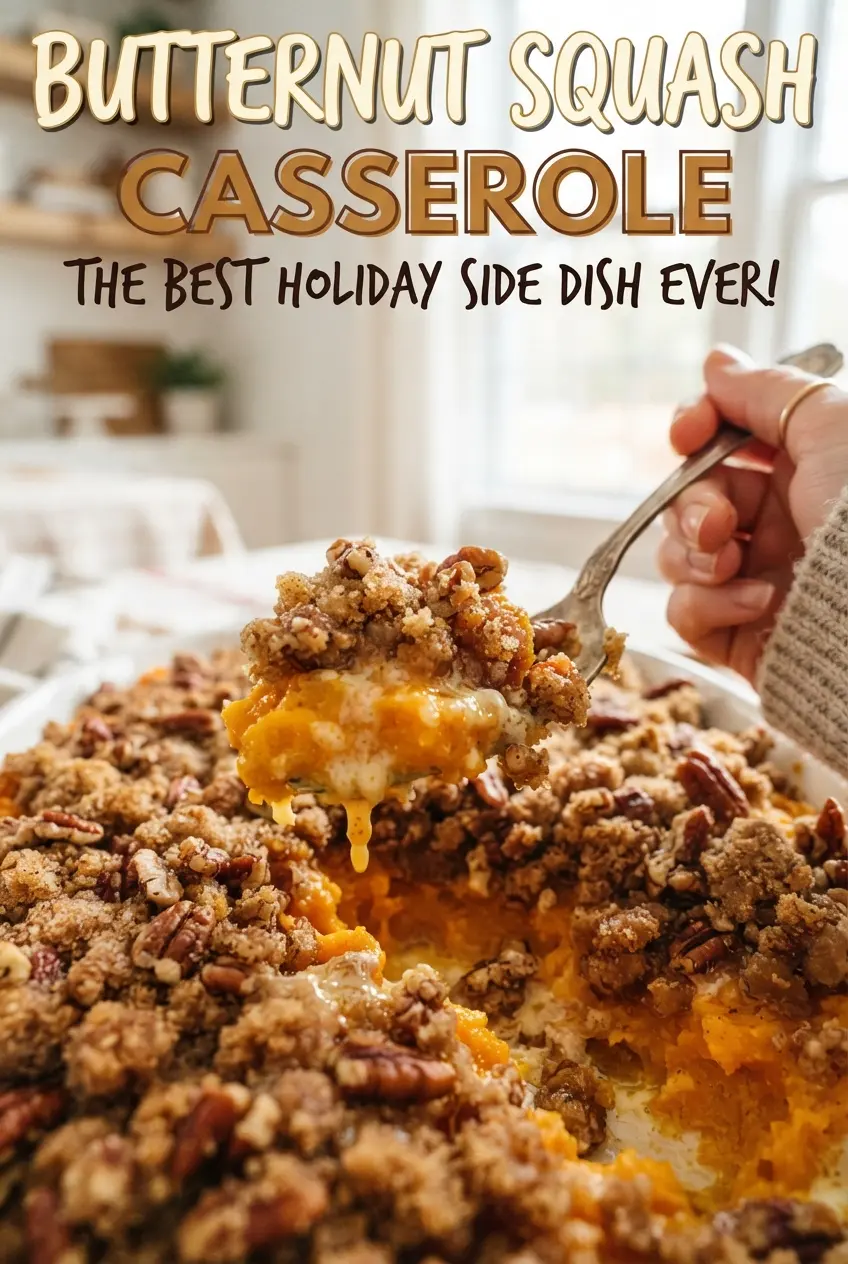
Butternut Squash Casserole
Ingredients
Equipment
Method
- Bring the cubed butternut squash to a boil and cook for 15 minutes until very tender, then drain well so it isn’t watery.
- Preheat the oven to 350F and grease a 9x13-inch baking dish.
- Mash the butternut squash with 1/4 cup butter, 1/4 cup brown sugar, eggs, milk, vanilla, cinnamon, and salt until smooth.
- Spread the smooth squash mixture evenly into the greased baking dish.
- Mix the all-purpose flour, chopped pecans, remaining butter, and remaining brown sugar into a crumbly topping.
- Sprinkle the crumbly pecan topping over the squash in an even layer.
- Bake for 35-40 minutes at 350F until the topping is golden and the edges bubble.