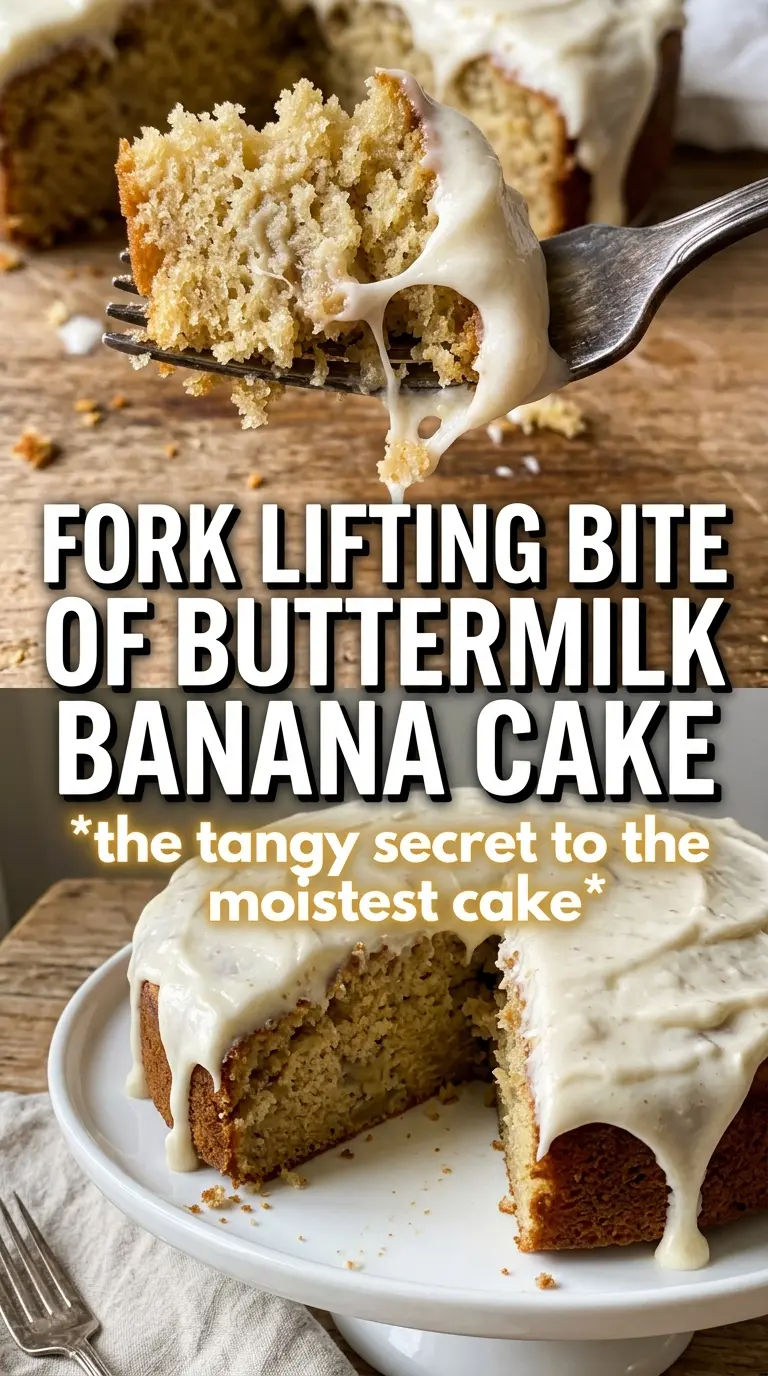
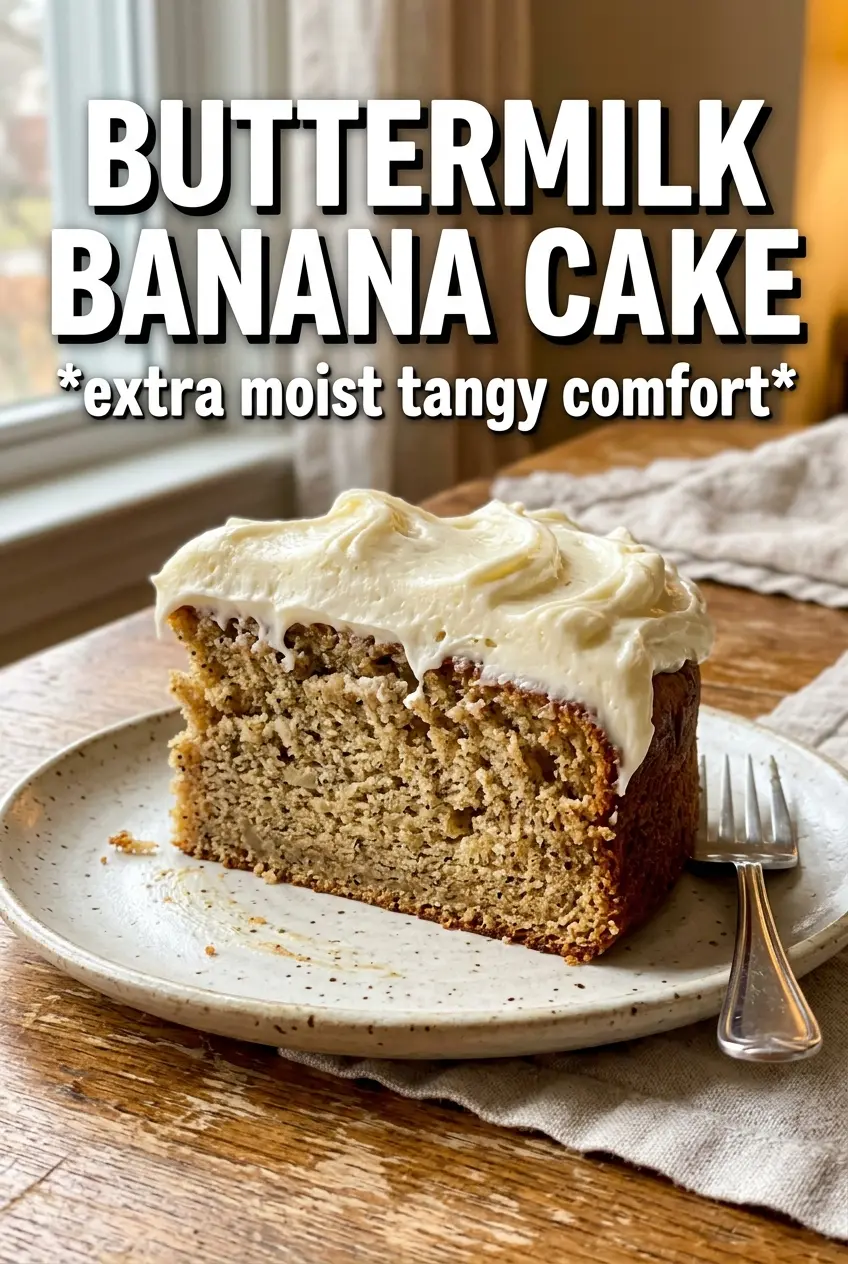
Pillowy, tender banana cake has a way of disappearing faster than any fancier dessert on the table, and this buttermilk version earns its keep because the crumb stays soft for days without turning heavy. The banana flavor comes through cleanly, the edges bake up golden, and the whole thing slices neatly whether you frost it with cream cheese icing or a banana buttercream.
The trick is in the balance. Buttermilk brings tang and a little extra lift, which keeps the cake from tasting flat or overly sweet, while the bananas add moisture without making the batter dense. Beating the butter and sugar until pale and fluffy matters here, because that air gives the cake its light texture before the bananas even go in. Then the flour and buttermilk are added in alternating rounds so the batter stays smooth instead of curdled or gummy.
Below, I’m breaking down the parts that matter most: how to keep the cake tender, why the frosting sets up the way it does, and the small timing details that keep a banana cake from sinking in the middle.
The cake baked up so light and moist, and the buttermilk kept the banana flavor from tasting too sweet. I frosted it after dinner and by morning the whole pan was gone.
Save this buttermilk banana cake for the days when you want a soft, tangy banana cake with a tall cream cheese frosting.
The Banana Cake Mistake That Makes It Heavy
The most common problem with banana cake is overloading it with banana and underestimating what that does to the crumb. Too much mashed banana can make the cake wet and sticky in the center, even when the top looks done. This version keeps the banana flavor front and center, but the flour, butter, and buttermilk stay in enough balance to give you a cake that feels soft instead of damp.
The other trap is skipping the creaming step or rushing it. Butter and sugar beaten until light give the cake structure, which matters because banana batter can collapse if it starts out too dense. If your cake has baked edges but a sunken middle, the batter was likely mixed too aggressively after the flour went in or pulled from the oven before the center had set.
What Each Ingredient Is Actually Doing In This Cake
- Ripe bananas — These bring the flavor and moisture, but they also add weight. Use bananas with lots of brown spotting for the best sweetness and easiest mashing. If they’re still mostly yellow, the cake will taste flatter and less fragrant.
- Buttermilk — This is what keeps the crumb tender and gives the cake its gentle tang. Regular milk won’t behave the same way, and the cake will taste a little one-note. If you’re out of buttermilk, stir 1 tablespoon of lemon juice or vinegar into 1 cup of milk and let it sit for 5 minutes, then use it right away.
- Butter and sugar — This combo is doing the work of building air into the batter. Softened butter matters here; melted butter will make the cake denser and flatter. Beat until the mixture looks pale and fluffy, not just combined.
- Baking soda — It reacts with the buttermilk and bananas to lift the cake. Old baking soda is a common reason banana cake comes out heavy, so check that it still fizzes briskly if you want to be sure it’s active.
- Cream cheese frosting — The tangy frosting matches the cake’s mild sweetness and helps the whole thing taste more balanced. If you want something a little lighter, a banana buttercream works too, but cream cheese frosting gives the most classic finish.
Getting The Batter Light Without Overmixing It
Build the base first
Start by beating the softened butter and sugar until the mixture looks fluffy and noticeably lighter in color. That step isn’t just about combining ingredients; it’s how the cake gets its lift before the bananas go in. Add the eggs one at a time so the batter stays emulsified, then mix in the vanilla and mashed bananas until everything looks evenly streaked and smooth. If the mixture looks slightly curdled after the bananas go in, that’s normal.
Alternate the dry and wet ingredients
Mix the flour, baking soda, salt, and cinnamon separately, then add the dry mixture and buttermilk in three additions. This keeps the batter from tightening up and helps the cake bake evenly. Stop as soon as the flour disappears; if you keep beating after that, the cake can turn tough and a little rubbery around the edges.
Watch for the set center
Bake in a greased 9×13 pan until the center springs back when pressed and a toothpick comes out clean. Banana cake can look done on top before the middle actually is, so don’t pull it the second the edges color. Let it cool completely before frosting, because warm cake will melt the frosting into a slide instead of a thick, swirled layer.
Dairy-Free Version
Use a plant-based butter and a plain dairy-free yogurt thinned with a splash of non-dairy milk in place of the buttermilk. The cake will still stay soft, though you’ll lose a little of that classic tang that buttermilk brings.
Gluten-Free Swap
A good 1:1 gluten-free flour blend works here, but choose one that includes xanthan gum. The cake will be a touch more delicate, so let it cool fully before slicing or it can crumble at the edges.
Banana Buttercream Instead of Cream Cheese
If you want a sweeter, fluffier finish, replace the cream cheese frosting with banana buttercream. It gives you a more bakery-style birthday cake vibe, but it won’t have the same tang that balances the banana cake so well.
Make It Into Cupcakes
This batter bakes nicely as cupcakes, but the timing changes fast, so start checking around 18 to 20 minutes. You’ll get a little more caramelized edge on each one, which is great if you like a more portable version of the same cake.
Storage and Reheating
- Refrigerator: Store covered for up to 5 days. The frosting stays sturdy, and the cake actually softens a bit by day two.
- Freezer: Freeze unfrosted slices wrapped tightly for up to 2 months. Frosting can weep a little after thawing, so I’d frost after defrosting if possible.
- Reheating: Bring slices to room temperature or warm them for 10 to 15 seconds in the microwave. Don’t heat long enough to melt the frosting unless you want a gooey, messy slice.
Questions I Get Asked About This Recipe
Buttermilk Banana Cake
Ingredients
Equipment
Method
- Preheat the oven to 350°F and grease a 9x13 pan with a light coating so the cake releases cleanly.
- Beat the butter and sugar until very light and fluffy, then add the eggs one at a time and mix in the vanilla and mashed bananas.
- Alternate folding in the flour mixture (flour, baking soda, salt, cinnamon) and the buttermilk in three additions, mixing just until the batter looks smooth and no dry streaks remain.
- Pour the batter into the pan and bake for 30–35 minutes at 350°F until the center bounces back when pressed and a toothpick comes out clean.
- Beat the cream cheese, butter, powdered sugar, vanilla, and heavy cream until thick and fluffy, stopping to scrape the bowl for even texture.
- Frost the completely cooled cake generously, spreading in an even layer and swirling on top for a bakery-style finish.