Sticky brown sugar pineapple chicken turns into one of those dinners that disappears fast because the sauce hits that sweet-salty balance and clings to every bite of chicken. The glaze cooks down to a glossy amber coating with pineapple chunks tucked through it, and the edges pick up just enough caramelization to keep every forkful interesting.
What makes this version work is the order of the steps. The chicken gets a hard sear first, which gives you color and flavor before the glaze ever hits the pan. Then the sauce is built right in the same skillet, so all those browned bits dissolve into the pineapple juice, soy sauce, and brown sugar instead of getting left behind on the bottom of the pan.
Below, I’ve included the part that matters most for keeping the glaze thick instead of watery, plus a few swaps that still give you a sticky, balanced skillet dinner when you’re short on ingredients.
The glaze thickened up exactly the way you described, and the pineapple stayed juicy instead of turning mushy. I served it over rice and my husband went back for seconds before I even sat down.
Save this brown sugar pineapple chicken for a sticky skillet dinner with caramelized edges and a glossy pineapple glaze.
The part that keeps the glaze glossy instead of grainy
The biggest mistake with pineapple-glazed chicken is rushing the sauce after the chicken comes out of the pan. If the heat is too high when the brown sugar goes in, the glaze can turn tight and sticky in a bad way, or worse, the cornstarch can clump before it has a chance to smooth out. A steady simmer is what turns the liquid into a lacquered sauce that coats the chicken instead of sliding off it.
- Let the seared chicken rest while you build the glaze. That keeps the juices inside the meat, and it also gives the pan a little room to cool before the sweet ingredients go in.
- Use pineapple juice, not pineapple syrup. Juice gives you the right balance of sweetness and acidity, and it reduces cleanly without tasting candy-sweet.
- Whisk the cornstarch with cold water first. If you add it dry, you’ll get little starch lumps that never fully dissolve.
- Add the pineapple chunks at the end. They stay bright and intact instead of breaking down into a jammy sauce.
What each ingredient is actually doing in this skillet
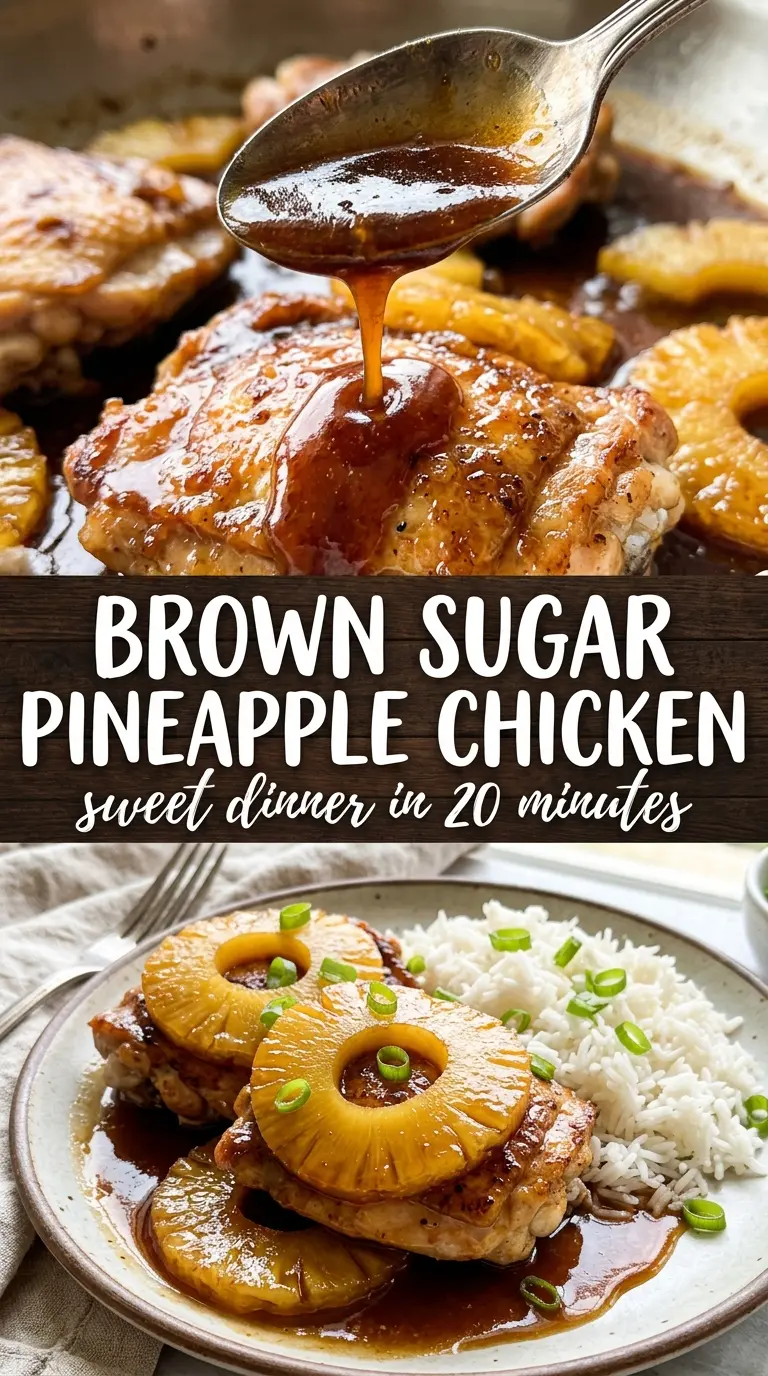
- Chicken breasts — They give you a lean base that browns well and soaks up the glaze without competing with it. If you want extra insurance against overcooking, slice very thick breasts in half horizontally so they cook more evenly.
- Pineapple juice — This is the backbone of the sauce. Fresh or canned both work, but skip anything with added sugar if you want the glaze to taste balanced instead of one-note sweet.
- Brown sugar — It deepens the glaze and helps it caramelize into that sticky finish. Light or dark brown sugar both work; dark brown sugar gives a stronger molasses note.
- Soy sauce and ketchup — Soy sauce brings salt and depth, while ketchup adds body and a little tang so the glaze tastes finished instead of flat.
- Ginger and garlic — These keep the sauce from tasting heavy. Fresh ginger is worth using here because it cuts through the sweetness in a way dried ginger just can’t match.
- Cornstarch slurry — This is what turns the sauce from thin and runny into something that clings. Arrowroot can stand in if needed, but keep the heat gentle once it goes in.
How to build the sauce so it coats instead of splitting
Seasoning and searing the chicken
Pat the chicken dry before it hits the skillet, then season it well with salt, pepper, garlic powder, and smoked paprika. The dry surface is what gives you a deep golden crust instead of pale, steamed chicken. Sear over medium-high heat in the olive oil until the first side releases cleanly and the second side is browned and the chicken reaches 165°F. If the pan is crowded, the chicken will steam and the glaze won’t have the same depth later.
Reducing the pineapple glaze
Use the same pan after the chicken comes out. Pour in the pineapple juice, brown sugar, soy sauce, ketchup, garlic, and ginger, then stir while the browned bits dissolve into the liquid. Bring it to a simmer, not a hard boil; aggressive heat can make the sugars catch on the pan before the sauce has a chance to reduce evenly. When it starts to look slightly syrupy around the edges, you’re in the right place.
Thickening and finishing the skillet
Stir in the cornstarch slurry and keep the sauce moving for 2 to 3 minutes until it turns glossy and lightly thick enough to leave a trail on the spoon. Add the pineapple chunks and return the chicken to the pan, turning everything through the glaze until each piece is coated. Let it cook for 2 more minutes so the chicken reheats and the sauce clings. If the glaze gets too tight, splash in a tablespoon of pineapple juice or water and loosen it gently.
How to adapt this when you need a different dinner
Use chicken thighs for a richer result
Boneless skinless thighs stay juicier and handle a little extra simmering better than breasts. You’ll get a deeper, more forgiving texture, but the final dish will be a touch richer and less lean.
Make it gluten-free without changing the sauce
Swap in gluten-free soy sauce or tamari and keep everything else the same. The glaze still thickens the same way, and the flavor stays salty-sweet with the same sticky finish.
Make it lower in sugar
Reduce the brown sugar to 2 tablespoons and let the pineapple juice do more of the sweetening. The glaze will be a little less dark and less candy-like, but it still reduces into a shiny sauce with plenty of flavor.
Turn it into a meal-prep dinner
Cook the chicken and glaze it as written, then portion it with rice while the sauce is still loose enough to spread. It reheats well because the glaze protects the chicken from drying out, but the pineapple chunks soften a bit after chilling, which is normal.
Storage and Reheating
- Refrigerator: Keep leftovers in an airtight container for up to 4 days. The glaze will thicken as it chills.
- Freezer: It freezes well for up to 2 months, though the pineapple pieces soften after thawing. Freeze in portions with some sauce so the chicken stays moist.
- Reheating: Warm gently in a skillet over low heat with a splash of water or pineapple juice. High heat can scorch the sugars and make the sauce sticky in the wrong way before the chicken warms through.
Answers to the questions worth asking
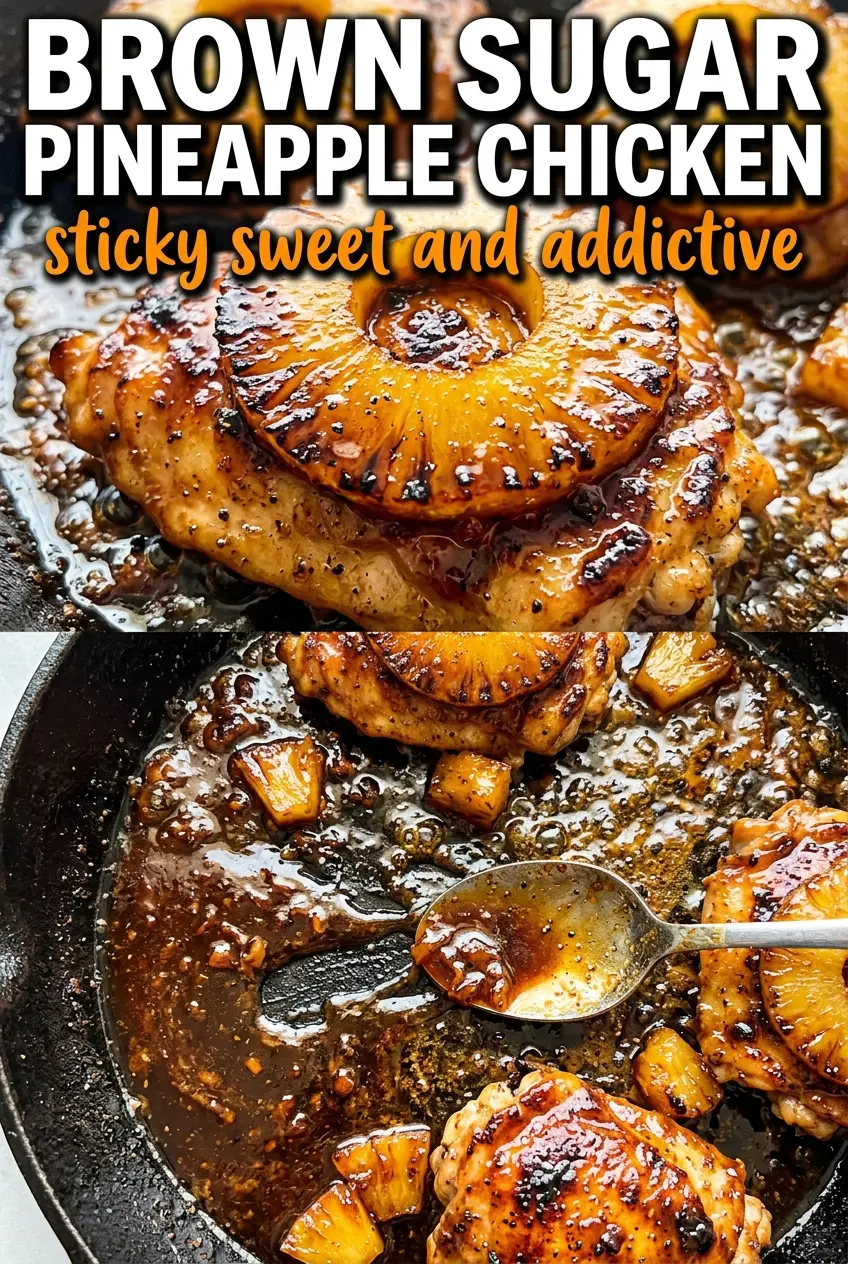
Brown Sugar Pineapple Chicken
Ingredients
Equipment
Method
- Season the chicken breasts with salt, pepper, garlic powder, and smoked paprika to taste. Let the chicken marinate 20 minutes while you prep the glaze ingredients.
- Heat olive oil in a large cast iron skillet over medium-high heat. Add the chicken and sear 5-6 minutes per side until golden and cooked through to 165°F, then remove to a plate.
- Whisk pineapple juice, brown sugar, soy sauce, ketchup, garlic, and ginger in the same pan. Bring to a simmer over medium heat.
- Stir in the cornstarch slurry (cornstarch mixed with water) and cook 2-3 minutes until the sauce thickens to a glaze. Add the pineapple chunks.
- Return the chicken to the pan and turn to coat in the glaze. Cook 2 more minutes to caramelize the glaze at the edges.
- Garnish with sesame seeds and sliced green onions. Serve over steamed rice.