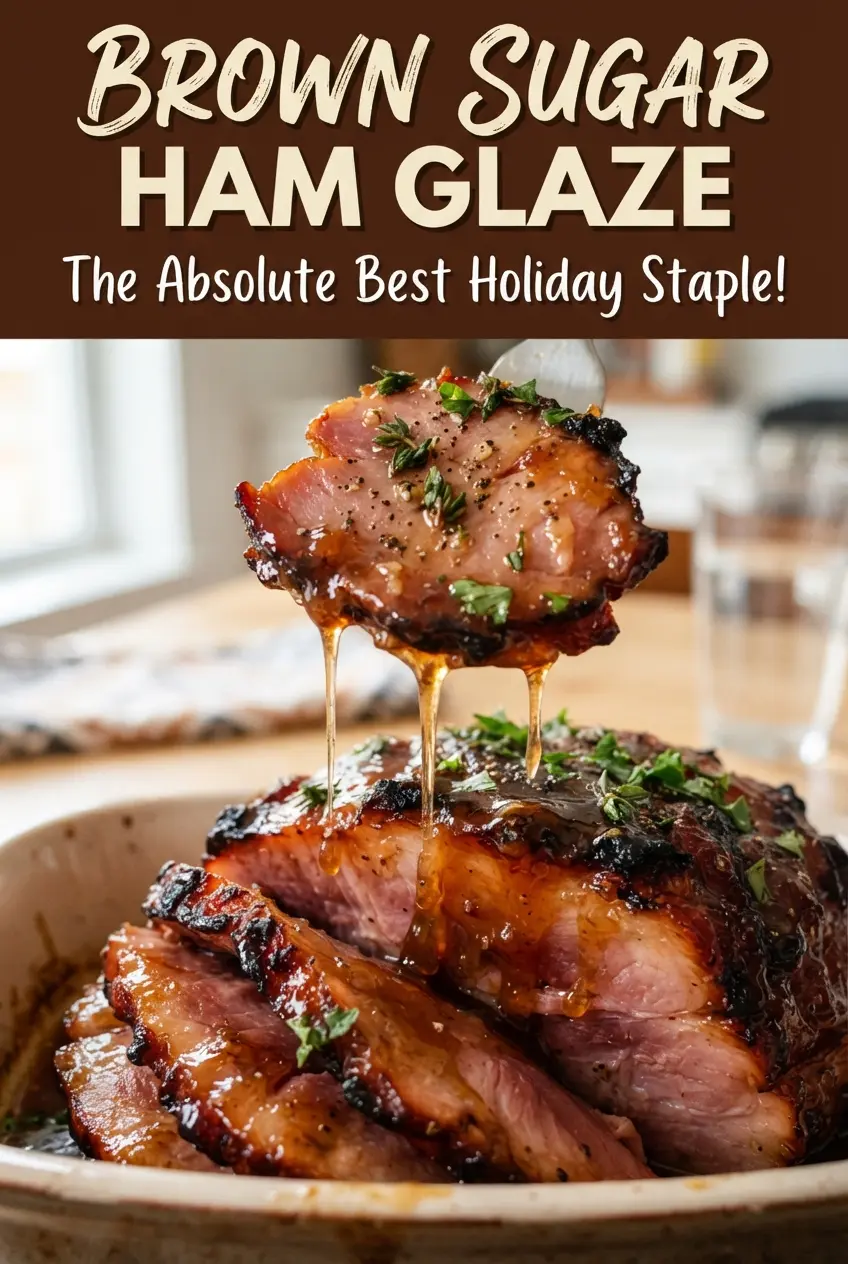
Brown sugar ham glaze turns a plain holiday ham into something glossy, sticky, and deeply caramelized at the edges. It clings to the scored surface, settles into the cuts, and finishes with that sweet-savory shine people always notice first when the ham comes to the table.
What makes this version work is the balance: brown sugar and honey give you body and shine, while Dijon and cider vinegar keep it from tasting flat or candy-like. Pineapple or orange juice adds enough acidity and fruitiness to lift the glaze without thinning it out too much, and the butter helps it brush on smoothly and stay supple as it bakes.
The part worth paying attention to is the simmer. You’re not boiling this hard; you’re dissolving the sugar and cooking it just long enough for the glaze to turn glossy and lightly syrupy. Below, I’ve included the timing that keeps the ham lacquered instead of burnt, plus the substitutions that still give you a proper glaze when you’re working with what’s in the pantry.
The glaze thickened up perfectly in about 4 minutes, and brushing it on every 10 minutes gave the ham that shiny, sticky finish without burning the sugar.
Save this brown sugar ham glaze for a glossy, sweet-savory finish on your holiday ham.
The Part That Keeps Brown Sugar Ham Glaze Glossy Instead of Grainy
The main mistake with ham glaze is rushing the sugar. If the heat is too high, the sugar can stay gritty or turn from glossy to sticky and harsh before it ever has a chance to melt smoothly. The goal is a simmer, not a boil, so the brown sugar dissolves cleanly and the honey and butter emulsify into one coherent sauce.
Another common failure is letting the glaze cook too long before it hits the ham. This isn’t a jam. It should coat a spoon and look shiny, but still stay brushable. Once it cools even a little, it thickens fast, which is exactly what you want on the ham and exactly why you don’t want to reduce it down until it turns syrup-thick in the pan.
- Brown sugar — This gives the glaze its body and that deep caramel note. Light or dark brown sugar both work, but dark brown sugar gives a richer molasses edge.
- Honey — Honey adds shine and helps the glaze cling to the ham. Maple syrup can stand in, but the flavor turns warmer and less classic.
- Juice — Pineapple juice gives a brighter, more traditional holiday ham flavor. Orange juice is a little softer and less tangy, which works well if you want the glaze to lean sweeter.
- Dijon mustard — This keeps the glaze from tasting one-note. Regular yellow mustard won’t give the same depth.
- Butter — Butter smooths out the glaze and helps it brush on evenly. Don’t skip it if you want that satin finish.
Building the Glaze So It Brushes On Cleanly
Melting the Sugar Base
Add the brown sugar, honey, juice, Dijon, butter, vinegar, cinnamon, and cloves to a saucepan over medium heat. Stir often as the butter melts and the sugar starts to disappear into the liquid. If the mixture looks grainy at first, that’s normal. Keep stirring until the granules are gone and the surface looks unified.
Letting It Simmer to the Right Thickness
Once the glaze starts to bubble, lower the heat just enough to keep a steady simmer. Let it go for 3 to 4 minutes, stirring now and then, until it turns glossy and slightly thicker. If it starts reducing aggressively, pull it off the heat; overcooked glaze can harden on the ham before it has time to lacquer the surface.
Glazing the Ham in Layers
Brush the glaze over a fully cooked ham during the last 30 minutes of baking, then repeat every 10 minutes. Each layer should look shiny and thin, not puddled. The repeated brushing builds that sticky outer coating without scorching the sugar, which is the mistake that turns a beautiful ham into a dark, bitter crust.
Serving the Finish
Spoon any remaining warm glaze over the sliced ham at the table. The slices catch the glaze differently than the whole ham, so this last spoonful matters. Warm glaze also loosens just enough to soak into the cut edges instead of sitting on top in a heavy layer.
How to Adapt This Glaze When You Need a Different Finish
Use orange juice for a brighter, softer glaze
Orange juice makes the glaze taste a little lighter and more citrus-forward, with less sharpness than pineapple juice. It’s a good choice if you want the ham to taste sweet and glossy without that extra tangy edge.
Make it dairy-free without changing the texture
This glaze is naturally close to dairy-free already, so the only swap you need is a dairy-free butter substitute if you’re avoiding butter. Use one that melts smoothly, because the fat helps the glaze stay glossy and brushable instead of thin and watery.
Swap in maple syrup for a deeper, earthier sweetness
Maple syrup works in place of honey if you want the glaze to taste a little darker and more woodsy. It won’t be quite as floral or sticky, but it does give the ham a richer finish that pairs nicely with cloves and cinnamon.
Storage and Reheating
- Refrigerator: Store leftover glaze in an airtight container for up to 1 week. It will thicken as it chills.
- Freezer: It freezes well for up to 2 months. Thaw it in the refrigerator overnight before reheating.
- Reheating: Warm it gently in a small saucepan over low heat or in short microwave bursts, stirring between each one. Don’t boil it again or the sugar can turn sticky and overly thick.
Answers to the Questions Worth Asking
Brown Sugar Ham Glaze
Ingredients
Equipment
Method
- Combine brown sugar, honey, pineapple or orange juice, Dijon mustard, butter, apple cider vinegar, ground cinnamon, and ground cloves in a saucepan.
- Bring the mixture to a simmer over medium heat, stirring until the sugar dissolves.
- Simmer for 3-4 minutes until slightly thickened and glossy.
- Brush the glaze over a fully cooked ham during the last 30 minutes of baking, every 10 minutes.
- Spoon the remaining warm glaze over sliced ham at the table.