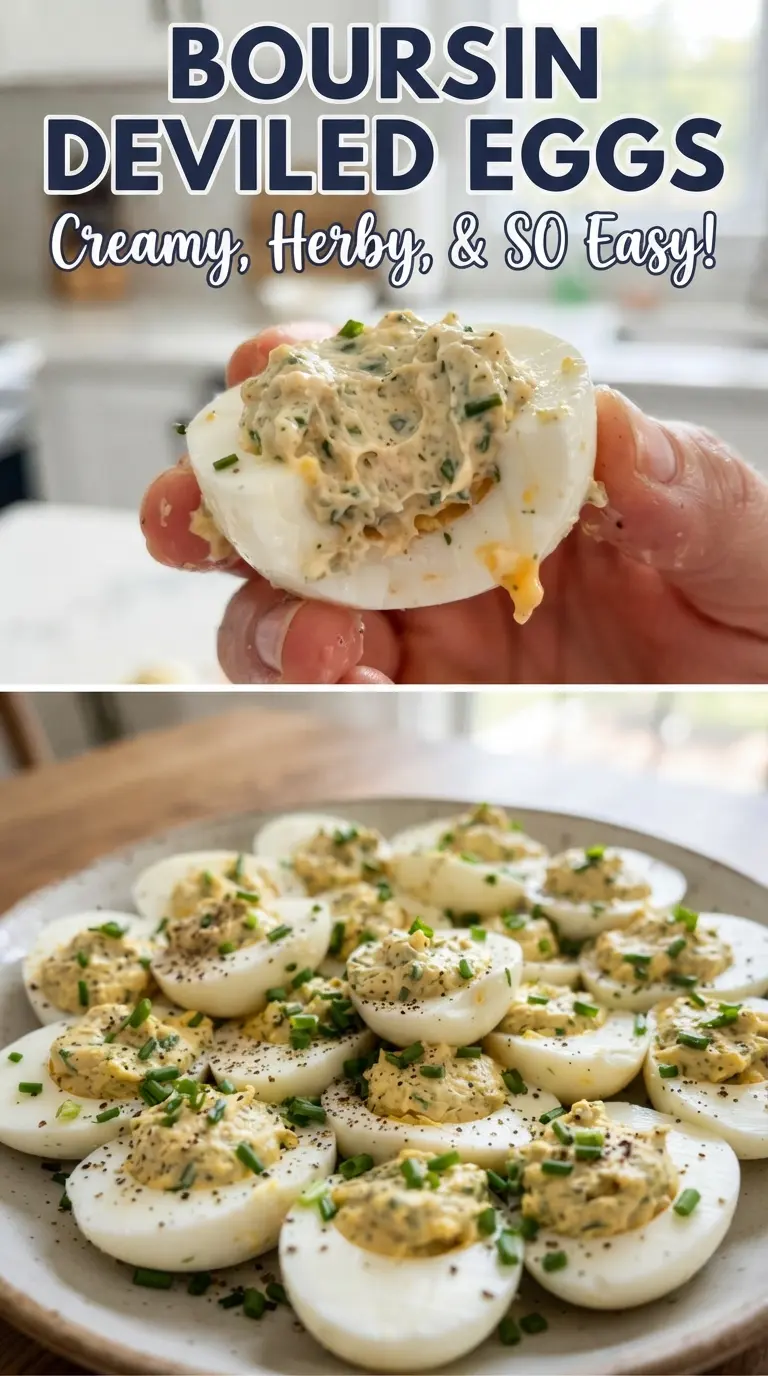
Boursin deviled eggs bring a softer, creamier filling than the classic version, with enough garlic and herbs to make each bite taste finished without needing much else. The texture is the first thing you notice: rich and smooth, but still light enough to pipe neatly into the whites. They look polished on a platter, and they disappear fast because the filling tastes more like a proper herbed spread than a heavy egg salad.
The key is in the balance. Boursin gives you the seasoning, the tang, and the creamy body, so the mayonnaise only has to round things out instead of carrying the whole filling. Dijon and lemon juice keep the richness from tasting flat, and a short chill after mixing helps the filling firm up enough to pipe clean rosettes. If the yolks are even a little warm, the mixture loosens and gets harder to shape.
Below, you’ll find the small details that make these deviled eggs easy to peel, smooth to fill, and worth making again. The garnish matters here too; fresh dill, chives, and black pepper give the eggs that fresh-from-the-platter finish.
The filling was silky and held its shape perfectly after chilling, and the Boursin gave it that herby garlic flavor without needing extra seasoning. I piped them for a brunch tray and they were gone in minutes.
Save these Boursin deviled eggs for the next brunch spread when you want a creamy, herby filling that pipes beautifully.
The Trick to Keeping the Filling Smooth Instead of Grainy
The filling goes wrong when the yolks are still warm or when the cheese is too cold to blend cleanly. Softened Boursin matters here because it melts into the yolks without leaving little lumps behind, and that gives you the plush, pipeable texture that makes these eggs stand out. If the mixture feels thick but slightly stiff, that’s good. If it looks oily or loose, the eggs were too warm and the mayonnaise is carrying more weight than it should.
The other thing that helps is how you handle the yolks after cooking. A full 10-minute ice bath stops the cooking and makes peeling easier, which matters because ragged whites never look as neat once they’re filled. Mash the yolks first, then add the cheese and liquids so everything has a chance to break down evenly.
- Boursin garlic and herb cheese — This is the ingredient doing the heavy lifting. It brings seasoning, fat, and a spreadable texture in one step, so the filling tastes layered without extra chopping. Let it soften fully at room temperature or it will resist blending and leave the filling slightly speckled.
- Mayonnaise — Use it to loosen the mixture just enough for piping. The amount here is modest on purpose, because too much mayo can flatten the herb flavor and make the filling slippery instead of creamy.
- Dijon mustard — Dijon adds sharpness that keeps the filling from tasting one-note. Yellow mustard works in a pinch, but it tastes brighter and less refined, so start with less and adjust if that’s what you have.
- Lemon juice — A small amount wakes up the cheese and yolks. Fresh lemon is best because bottled juice can taste dull, especially in a filling this simple.
What Each Ingredient Is Actually Doing in This Recipe
- Primary ingredient (the star) — Quality matters most. Choose the best you can find.
- Cooking medium (oil, butter, or broth) — This carries flavors and prevents dryness.
- Seasonings (salt, pepper, spices, herbs) — Layer flavors so nothing overpowers. Build depth gradually.
- Aromatics (garlic, onion, herbs) — Cook with fat to bloom flavors. Become the foundation.
- Supporting ingredients — Complement the main ingredient without overpowering it.
- Sauce or liquid (if applicable) — Brings flavors together. Balance richness with acid.
- Acid (lemon, vinegar, wine, or other) — Brightens and prevents flat-tasting results.
- Final finish (garnish, glaze, or sauce) — Prevents one-dimensional taste and adds visual appeal.
Building the Filling and Piping It Cleanly
Cooking the eggs without overcooking the yolks
Cover the eggs with cold water, bring the pot to a boil, then take it off the heat and cover it for 12 minutes. That method gives you set whites and yolks that stay tender instead of chalky. If you boil them hard the whole time, the yolks can turn dry and the green ring around the edge will show up. Move them straight into an ice bath for a full 10 minutes so the shells loosen and the centers stop cooking.
Mixing the filling until it looks like a thick spread
After peeling, halve the eggs lengthwise and pop the yolks into a bowl. Mash them first, then beat in the Boursin, mayonnaise, Dijon, lemon juice, salt, and pepper until the mixture looks smooth and fluffy. If you still see little bits of cheese, keep mixing; the filling should be silky enough to mound on a spoon. Taste before piping, since Boursin already brings salt and garlic and you may only need a little more pepper.
Piping the rosettes and finishing with herbs
Spoon the filling into a piping bag or a zip-top bag with the corner snipped off, then pipe into the egg whites in a steady swirl. Chill the filled eggs before serving so the tops set up and hold their shape. Finish with dill, chives, and cracked black pepper right before they hit the platter so the herbs stay bright and fresh-looking. If you garnish too early, the herbs can wilt and the pepper can sink into the filling.
How to Adapt These Eggs for Different Crowds and Dietary Needs
Dairy-Free Version
Swap the Boursin for a dairy-free garlic-and-herb spreadable cheese. The texture will still be creamy, but the flavor usually runs a little flatter than the original, so add a little extra Dijon and black pepper to sharpen it up. Chill the filling before piping, since some dairy-free spreads soften faster than the real thing.
Extra Tangy Brunch Style
Add an extra half teaspoon of lemon juice and a touch more Dijon if you want a brighter, sharper filling. This makes the eggs taste a little lighter and cuts through richer brunch dishes on the table. Don’t add too much acid at once or the filling can loosen and stop piping cleanly.
No Piping Bag Needed
Use a spoon and a small offset spatula if you don’t want to fuss with piping. The eggs will still taste the same, but the tops will look more rustic and the filling won’t have the same polished height. This is the better move when you’re making a big batch and want speed over presentation.
Storage and Reheating
- Refrigerator: Store covered for up to 2 days. The filling stays creamy, but the herb garnish looks best if added just before serving.
- Freezer: Don’t freeze deviled eggs. The whites turn rubbery and the filling separates after thawing.
- Reheating: These are meant to be served cold. If they’ve been refrigerated, let them sit out for 10 to 15 minutes before serving so the filling loses its chill and tastes fuller.
Questions I Get Asked About This Recipe

Boursin Deviled Eggs
Ingredients
Equipment
Method
- Place large eggs in a pot, cover with cold water, and bring to a boil; cover, remove from heat, and let stand 12 minutes. Visual cue: the water should reach a full boil before you turn off the heat.
- Chill the eggs in an ice bath for 10 minutes, then peel and halve lengthwise. Visual cue: shells should loosen easily after cooling.
- Beat the egg yolks with Boursin garlic and herb cheese, mayonnaise, Dijon mustard, lemon juice, and salt until smooth and creamy. Visual cue: the mixture should look uniform with no yellow streaks.
- Pipe the filling into the egg whites. Visual cue: the filling should be neat and generously mounded in each half.
- Top with fresh dill and chives for garnish and cracked black pepper. Visual cue: you should see visible green flecks and pepper specks on top.
- Chill until serving. Visual cue: the filling should be firm and cool when you plate them.