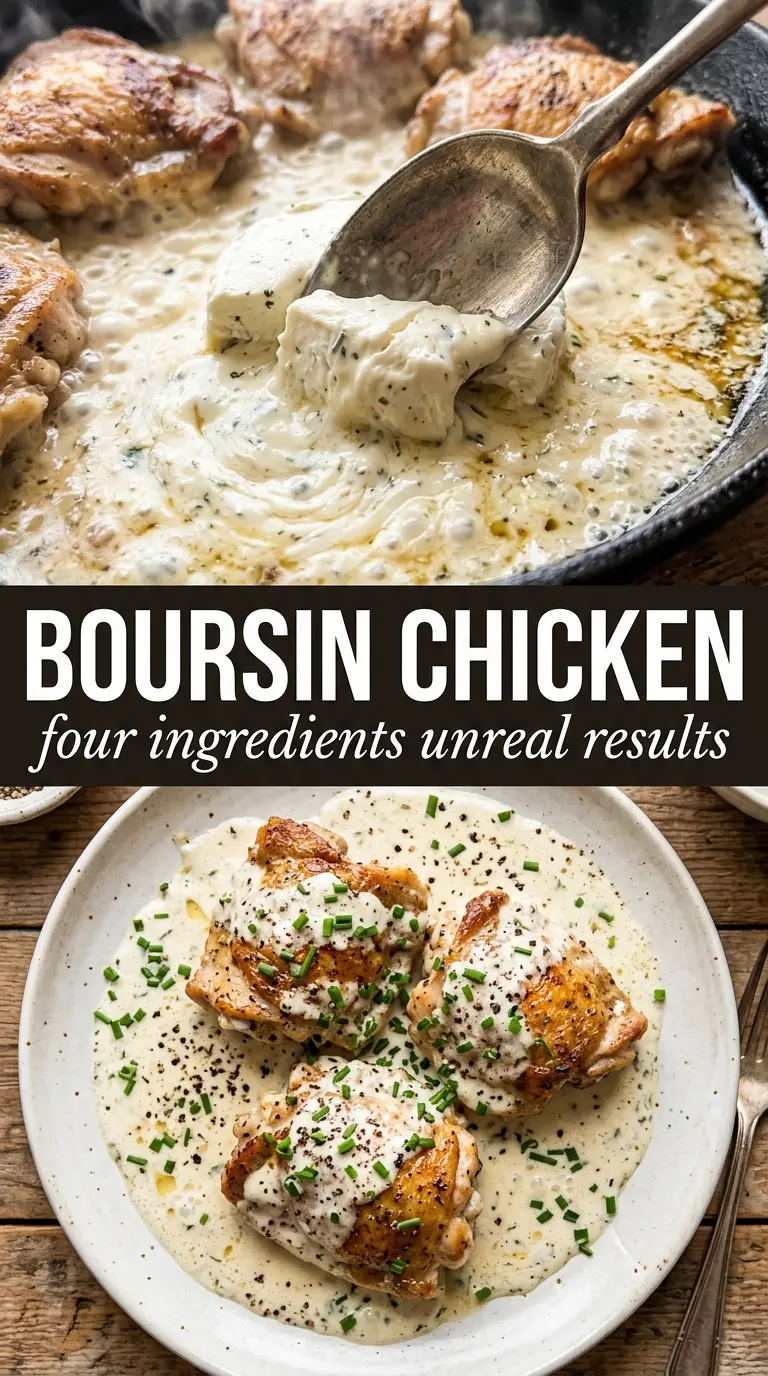
Golden-seared chicken breasts coated in a glossy Boursin cream sauce earn a spot in the regular dinner rotation fast. The sauce tastes layered and rich without needing a long list of ingredients, and it clings to the chicken instead of sliding off the plate. That balance matters: enough cream to feel luxurious, enough broth to keep the sauce from turning heavy, and just enough garlic and thyme to make every bite taste finished.
The trick is building the sauce in the same skillet after the chicken comes out. Those browned bits on the bottom dissolve into the wine or broth and give the sauce its depth, while the Boursin melts into a smooth base that doesn’t need flour to thicken. A short simmer after the cream goes in is enough to bring everything together, and the chicken goes back in only at the end so it stays juicy.
Below you’ll find the exact timing that keeps the sauce silky, the ingredient swaps that still work, and a few practical fixes for when the cheese softens faster than expected.
The sauce turned out silky and coated the chicken perfectly, and the thyme made it taste like something from a nice restaurant without any fuss.
Save this Boursin chicken for the nights when you want a creamy herb sauce that comes together in one skillet.
The Part That Keeps the Sauce From Turning Grainy
The Boursin goes into warm broth, not screaming-hot cream. That order matters because the cheese melts cleanly when it has liquid around it, and the broth gives you enough room to whisk without the sauce seizing on contact. If you dump the cheese straight into hot cream, it can clump before it has a chance to dissolve evenly.
The other thing worth respecting is the sear on the chicken. You want a deep golden crust before the chicken comes out of the pan, because that color is what gives the sauce its savory backbone. If the pan looks dry or pale, the finished dish tastes flatter no matter how good the cheese is.
- Boursin garlic and herb cheese — This is the heart of the sauce, so use the full package. The soft cheese melts into a creamy base that tastes built-in, not added at the end. If you have to substitute, use another soft herb cheese, but expect a slightly different garlic level and a less defined herb finish.
- Dry white wine or chicken broth — Wine gives the sauce a sharper, brighter edge, while broth keeps it gentler and family-friendly. Either one works, but if you use broth only, add a tiny squeeze of lemon at the end if the sauce tastes too soft or one-note.
- Heavy cream — This rounds out the cheese sauce and helps it stay glossy. Half-and-half can work in a pinch, but the sauce will be thinner and a little less stable when it simmers. Don’t use milk here unless you’re fine with a looser finish.
- Fresh thyme — Fresh thyme keeps the sauce from tasting heavy. Dried thyme can work, but use less and crush it between your fingers before adding it so the flavor opens up. The fresh garnish matters too; it gives the plate a clean, aromatic finish.
- Chicken breasts — Boneless, skinless breasts stay lean and slice cleanly under the sauce. If yours are thick, pound them to an even thickness so they cook at the same rate. Uneven chicken is the main reason people end up with dry edges and an undercooked center.
What Each Ingredient Is Actually Doing in This Recipe
- Primary ingredient (the star) — Quality matters most. Choose the best you can find.
- Cooking medium (oil, butter, or broth) — This carries flavors and prevents dryness.
- Seasonings (salt, pepper, spices, herbs) — Layer flavors so nothing overpowers. Build depth gradually.
- Aromatics (garlic, onion, herbs) — Cook with fat to bloom flavors. Become the foundation.
- Supporting ingredients — Complement the main ingredient without overpowering it.
- Sauce or liquid (if applicable) — Brings flavors together. Balance richness with acid.
- Acid (lemon, vinegar, wine, or other) — Brightens and prevents flat-tasting results.
- Final finish (garnish, glaze, or sauce) — Prevents one-dimensional taste and adds visual appeal.
How to Build the Sauce Around the Sear
Seasoning and Searing the Chicken
Season the chicken on both sides with salt, pepper, and garlic powder, then lay it into a hot skillet with the olive oil. You want steady sizzling right away; if the pan is too cool, the chicken will stew before it browns. Leave it alone long enough to develop a crust, then turn it once and cook until the internal temperature reaches 165°F. Pull it out to a plate and let the pan keep all those browned bits.
Softening the Garlic Without Burning It
Add the garlic to the same pan and stir it for about 30 seconds, just until it smells fragrant. Garlic burns fast in a dry skillet, and burned garlic makes the whole sauce taste bitter. If the pan looks too hot, take it off the burner for a moment before the garlic goes in. That brief pause saves the sauce.
Deglazing and Melting the Cheese
Pour in the wine or broth and scrape the bottom of the pan until the fond dissolves. Let it simmer for a minute or two so the sharp edge of the wine cooks off, then add the Boursin and stir until the sauce looks smooth and pale. The cheese should melt into the liquid, not sit on top in little soft patches. If it looks greasy or broken, the heat is too high.
Finishing the Cream Sauce
Stir in the heavy cream and thyme, then let the sauce bubble gently until it thickens enough to coat the back of a spoon. Keep the heat modest. A hard boil can split the dairy and make the sauce look grainy. Once it has that glossy, pourable texture, return the chicken to the skillet and spoon sauce over the top so the meat warms through without overcooking.
How to Adapt Boursin Chicken Without Losing the Creamy Finish
Make It Gluten-Free Without Changing the Method
This recipe is naturally gluten-free as written, as long as your broth is certified gluten-free. The sauce thickens from reduction and dairy, not flour, so you don’t lose anything by keeping it that way.
Use Chicken Thighs for a Richer Dinner
Boneless thighs give you more forgiveness and a deeper savory flavor. They take a few minutes longer than breasts, but they stay tender even if you let them sit in the sauce for a bit before serving.
Skip the Wine and Keep It Family-Friendly
Chicken broth works well in place of white wine. The sauce will be a touch softer and less sharp, so let the broth reduce for an extra minute before adding the Boursin to concentrate the flavor.
Stretch It for Pasta or Mashed Potatoes
If you want more sauce for serving over starches, add another splash of broth and a little extra cream after the cheese melts. The tradeoff is a looser sauce, so let it simmer a minute longer before the chicken goes back in.
Storage and Reheating
- Refrigerator: Store leftovers in a covered container for up to 3 days. The sauce will thicken as it chills, which is normal.
- Freezer: It can be frozen, but the cream sauce may separate a little when thawed. For the best texture, freeze only if you need to; the chicken holds up better than the sauce.
- Reheating: Reheat gently on the stovetop over low heat with a splash of broth or cream, stirring often. High heat is the fastest way to make the sauce break, especially after refrigeration.
Answers to the Questions Worth Asking

Boursin Chicken
Ingredients
Equipment
Method
- Season the boneless skinless chicken breasts with salt, pepper, and garlic powder to taste, then sear in olive oil in a large skillet over medium-high heat for 5-6 minutes per side until golden and the internal temperature reaches 165°F; remove the chicken to a plate.
- Cook the garlic in the same skillet for 30 seconds, then deglaze with the dry white wine and cook for 2 minutes.
- Pour in the chicken broth, bring to a simmer, and add the Boursin garlic and herb cheese, stirring until completely melted and smooth.
- Stir in the heavy cream and fresh thyme leaves, then simmer for 3-4 minutes until the sauce thickens slightly.
- Return the chicken to the skillet and spoon the Boursin sauce over each breast.
- Garnish with fresh thyme for garnish and serve over mashed potatoes or pasta.