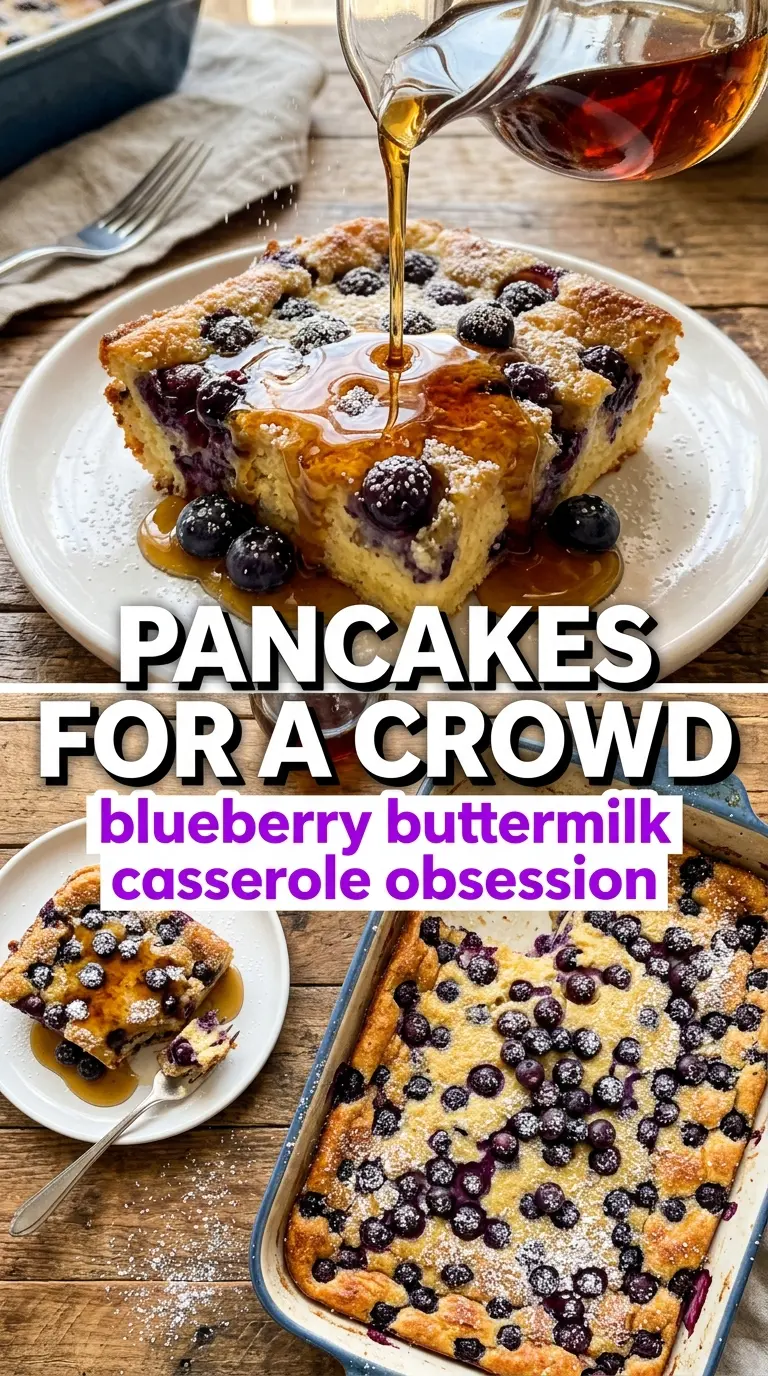
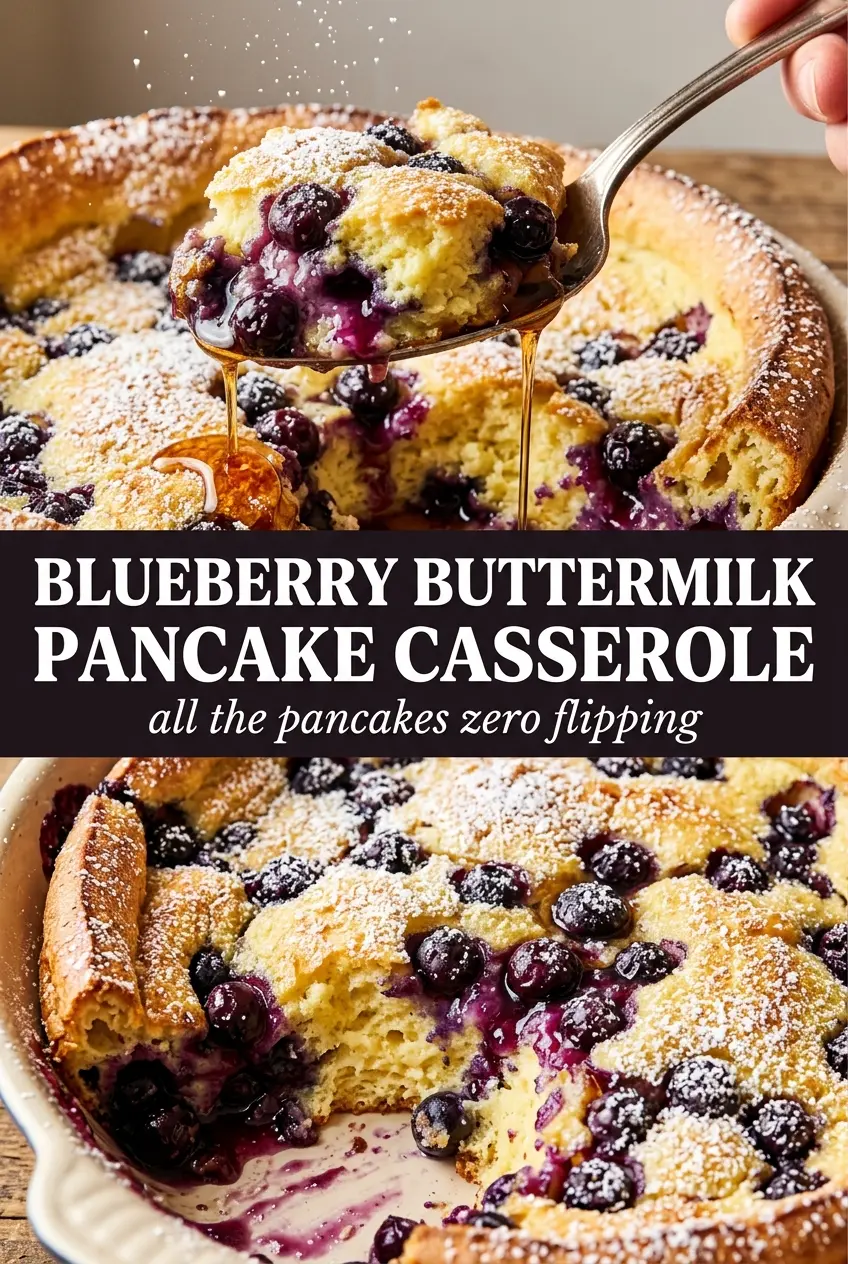
Blueberry buttermilk pancake casserole gives you everything people love about a stack of pancakes without standing at the stove flipping batch after batch. The top bakes up golden and lightly crisp at the edges, the center stays tender, and the blueberries burst into little pockets of jammy sweetness as it bakes. Cut into squares, it eats like the best part of a diner breakfast, only easier to serve to a table full of hungry people.
The trick is treating the batter like pancakes, not quick bread. Buttermilk brings tang and tenderness, while baking soda and baking powder work together to lift the casserole enough that it turns fluffy instead of dense. I also like scattering the blueberries over the top instead of folding them all through the batter; that keeps the crumb from turning streaky and gives you those bright berry bursts in every slice.
Below, I’ll walk through the one step that keeps the texture light, how to use fresh or frozen blueberries without watering the batter down, and a few ways to adapt this for different mornings. It’s the kind of breakfast bake that disappears fast, so it’s worth knowing how to make it hold up on the second helping too.
The middle came out fluffy and set perfectly, and the blueberries stayed juicy without making the whole pan soggy. I loved that I could bake it once and cut it into clean squares for everyone.
Like this blueberry buttermilk pancake casserole? Save it for the mornings when you want fluffy baked pancakes with crisp edges and juicy berries, all from one pan.
The Small Batter Mistake That Makes Pancake Casserole Heavy
The biggest problem with pancake casserole is overmixing. Once flour meets liquid, gluten starts developing, and if you beat the batter smooth you end up with a pan that eats more like breakfast cake than pancakes. Stir just until the dry spots disappear and stop there; the batter should look a little rough.
The other issue is oven timing. Pancake batter needs enough heat to set the center without drying out the edges. At 375°F, this casserole has enough oven power to rise and brown, but not so much that the top scorches before the middle finishes. You want a top that springs back when you touch it lightly and a center that no longer looks wet in the middle.
What Each Ingredient Is Actually Doing in This Recipe
- Primary ingredient (the star) — Quality matters most. Choose the best you can find.
- Cooking medium (oil, butter, or broth) — This carries flavors and prevents dryness.
- Seasonings (salt, pepper, spices, herbs) — Layer flavors so nothing overpowers. Build depth gradually.
- Aromatics (garlic, onion, herbs) — Cook with fat to bloom flavors. Become the foundation.
- Supporting ingredients — Complement the main ingredient without overpowering it.
- Sauce or liquid (if applicable) — Brings flavors together. Balance richness with acid.
- Acid (lemon, vinegar, wine, or other) — Brightens and prevents flat-tasting results.
- Final finish (garnish, glaze, or sauce) — Prevents one-dimensional taste and adds visual appeal.
What the Buttermilk and Blueberries Are Each Bringing to the Pan
- Buttermilk — This is what gives the casserole that familiar tang and tenderness. If you substitute milk, the result will taste flatter and the crumb won’t be as soft. In a pinch, use 2 cups milk mixed with 2 tablespoons lemon juice or vinegar, then let it sit 5 minutes before mixing.
- Baking soda and baking powder — This combo gives you lift and helps the batter brown properly. Baking soda reacts with the buttermilk, while baking powder gives the casserole extra rise in the oven. Don’t swap one for the other here.
- Butter, melted — Melted butter keeps the texture rich and helps the edges turn golden. Let it cool slightly before adding it to the wet ingredients so it doesn’t scramble the eggs. Neutral oil works in a pinch, but you lose that buttery flavor.
- Blueberries — Fresh or frozen both work. If you use frozen berries, add them straight from the freezer; thawing first leaks juice into the batter and can make the top uneven. Scattering them over the surface instead of stirring them through helps the casserole bake evenly.
Building the Batter, Then Letting the Oven Do the Pancake Work
Mixing the Dry Ingredients First
Whisk the flour, sugar, baking powder, baking soda, and salt together until the mixture looks even. This does more than combine everything; it spreads the leaveners through the flour so the casserole rises consistently instead of puffing in patches. If you see clumps of baking powder later in the finished bake, it usually means the dry ingredients weren’t mixed well enough at the start.
Bringing the Wet Ingredients Together
In a separate bowl, whisk the buttermilk, eggs, melted butter, and vanilla until the mixture looks smooth and evenly colored. The butter should be warm but not hot, or it can create tiny bits of cooked egg when it hits the colder dairy. A smooth wet mixture makes it easier to combine everything quickly without overworking the batter.
Stopping the Mix at the Right Moment
Pour the wet mixture into the dry ingredients and stir just until no dry flour remains. The batter should look thick and a little lumpy; that’s what you want. If you keep stirring until it’s glossy and completely smooth, the casserole will lose the light pancake texture and bake up tougher around the edges.
Baking Until the Center Sets
Spread the batter into a greased 9×13 dish, scatter the blueberries over the top, and bake until the center is set and the top is golden. The casserole is done when the middle no longer jiggles like liquid and the surface springs back lightly when touched. If the edges are browning too quickly before the center is done, lay a loose piece of foil over the top for the last few minutes.
Make it dairy-free
Use a thick unsweetened non-dairy milk with 2 tablespoons lemon juice or vinegar stirred in, then let it stand for 5 minutes before mixing. You’ll lose a little of buttermilk’s tang, but the texture still bakes up tender if the milk is not too thin.
Make it gluten-free
Swap in a 1:1 gluten-free baking flour blend that includes xanthan gum. The batter may need an extra minute or two in the oven, and the crumb will be a little more delicate, but it still slices cleanly once cooled for 10 minutes.
Make it lemony
Add 1 tablespoon lemon zest to the dry ingredients for a brighter finish that plays well with the berries. It keeps the casserole tasting fresh without changing the texture, and a little extra maple syrup on top balances the citrus.
Storage and Reheating
- Refrigerator: Store leftovers covered for up to 4 days. The top softens a little, but the casserole stays moist.
- Freezer: Freeze baked squares tightly wrapped for up to 2 months. Thaw overnight in the fridge for the best texture.
- Reheating: Warm slices in a 325°F oven or toaster oven until heated through. The microwave works, but it softens the edges fast, so use short bursts if you want to keep a little texture.
Answers to the Questions Worth Asking
Blueberry Buttermilk Pancake Casserole
Ingredients
Equipment
Method
- Preheat the oven to 375°F and grease a 9x13 baking dish with a light coating so the pancake bake releases easily.
- Whisk all-purpose flour, sugar, baking powder, baking soda, and salt together in a bowl until evenly combined.
- Whisk buttermilk, large eggs, melted butter, and vanilla extract until smooth, then stir into the dry ingredients until just combined with no visible dry flour.
- Pour the batter into the prepared dish and scatter fresh or frozen blueberries evenly across the top so they bake into the golden surface.
- Bake for 35–40 minutes at 375°F until the center is set and the top is golden and lightly springy when touched.
- Dust with powdered sugar, slice into squares, and serve immediately with warm maple syrup drizzled across the top.