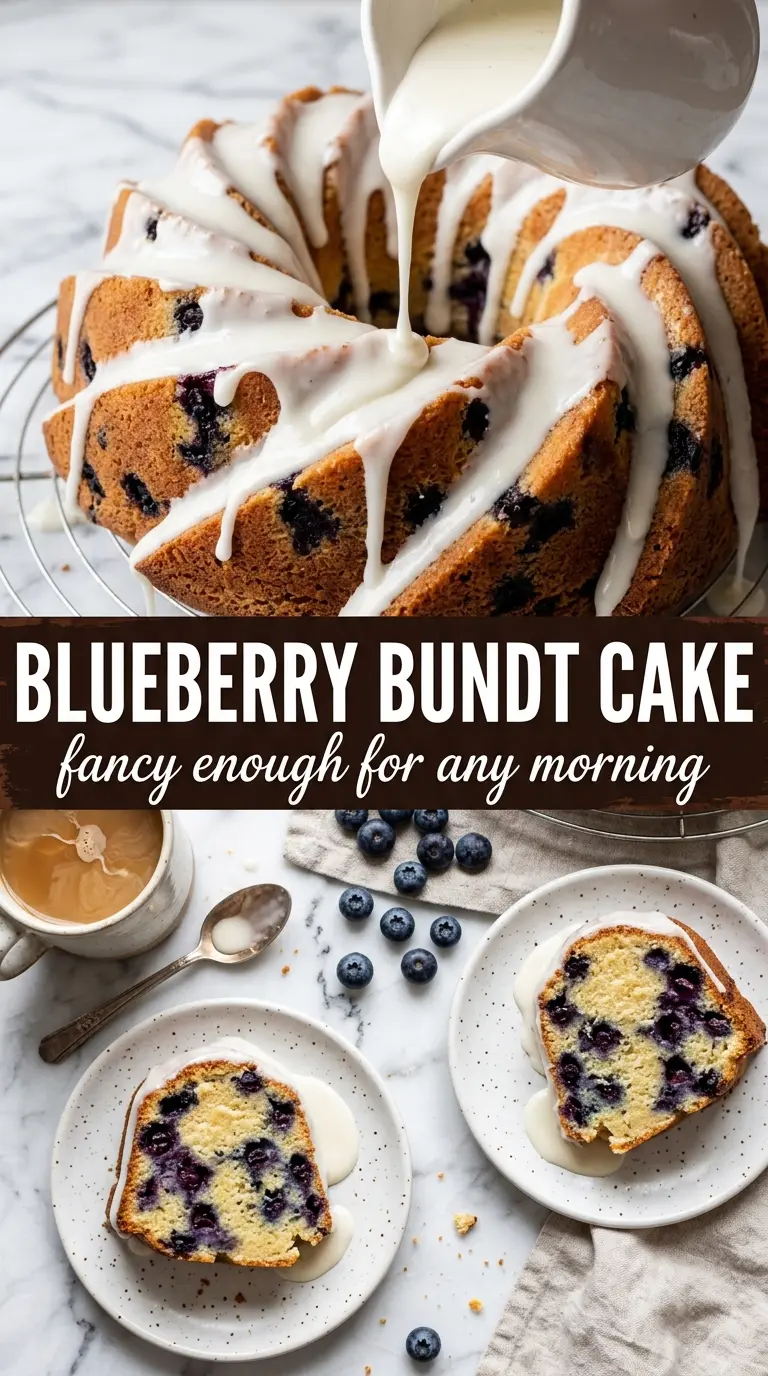
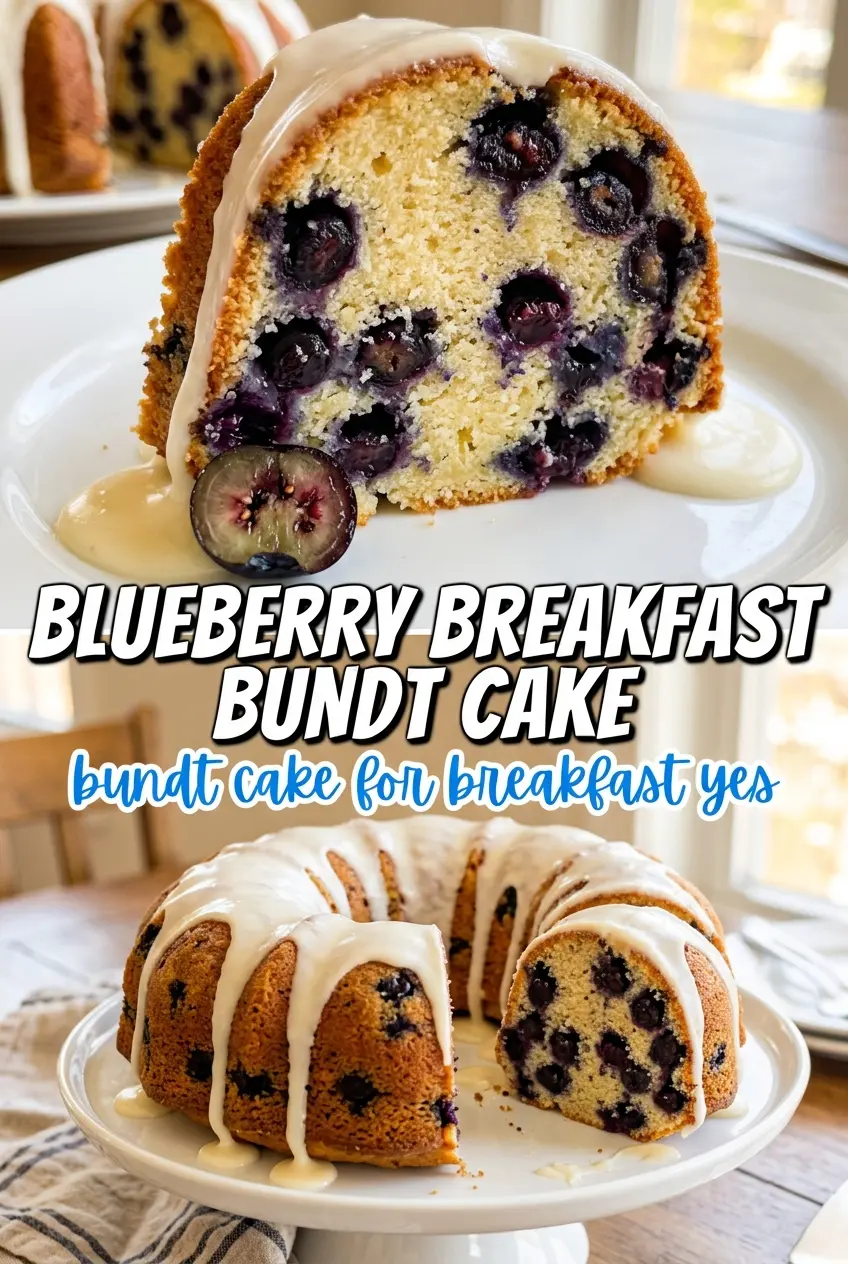
Blueberry Breakfast Bundt Cake bakes up with a tender crumb, juicy pockets of fruit, and a lemon glaze that settles into every ridge of the pan. It’s the kind of cake that looks special on the table but still feels at home next to a cup of coffee on a quiet morning. The batter stays soft without turning heavy, and the berries hold their shape instead of disappearing into purple streaks.
The trick is in the balance. Sour cream keeps the crumb plush, while the lemon zest lifts the whole cake so it tastes bright, not flat. Tossing the blueberries with a little flour helps them stay suspended through the batter, and the bundt pan does the rest, giving you those clean edges and that pretty finished shape without any extra work.
Below, I’ve included the one step that keeps the cake from sticking, along with the glaze ratio I use when I want a thick drizzle that sets instead of running off the sides. If you’ve ever had a bundt cake break apart on the way out of the pan, this version will help you avoid that mess.
The cake released cleanly from the pan and the blueberries stayed evenly distributed all the way through. The lemon glaze thickened up just enough to cling to the ridges without sliding off.
Keep this blueberry breakfast bundt cake handy for a brunch cake with soft crumb, lemon glaze, and berries in every slice.
The Reason This Bundt Cake Stays Tender Instead of Dry
A lot of bundt cakes go dry because the batter gets overmixed after the flour goes in, or because the pan is baked a little too long in the center. This one avoids both problems by leaning on sour cream for moisture and by stopping the mixing the moment the flour disappears. The cake should look set at the edges, spring back lightly when touched, and still have a few moist crumbs on the tester when it comes out.
Blueberries can also sink if the batter is too loose. Coating them with flour gives them a little grip, and the thick batter helps keep them where they belong. That means you get a neat slice with berries throughout instead of a fruit layer hiding at the bottom of the pan.
What the Sour Cream, Lemon, and Blueberries Are Each Doing Here
- Sour cream — This is the ingredient that keeps the crumb soft and plush without making the cake feel wet or heavy. Plain full-fat Greek yogurt works in a pinch, but the cake will be a little tangier and slightly less rich.
- Lemon zest — The zest adds the bright note that keeps the cake from tasting flat. Fresh zest matters here; bottled juice won’t give you the same lift.
- Blueberries — Fresh berries hold their shape best and give cleaner pockets of fruit. If you use frozen blueberries, don’t thaw them first or they’ll streak the batter and soften too much before the cake sets.
- Butter — Softened butter helps create that classic bundt cake texture when it’s beaten with the sugar until pale and fluffy. If it’s too cold, the batter won’t aerate properly and the cake will bake up denser.
- Powdered sugar and lemon juice — The glaze should be thick enough to cling to the ridges. Add the lemon juice slowly so you can stop at a pourable, spoonable consistency instead of a thin drizzle that disappears into the cake.
Building the Batter and Baking It Through Without Losing the Fruit
Creaming the Butter and Sugar
Beat the butter and sugar until the mixture looks pale and fluffy, not just combined. That step traps air and gives the cake its lift, which matters in a dense pan like a bundt. Add the eggs one at a time so the batter stays smooth; if it looks slightly curdled after the last egg, the flour will pull it back together.
Adding the Wet Ingredients
Mix in the vanilla, lemon zest, and sour cream until the batter looks glossy and even. The sour cream should disappear into the mixture, not sit in streaks. If the bowl looks broken at this point, keep going for a few more turns before reaching for the flour.
Folding in the Dry Ingredients and Berries
Stir the flour, baking powder, baking soda, and salt in just until no dry patches remain, then fold in the floured blueberries with a light hand. Overmixing now is what makes the cake tough, and rough stirring can crush the berries. The batter will be thick, and that’s exactly what you want.
Baking and Releasing the Cake
Pour the batter into a generously greased and floured bundt pan, then bake until the top is golden and a tester comes out clean or with a few moist crumbs. Let the cake rest in the pan for 15 minutes before turning it out; if you wait too long, the sugars can glue the cake to the pan. Cool it completely before adding the glaze so it stays thick and glossy instead of melting off.
How to Change This Cake for the Pantry You Have
Use frozen blueberries when fresh aren’t available
Frozen blueberries work well here, but keep them frozen until the moment they go into the batter. Toss them with flour straight from the freezer so they don’t bleed as much color, and expect the cake to need a couple extra minutes in the oven.
Make it dairy-free without losing the structure
Use a good plant-based butter and a thick dairy-free yogurt in place of the sour cream. The cake will still be tender, though the crumb will be a little less rich and the flavor slightly lighter.
Skip the glaze and turn it into a less-sweet breakfast cake
Leave off the lemon glaze and dust the cooled cake with powdered sugar instead. That keeps the lemon flavor bright and gives you a more restrained finish for a morning table.
Storage and Reheating
- Refrigerator: Store covered for up to 5 days. The crumb stays moist, though the glaze will soften a little.
- Freezer: This cake freezes well without the glaze. Wrap slices tightly and freeze for up to 2 months, then glaze after thawing if you want the best texture.
- Reheating: Warm individual slices for 10 to 15 seconds in the microwave or briefly in a low oven. Don’t overheat it or the butter in the crumb will make the cake feel dry.
Questions I Get Asked About This Recipe
Blueberry Breakfast Bundt Cake
Ingredients
Equipment
Method
- Preheat the oven to 350°F, then generously grease and flour a 10-cup bundt pan so every ridge releases cleanly after baking.
- Beat the softened butter and sugar until light and fluffy, scraping the bowl as needed for an even texture.
- Add the eggs one at a time, mixing until each egg is fully incorporated before adding the next.
- Mix in the vanilla extract, then add the lemon zest and blend just until the batter looks uniform.
- Mix in the sour cream until smooth, keeping the batter thick and cohesive.
- Add the all-purpose flour, baking powder, baking soda, and salt, then fold until just combined so the cake stays tender.
- Gently fold in the floured blueberries, stopping as soon as they’re evenly distributed to prevent crushing.
- Pour the batter into the prepared bundt pan, filling the center and smoothing the top for even baking.
- Bake at 350°F for 45–55 minutes, until a toothpick inserted in the center comes out clean with no wet batter.
- Cool the cake in the pan for 15 minutes so it firms up, then invert onto a rack or plate.
- Drizzle the lemon glaze over the completely cooled cake, letting thick rivulets fall down the ridges for the signature glazed bundt cake look.