Black Pepper Chicken hits the table with glossy sauce, tender chicken, and just enough heat to keep every bite interesting. The pepper doesn’t just sit on top here; it blooms in the sauce and clings to the chicken and vegetables, which is what makes this version taste bold instead of flat. Served over rice, it has that takeout-style comfort people go back to again and again.
What makes this recipe work is the order. The chicken gets a hard, fast stir-fry first so it browns instead of steaming, then the vegetables stay crisp-tender so they still have some life under the sauce. The cornstarch slurry goes in at the end, after the sauce has had a chance to coat everything, which keeps it glossy instead of gluey. Freshly cracked black pepper matters here more than pre-ground because it brings sharp heat and a little texture.
Below you’ll find the small details that keep the sauce from turning watery, plus the best swap if you want to use chicken thighs instead of breast. It’s a simple dish, but the little choices make a big difference.
The sauce thickened right at the end and coated the chicken instead of pooling in the bowl. I used extra black pepper like suggested, and it tasted just like the takeout version my husband always orders.
Save this black pepper chicken for the nights when you want glossy takeout-style sauce, tender chicken, and crisp peppers over rice.
The Secret to Keeping the Pepper Sauce Glossy, Not Gloopy
The mistake most people make with black pepper chicken is cooking the sauce too long after the cornstarch goes in. Once the slurry is added, the sauce needs just enough heat to turn shiny and clingy; if it boils hard for too long, it can go past glossy and start looking thick, dull, and a little pasty. That’s why the chicken and vegetables are already cooked before the final toss. The sauce should finish in the pan, not simmer there like a stew.
High heat matters at the start, too. If the pan isn’t hot enough when the chicken goes in, it will sit and release liquid instead of browning. That liquid then dilutes the sauce later, which is why a lot of homemade stir-fries taste more steamed than seared. Work in batches if your pan is crowded, and don’t stir constantly at the beginning. Let the chicken make contact with the pan and take on a little color.
What the Sauce Ingredients Are Doing Here
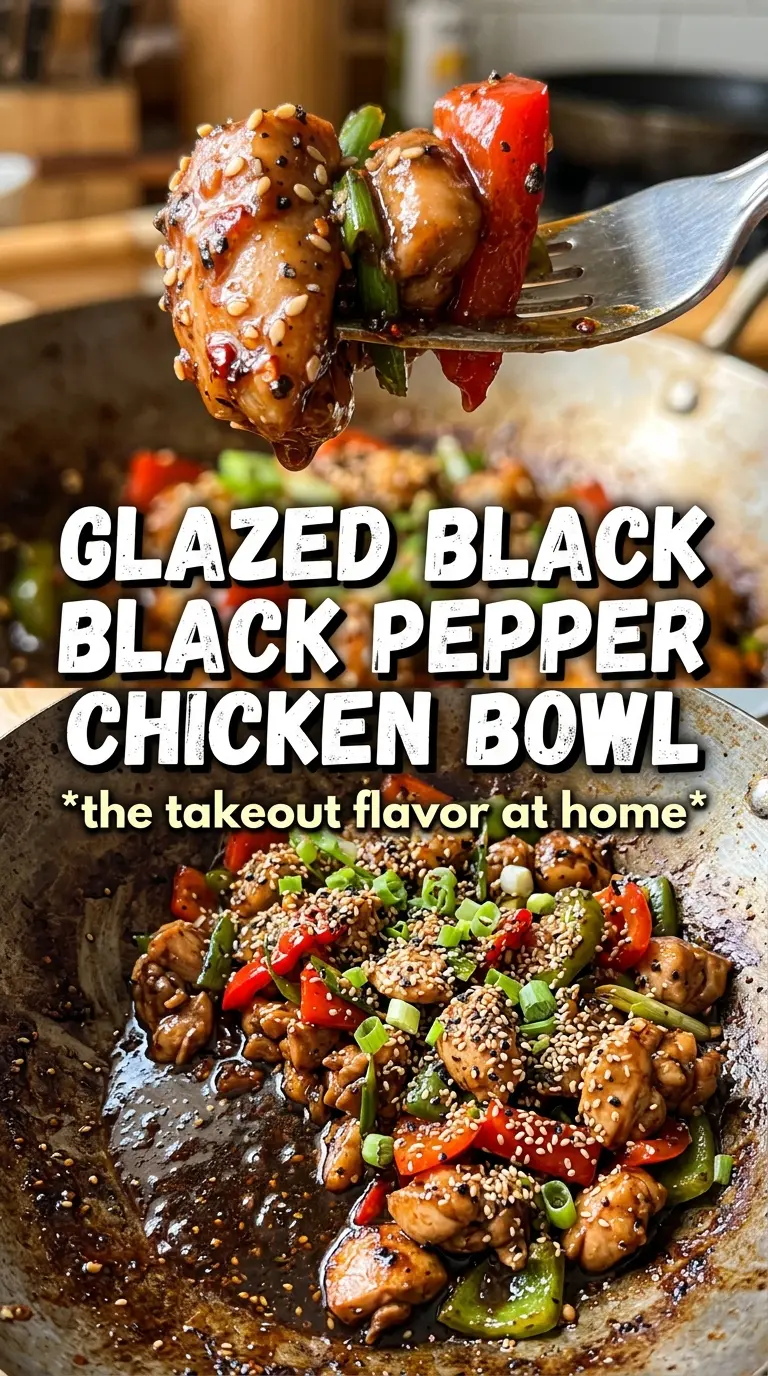
- Chicken breast — Sliced thin, it cooks fast and stays tender as long as you don’t overcook it. Chicken thighs will work too if you want a little more richness and forgiveness; just give them an extra minute or two in the pan.
- Freshly cracked black pepper — This is the point of the dish, so don’t swap in a tiny amount of pre-ground pepper and expect the same result. Fresh cracks taste sharper and more aromatic, and they hold up better once they hit the hot sauce.
- Dark soy sauce — It gives the sauce that deep color and round, almost molasses-like edge. If you don’t have it, use a little more regular soy sauce, but the sauce will be lighter and less dramatic.
- Oyster sauce — This brings body and a savory sweetness that soy sauce alone can’t replace. It helps the sauce coat the chicken instead of tasting thin.
- Cornstarch — Mixed with water first, it thickens the sauce quickly and evenly. If you dump it straight into the pan, it can clump and leave little starchy bits behind.
- Ginger and garlic — These go in after the vegetables so they don’t scorch. Burnt garlic turns bitter fast, and that bitterness will fight the pepper instead of backing it up.
The Fast Stir-Fry Sequence That Gives You Real Color
Whisk the sauce before the pan gets hot
Mix the soy sauce, oyster sauce, dark soy sauce, brown sugar, black pepper, cornstarch, and water in a bowl before you start cooking. Stir it until the cornstarch disappears and set it aside, because stir-frying moves fast once the wok is hot. If you wait to mix the sauce while the chicken is already in the pan, you’ll overcook something while you fumble for the whisk.
Brown the chicken in a hot pan
Heat the oil over high heat and add the sliced chicken in a single layer, working in batches if needed. You’re looking for light browning on the edges and no raw sheen in the center. If the pan gets crowded, the chicken will steam and turn pale, which is the fastest way to lose the savory base this dish depends on.
Cook the vegetables until they still have bite
Add the bell pepper and onion next and stir-fry them for about 3 minutes. They should soften slightly and pick up some browned spots, but they should still have structure so the final dish isn’t soft all the way through. Garlic and ginger only need about a minute; once you smell them bloom, move on before they darken.
Finish the sauce and stop as soon as it clings
Return the chicken to the pan, pour in the sauce, and toss until everything looks lacquered. In 2 to 3 minutes, the sauce should thicken enough to coat the back of a spoon and leave a shiny sheen on the chicken and peppers. If it gets too thick, add a splash of water; if it looks thin, give it another 30 seconds instead of cranking the heat higher.
How to Adapt It Without Losing the Point of the Dish
Use chicken thighs for a richer, more forgiving version
Boneless thighs stay juicier if you accidentally leave them in the pan a little too long. They also give the sauce a slightly fuller taste, though the finished dish will feel a bit less lean than the breast version.
Make it gluten-free with the right sauce swap
Use gluten-free soy sauce or tamari and check that your oyster sauce is labeled gluten-free. The texture stays the same, but the flavor may taste a touch cleaner and less deep than a version made with standard soy and oyster sauces.
Add a second vegetable without watering down the pan
Mushrooms, snap peas, or broccoli all work, but keep the total amount modest or you’ll crowd the pan and lose the sear. If you add something with a lot of moisture, cook it first and pull it out with the chicken so the sauce still finishes glossy.
Turn the heat down for a milder pepper finish
Use 1 teaspoon of cracked black pepper instead of 2 if you want the sauce more savory than sharp. The dish still tastes like black pepper chicken, but the pepper becomes a background note instead of the loudest thing in the bowl.
Storage and Reheating
- Refrigerator: Store in an airtight container for up to 4 days. The sauce thickens a bit as it chills, but the flavor holds up well.
- Freezer: It freezes, though the bell peppers soften after thawing. Freeze for up to 2 months in a sealed container, and expect the texture to be softer when reheated.
- Reheating: Rewarm in a skillet over medium heat with a splash of water to loosen the sauce. Microwave reheating works in a pinch, but it can overcook the chicken fast and make the sauce separate at the edges.
Answers to the Questions Worth Asking
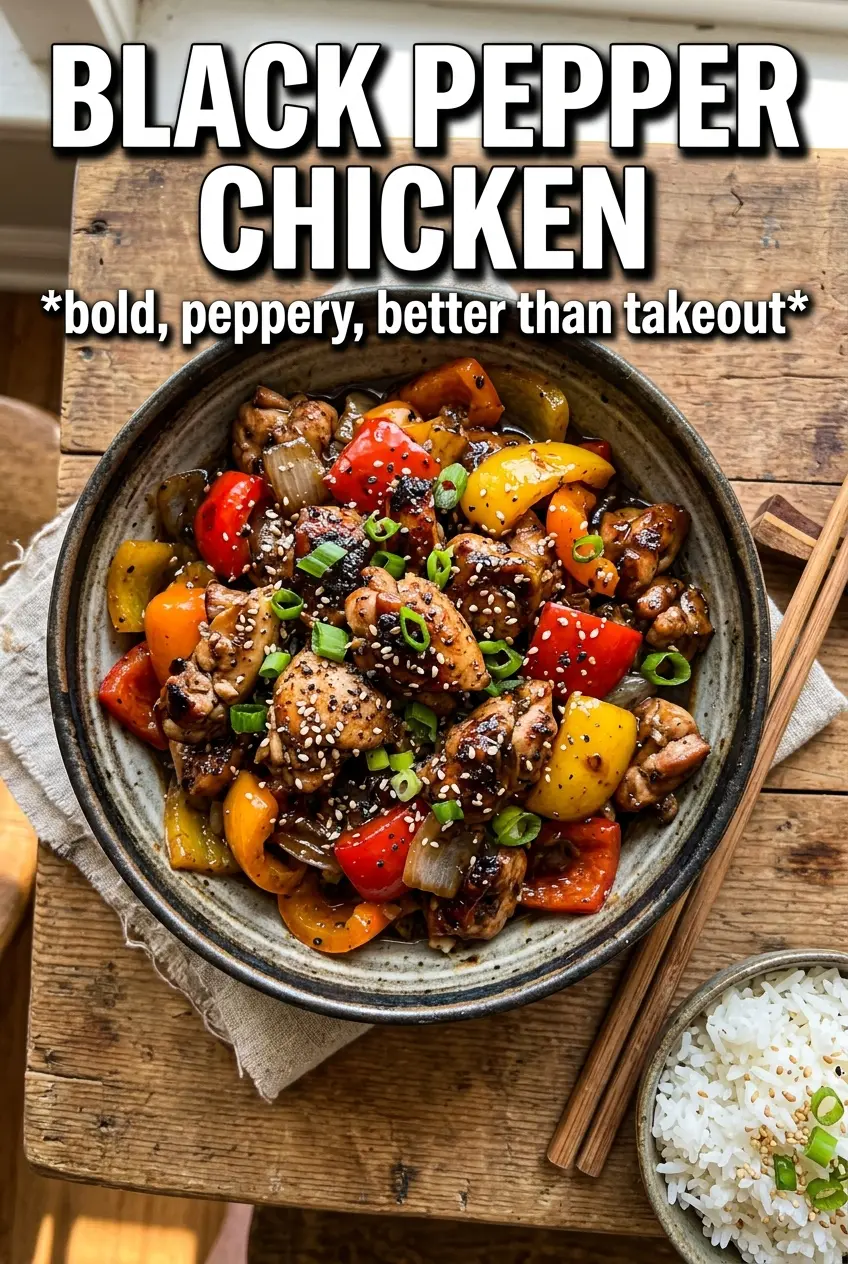
Black Pepper Chicken
Ingredients
Equipment
Method
- Whisk together soy sauce, oyster sauce, dark soy sauce, brown sugar, freshly cracked black pepper, and cornstarch with 1/4 cup water, until smooth; set aside.
- Heat vegetable oil in a wok or large skillet over high heat until shimmering.
- Stir-fry sliced chicken in batches for about 2 minutes, until golden and just cooked through, then remove to a plate.
- Stir-fry bell pepper and onion for 3 minutes over high heat.
- Add garlic and grated ginger and cook for 1 minute, stirring constantly so it smells fragrant but doesn’t burn.
- Return chicken to the pan, pour the sauce in, and toss until evenly coated.
- Cook for 2-3 minutes until the sauce thickens and clings to the chicken and peppers; season with extra cracked black pepper if desired.
- Serve the black pepper chicken over steamed rice while the sauce is glossy.