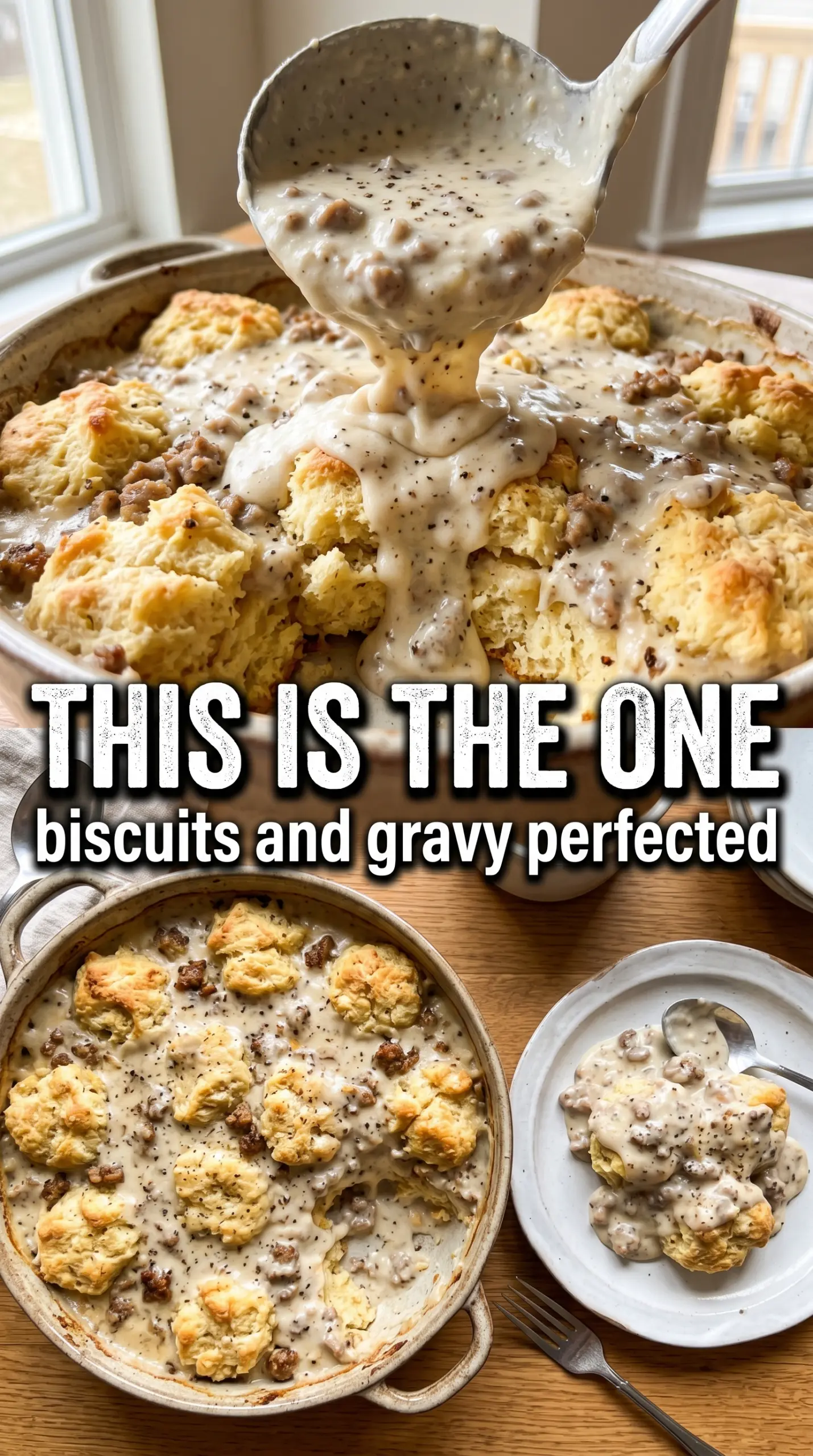
Biscuits and gravy casserole lands on the table with everything people love about a Southern breakfast in one pan: fluffy biscuit pieces, peppery sausage gravy, set eggs, and a golden top that cracks softly under your spoon. The edges get a little toasty, the center stays rich and spoonable, and every bite has that mix of creamy gravy and tender bread that makes a breakfast casserole worth repeating.
What makes this version work is the order. The sausage stays in the pan, so its drippings become the base for the gravy instead of getting poured off. That gives the flour something flavorful to cling to, and it keeps the sauce from tasting flat. The biscuits go in first, under the gravy, so they steam and puff in the right places instead of turning soggy on top. The eggs finish the dish by setting into the gravy, which gives the casserole structure without drying it out.
Below, I’m breaking down the one part that matters most if you want the gravy thick and silky, plus a few smart variations for making this ahead or adjusting it for your table.
The gravy thickened up beautifully and the biscuits stayed soft underneath instead of turning gummy. I baked it for brunch, and everyone kept going back for another scoop because the sausage flavor came through in every bite.
Like this biscuits and gravy casserole? Save it for the mornings when you want flaky biscuit pieces, rich sausage gravy, and a baked breakfast that feeds a crowd.
The Gravy Needs to Be Thick Before It Hits the Dish
The biggest mistake with a biscuit and gravy casserole is pouring in gravy that still looks loose in the skillet. It should coat a spoon and fall in slow ribbons, because it loosens a bit more in the oven as the biscuits release steam and the eggs set. If it starts out thin, the whole casserole can slide into a soft, wet layer instead of baking into distinct bites.
The sausage drippings do the heavy lifting here. When you whisk the flour into the fat and cook it for a minute, you’re taking away the raw flour taste and building the base for a gravy that can stand up to baking. The milk should go in gradually, with constant stirring, so the sauce turns glossy instead of lumpy.
- Breakfast sausage — Use a well-seasoned sausage with enough fat to leave about a tablespoon or two in the pan. That drippings base matters more than people think. Lean sausage can work, but the gravy will taste flatter, so add the butter back in if the pan looks dry.
- Whole milk — This gives the gravy its body and keeps it creamy after baking. Lower-fat milk works in a pinch, but the sauce won’t thicken as richly. If you use 2%, simmer a touch longer before layering the casserole.
- Refrigerated biscuit dough — Canned biscuits save time and puff well under the gravy. Quarter them so they bake through instead of staying doughy in the center. Biscuit pieces that are too large tend to trap raw pockets under the top layer.
- Sharp cheddar — Freshly shredded cheddar melts cleaner and gives you those golden pockets on top. Pre-shredded cheese can work, but it sometimes melts a little less smoothly because of the anti-caking coating.
What Each Ingredient Is Actually Doing in This Biscuit
- Flour (the structure base) — Use all-purpose or self-rising. Flour carries the entire structure of the biscuit.
- Cold butter (the flakiness) — Keep it cold and cut into small pieces. Cold butter creates steam pockets for layers.
- Buttermilk (the moisture and tang) — This hydrates the flour and adds subtle flavor. Don’t use regular milk.
- Salt (the flavor enhancer) — This brings out natural flavors and prevents flatness.
- Leavening (baking powder or baking soda) — This creates rise without yeast. Use the right amount or biscuits won’t rise properly.
- Sugar (optional, subtle sweetness) — A tiny bit enhances flavor without making them sweet.
- Mixing technique (minimal, gentle) — Overworking the dough makes biscuits tough and dense. Mix just until combined.
- Baking temperature (450°F+ high heat) — High heat creates steam for rise. Lower heat makes them dry and dense.
Building the Casserole So the Biscuits Stay Tender
Brown the Sausage Until It’s Crumbly and Fragrant
Cook the sausage over medium heat and break it up well so you get small crumbles instead of big chunks. You want browned bits on the bottom of the skillet, because those turn into flavor once the flour goes in. If the sausage is finished but the pan looks nearly dry, stir the butter in before adding the flour so the gravy has enough fat to thicken properly.
Cook the Roux Before the Milk Goes In
Sprinkle the flour over the sausage and fat, then stir until every bit of meat looks dusty and coated. Let it cook for about a minute, just long enough to lose the raw flour smell. Add the milk a splash at a time at first, whisking constantly, because dumping it all in too fast is how you get little flour lumps that never fully disappear.
Layer the Dish in the Right Order
Scatter the biscuit pieces across the bottom of the greased baking dish, then pour the thick sausage gravy over them evenly. Don’t stir everything together. The biscuits need contact with the hot gravy, but they also need some space to expand as they bake, and mixing the layers turns the whole pan heavy. Whisk the eggs with a splash of milk and pour them over the top so they settle into the gravy instead of sitting in one spot.
Bake Until the Center Sets
The casserole is done when the top is golden, the edges are bubbling, and the center no longer sloshes when you nudge the pan. If the middle still looks loose, give it a few more minutes rather than pulling it early. Underbaked eggs are the one thing that can make this dish feel heavy instead of plush, and the center needs that extra time to set cleanly.
How to Adjust This for a Smaller Table or a Different Pantry
Gluten-Free Version
Use a gluten-free biscuit dough and swap the flour for a 1:1 gluten-free blend that thickens well. The gravy will still set up, but it usually needs an extra minute or two on the stove to lose the slightly loose texture some blends have.
Sausage and Cheddar Swap
Swap the breakfast sausage for turkey sausage if you want a lighter casserole. It will still taste good, but you’ll want to add the full amount of butter and a little extra black pepper because turkey sausage usually brings less fat and less built-in seasoning.
Make-Ahead Brunch Assembly
You can assemble the casserole the night before and refrigerate it, then bake it in the morning. Cover it tightly so the biscuit dough doesn’t dry out at the edges. Add 5 to 10 extra minutes in the oven if it goes in cold from the fridge.
Storage and Reheating
- Refrigerator: Store leftovers covered for up to 4 days. The biscuits soften a bit, but the flavor stays solid.
- Freezer: This freezes better after baking than before. Cut into portions, wrap tightly, and freeze for up to 2 months.
- Reheating: Reheat in a 325°F oven covered with foil until hot. The microwave works for a single serving, but use short bursts so the eggs don’t turn rubbery and the gravy doesn’t split.
Answers to the Questions Worth Asking

Biscuits and Gravy Casserole
Ingredients
Equipment
Method
- Preheat the oven to 375°F and grease a 9x13 dish.
- Brown the breakfast sausage in a skillet, crumbling well, and leave it in the pan.
- Add the butter to the sausage in the pan and let it melt.
- Whisk the flour into the sausage drippings and cook for 1 minute.
- Gradually add the whole milk while stirring constantly until a thick gravy forms, then season heavily with salt and lots of cracked black pepper.
- Spread the quartered biscuit pieces across the bottom of the greased dish.
- Pour the sausage gravy evenly over the biscuits.
- Whisk the eggs with a splash of milk, pour over the gravy, and top with the shredded sharp cheddar.
- Bake for 30–35 minutes at 375°F until the eggs are set and the biscuits are golden, with bubbling gravy around the edges.