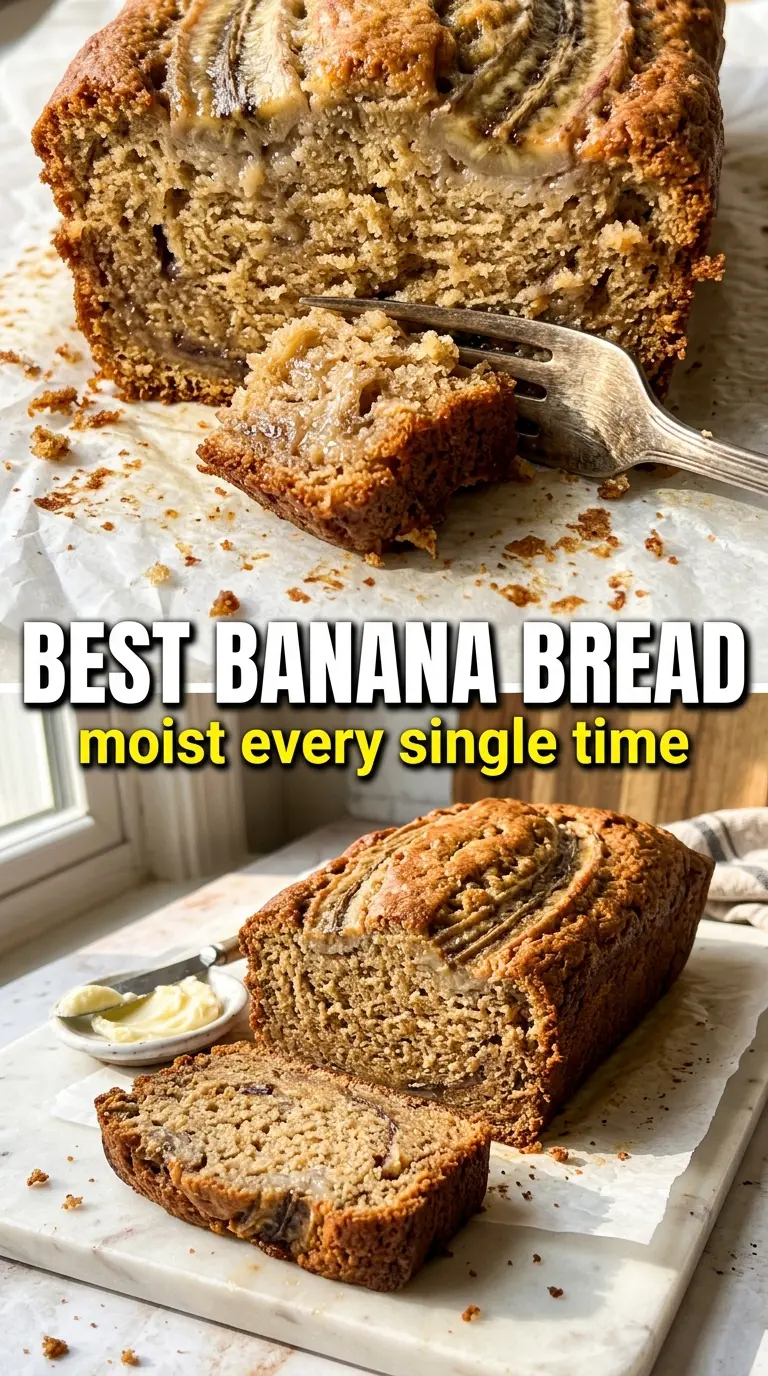
Banana bread earns its place when the loaf comes out with a dark golden top, a tender crumb, and that deep banana flavor that only comes from fruit that looks almost too far gone. The best loaves slice cleanly but still stay moist for days, with a soft center and a lightly crisp crust that crackles when you cut into it.
This version keeps the method straightforward, but the details matter. Melted butter gives the bread a richer, denser crumb than creaming softened butter, and mashing the bananas well helps the loaf bake up evenly instead of leaving wet pockets. The cinnamon stays in the background where it belongs, just enough to make the bananas taste warmer and more complete without turning the loaf into spice cake.
Below, you’ll find the small cues that keep banana bread from turning gummy or dry, plus a few smart variations if you want to change the texture or adapt it for what’s in your kitchen.
The loaf came out with a crackly top and stayed moist all the way to the last slice. I used bananas that were almost black, and the flavor was incredible.
Like this classic banana bread? Save it for the next time your bananas turn spotty and you want a moist loaf with a caramelized top crust.
The Mistake That Makes Banana Bread Dense and Gummy
Banana bread goes wrong when the batter is overworked after the flour goes in. Once the dry ingredients hit the bowl, the clock is ticking. Stir just until the flour disappears and stop there, even if the batter looks a little rough. That short mixing window keeps the loaf tender instead of tight and rubbery.
The other common trap is underbaking. The top can look done long before the center is set, especially with very ripe bananas adding extra moisture. You want a deeply golden top and a tester that comes out clean or with a few moist crumbs, not wet batter. If the loaf is still jiggly in the middle when it comes out, give it a few more minutes and check again.
- Very ripe bananas — The darker and softer they are, the sweeter and more aromatic the loaf will be. Yellow bananas can work in a pinch, but they won’t give you the same deep banana flavor.
- Melted butter — This keeps the crumb rich and soft without the airy texture you get from creamed butter. Cool it slightly before mixing so it doesn’t scramble the egg.
- Cinnamon — Just a small amount rounds out the banana flavor. More than that starts to read like spice bread instead of classic banana bread.
- All-purpose flour — It gives the loaf enough structure to rise while staying tender. A 1:1 gluten-free blend can work, but the crumb will be a little more delicate and less springy.
What Each Ingredient Is Actually Doing in This Bread
- Flour (the structure) — All-purpose or bread flour provides the base. Protein content affects texture.
- Leavening (baking powder, baking soda, or yeast) — This creates rise. For quick breads, chemical leavening works. Yeast requires time.
- Wet ingredients (milk, eggs, oil, or applesauce) — These hydrate flour and add richness. Balance moisture so bread isn’t gummy.
- Sugar (sweetness and structure) — Sugar tenderizes and adds flavor. Too much makes dense, gummy bread.
- Salt (the flavor enhancer) — Salt brings out natural flavors and prevents flatness.
- Flavorings (vanilla, spices, or zest) — These define the bread personality. Use quality extracts.
- Mix-ins (nuts, chocolate, fruit) — These add texture and prevent one-dimensional taste. Toast nuts first for better flavor.
- Proper baking temperature (350-375°F) — Moderate heat bakes bread evenly. Higher temps create dark crust before inside bakes.
Building the Batter Without Losing the Tender Crumb
Mashing the Bananas and Adding the Butter
Start with bananas that are heavily speckled or nearly black. Mash them in a large bowl until there are no big chunks left, then whisk in the melted butter. The mixture should look loose and thick, almost like a very rough puree. If the butter is piping hot, let it sit a minute first so it doesn’t cook the egg when you add it later.
Bringing in the Sugar, Egg, and Vanilla
Stir in the sugar first, then the egg and vanilla until the mixture looks glossy and uniform. You don’t need to beat air into it. Banana bread is meant to be dense enough to slice, so a simple mix is better than an aggressive whisk. If you see streaks of egg white, keep stirring until they disappear.
Folding in the Dry Ingredients
Sprinkle the flour, baking soda, salt, and cinnamon over the banana mixture rather than dumping everything in one pile. That helps everything distribute evenly without extra stirring. Fold gently with a spatula until the flour just disappears. A few tiny lumps are fine. A batter that looks overmixed will bake into a tighter loaf.
Baking Until the Center Sets
Pour the batter into a greased 9×5 loaf pan and bake at 350°F until the top is deeply golden and a toothpick comes out clean, usually 60 to 70 minutes. If the top browns too quickly before the center is done, tent it loosely with foil for the last stretch of baking. Let it cool in the pan for 10 minutes, then turn it out onto a rack. Slice too soon and the crumb will tear instead of setting cleanly.
How to Change This Loaf Without Losing What Makes It Work
Add walnuts for crunch
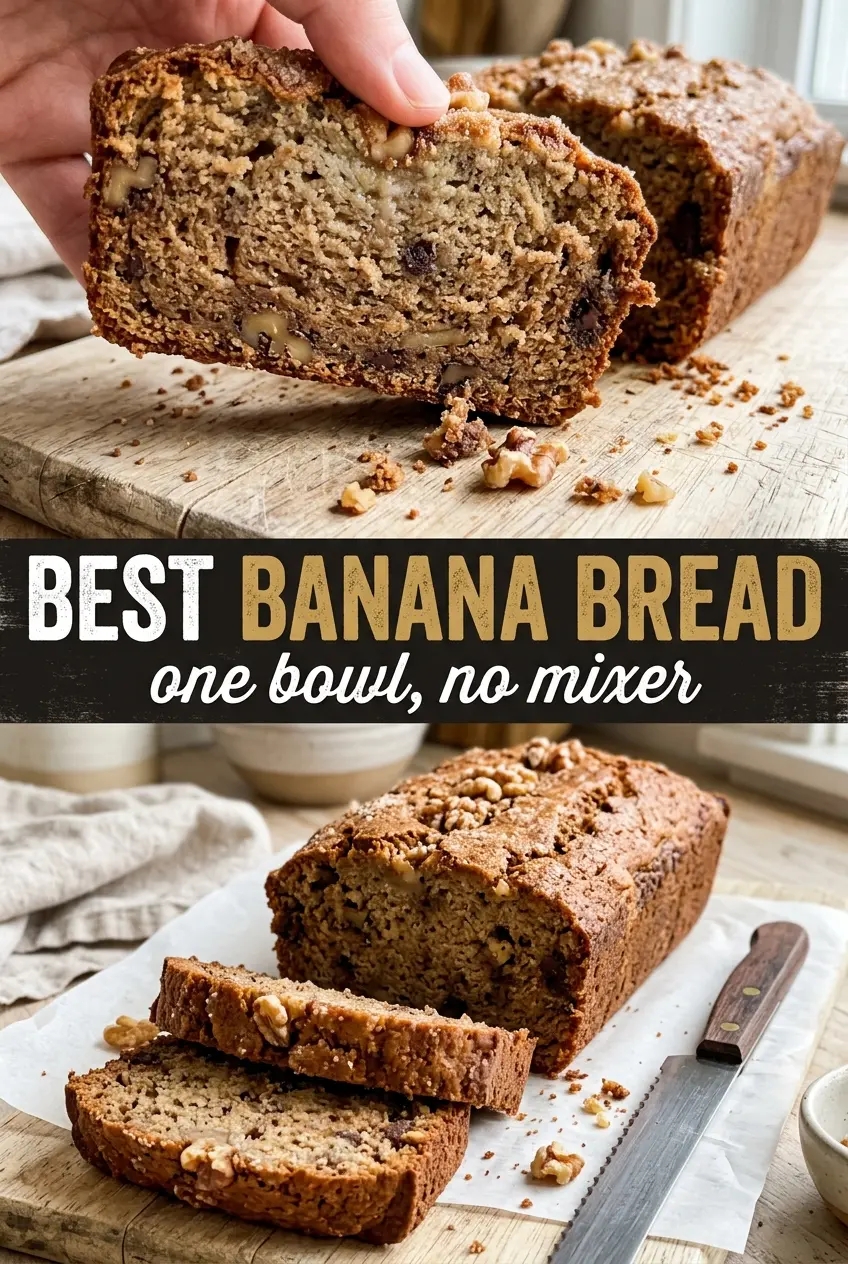
Fold in about 3/4 cup chopped walnuts with the dry ingredients for a classic bakery-style loaf. They add contrast to the soft crumb and a little bitterness that balances the sweetness.
Make it dairy-free
Swap the butter for an equal amount of neutral oil or melted plant-based butter. Oil gives the loaf an especially soft, moist crumb, while plant butter keeps the flavor closer to the original.
Turn it into banana muffins
Divide the batter among lined muffin cups and bake at 350°F for about 18 to 22 minutes. You lose the dramatic loaf shape, but you gain faster baking and tidy portions for breakfast or snack time.
Storage and Reheating
- Refrigerator: Store tightly wrapped for up to 5 days. The crumb stays moist, but the chilled texture gets firmer.
- Freezer: Banana bread freezes well. Wrap the whole loaf or individual slices tightly in plastic and foil, then freeze for up to 3 months.
- Reheating: Thaw at room temperature, then warm slices briefly in the microwave or toaster oven. Reheat just until warm; overheating dries out the edges and makes the crumb tough.
Questions I Get Asked About This Recipe
Best Banana Bread
Ingredients
Equipment
Method
- Preheat the oven to 350°F and grease a 9x5 loaf pan.
- Melt the butter and whisk it directly into the mashed very ripe bananas in a large bowl.
- Stir in the sugar, large egg, and vanilla extract until well combined, with no streaks of egg left.
- Sprinkle the all-purpose flour, baking soda, salt, and cinnamon over the banana mixture, then fold until no dry streaks remain.
- Pour the batter into the prepared pan and bake for 60–70 minutes until deeply golden on top and a toothpick comes out clean.
- Cool in the pan for 10 minutes, then turn out onto a rack and do not slice until slightly cooled or the crumb will fall apart.