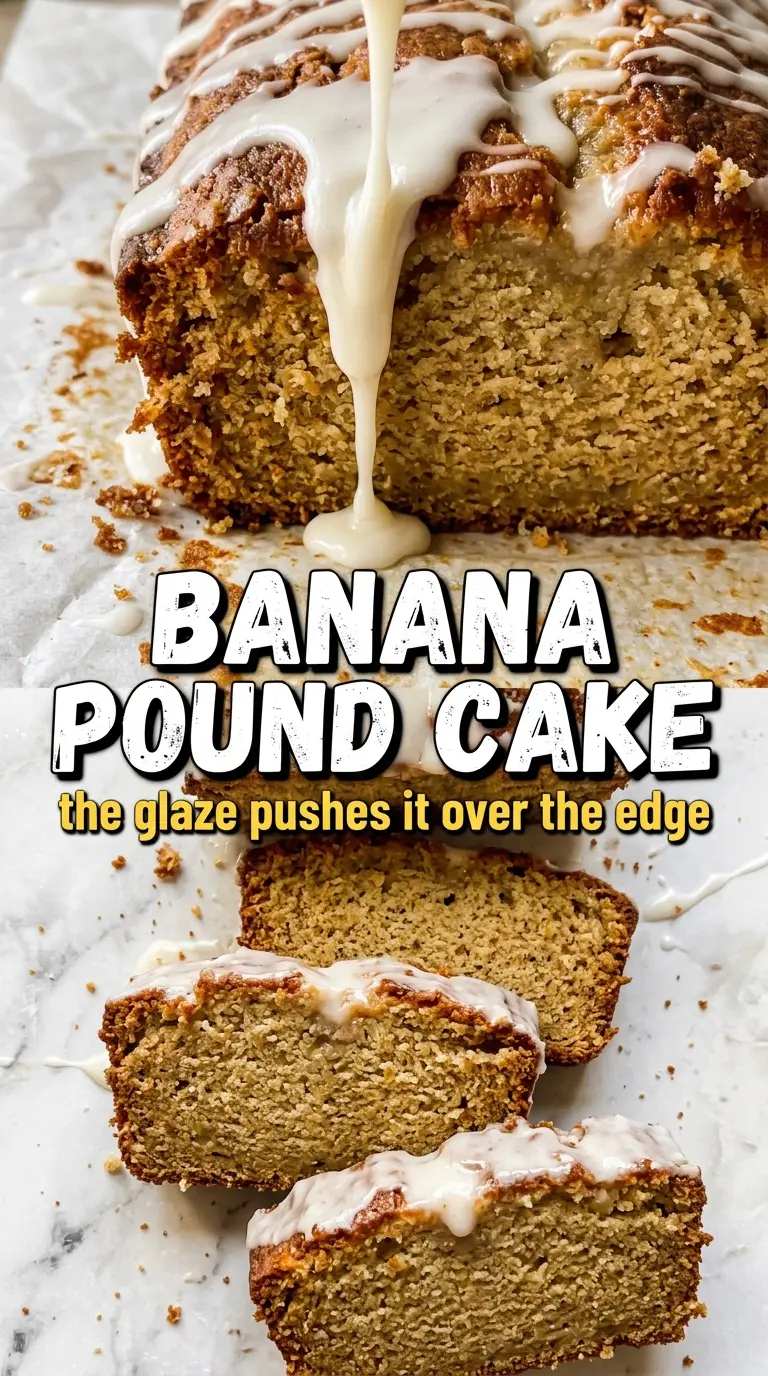
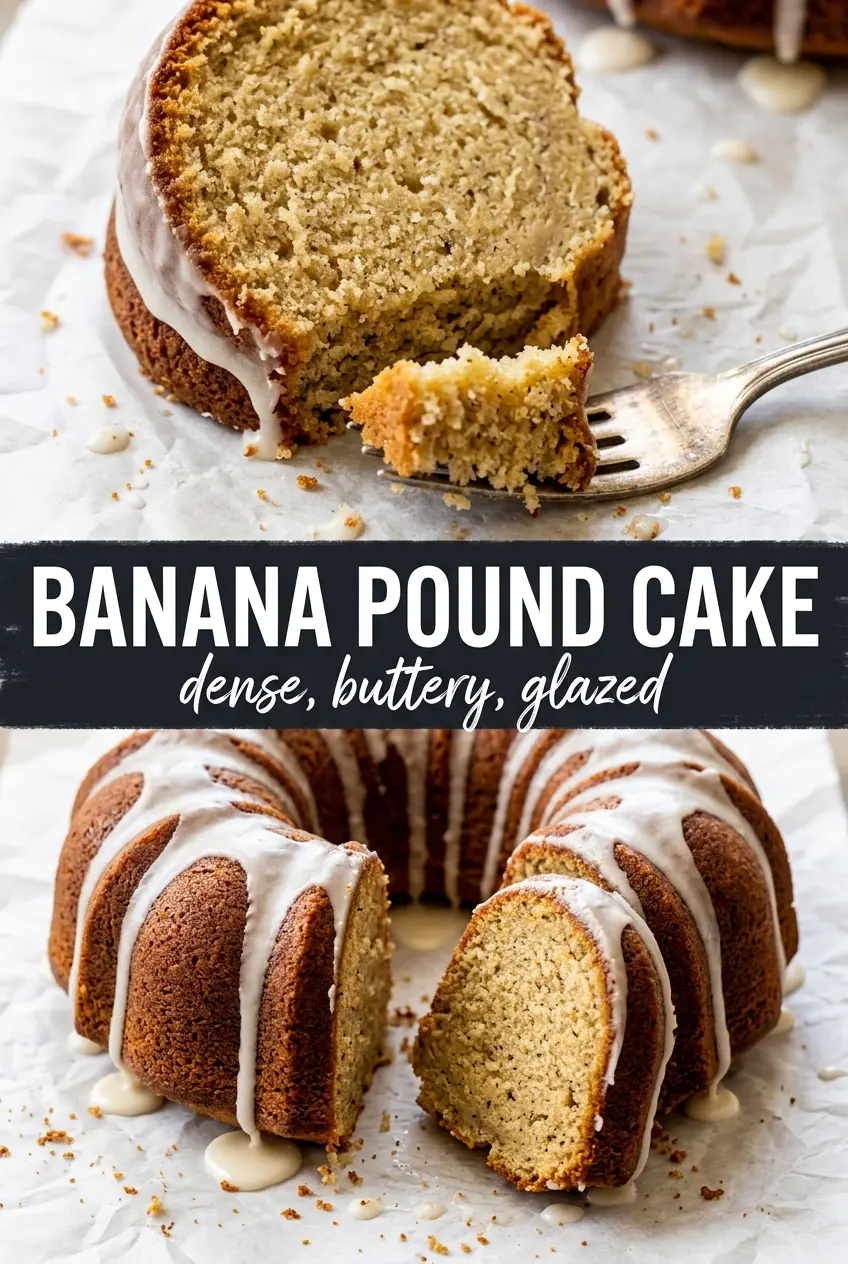
Banana pound cake lands somewhere between a classic pound cake and the banana loaf people usually bake on autopilot, and that’s what makes it worth keeping around. It bakes up dense and buttery, with a tight crumb that slices cleanly instead of crumbling apart, while the mashed bananas keep it moist enough to stay tender for days. The top turns deep golden and a little caramelized, which gives each slice a faintly toasty edge under the vanilla glaze.
The texture comes from two things working together: a long, proper creaming of butter and sugar, and a batter that’s enriched with sour cream instead of being thinned out with milk. That combination gives you a cake that feels substantial without turning heavy or dry. The bananas bring flavor, of course, but the structure still behaves like a real pound cake, which is why it holds up so well on a cake stand and on day two.
Below, I’ll walk through the details that matter most here: how to keep the crumb fine instead of gummy, which bananas work best, and how to glaze it so the finish looks polished instead of runny.
The cake baked up with that tight pound-cake crumb I was hoping for, and the banana flavor came through without turning the whole thing wet or heavy. The glaze set just enough to drip красиво down the sides, and it sliced perfectly the next day.
Save this banana pound cake for the days when you want a dense, buttery slice with a caramelized crust and vanilla glaze.
The Part That Keeps Banana Pound Cake from Turning Dense in the Wrong Way
Banana pound cake should be dense in the elegant, sliceable way, not heavy or gummy. The difference usually comes from the butter-sugar stage. When you beat that mixture until it turns pale and fluffy, you’re building tiny air pockets that help the cake rise evenly in the oven, even though the batter is thick. If you rush this step, the cake can bake up tight and pasty in the center.
The other place people lose the texture is by treating bananas like a liquid. Mashed bananas should be smooth but not soupy, and they need to be folded in with the eggs and vanilla before the flour goes in. That keeps the batter from overworking. Once the flour is added, stop mixing as soon as you don’t see dry streaks. Overmixing here is what turns a pound cake into something closer to bread pudding.
What the Bananas, Sour Cream, and Butter Are Each Doing Here
- Bananas — Use ripe bananas with plenty of brown spots. They bring the flavor and moisture, but they also need to be mashed well enough to blend cleanly into the batter. If your bananas are very large and wet, the cake can skew soft, so keep them to about 1 1/2 cups mashed.
- Butter — This is where the pound cake character comes from. Softened butter creams into the sugar and gives the crumb its fine, rich structure. Margarine won’t give the same flavor or the same clean slice.
- Sour cream — This keeps the cake tender without watering it down. Full-fat sour cream works best because it adds richness and helps the cake stay moist after cooling. Plain Greek yogurt can work in a pinch, but the crumb will be a touch tangier and a little less plush.
- All-purpose flour — Standard all-purpose flour is the right choice here. Cake flour would make the cake too delicate for the pound cake style, and bread flour would make it too firm. Measure carefully so you don’t pack in extra flour and dry out the crumb.
- Vanilla glaze — The glaze is thin enough to drip but thick enough to cling. Start with less milk than you think you need, then add it slowly until it falls off the spoon in a ribbon. If it’s too thin, it’ll run straight off the cake instead of setting in those pretty trails.
Building the Batter Without Losing the Pound Cake Texture
Cream the Butter Until It Looks Almost Whipped
Beat the butter and sugar for a full 5 minutes, scraping down the bowl once or twice so the mixture stays even. You’re looking for a pale, fluffy mixture that has expanded in volume and no longer looks grainy. This is the stage that gives the cake lift, so don’t stop when it just looks combined.
Add the Eggs One at a Time
Mix in each egg fully before adding the next. If the batter looks a little curdled after the second or third egg, that’s normal and it will smooth out once the flour goes in. What you’re trying to avoid is dumping the eggs in all at once, which can make the batter split and lose that emulsified, satiny texture.
Fold in the Flour and Sour Cream in Turns
Mix the dry ingredients together first, then alternate adding the flour mixture and sour cream in three additions. That slower rhythm keeps the batter from tightening up too fast. End with flour, and stop mixing the second the last streak disappears. A thick batter is expected here; a glossy, smooth batter means you’ve gone a step too far.
Know When the Cake Is Done
Bake at 325°F until the top is deeply golden and a toothpick comes out clean or with just a few moist crumbs. The center should spring back lightly when touched. If the top browns before the middle is set, tent it loosely with foil for the last 15 minutes. Pulling it too early leaves you with a sunken middle, while overbaking dries out the edges first.
How to Adjust This Banana Pound Cake for Different Kitchens and Different Eaters
Dairy-Free Version
Use a high-quality plant-based butter and swap the sour cream for thick dairy-free yogurt. The cake will still bake up rich, but the crumb will be slightly less lush and the butter flavor will soften a bit. Stick with a stick-style butter alternative if you want the structure to stay close to the original.
Turn It into a Banana Bundt Cake
Use a well-greased and floured bundt pan and plan on the full bake time, sometimes a few extra minutes, since the batter is thick and the pan shape is deeper. The edges get more caramelized, which is a good thing here. Wait 20 minutes before unmolding so the cake has enough structure to release cleanly.
Make It a Banana Loaf Cake
A standard loaf pan works if that’s what you have, but expect a taller center and a little more time in the oven. Check the middle carefully because the edges can look done before the center finishes baking. If the top darkens too quickly, lay a sheet of foil over it for the last stretch.
Storage and Reheating
- Refrigerator: Store covered for up to 5 days. The crumb tightens slightly in the fridge, but the flavor stays good.
- Freezer: Freeze slices or the whole cake, well wrapped, for up to 2 months. Glaze after thawing if you want the best look and texture.
- Reheating: Warm slices at room temperature or for a few seconds in the microwave. If you overheat it, the butter in the cake can make the crumb seem oily instead of tender.
Answers to the Questions Worth Asking
Banana Pound Cake
Ingredients
Equipment
Method
- Preheat the oven to 325°F and grease and flour a large loaf pan or bundt pan for easy release.
- Beat butter and sugar together for 5 minutes until very light and fluffy.
- Add the eggs one at a time, beating well after each addition.
- Mix in vanilla extract and the mashed bananas until the batter looks glossy and evenly blended.
- Whisk the all-purpose flour with baking soda, baking powder, and salt.
- Alternate folding in the flour mixture and sour cream in three additions, stopping as soon as no dry streaks remain.
- Pour the batter into the prepared pan, then bake for 65–75 minutes until a toothpick comes out clean and the top is deeply golden.
- Cool the cake in the pan for 20 minutes, then unmold.
- Stir together powdered sugar, milk, and vanilla extract for the vanilla glaze until smooth and drizzle-ready.
- Drizzle the vanilla glaze over the cooled cake so it drips down the sides.