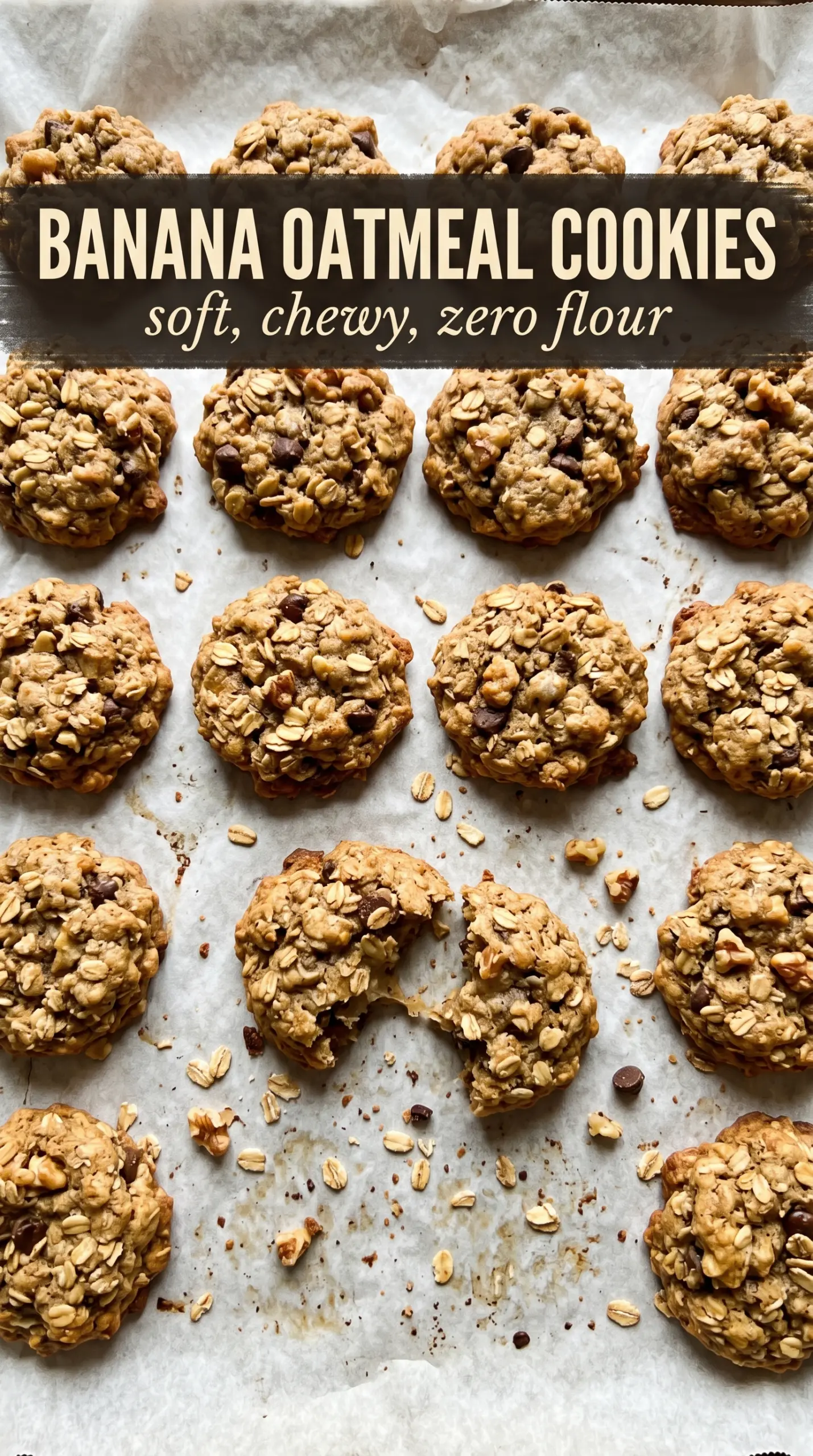
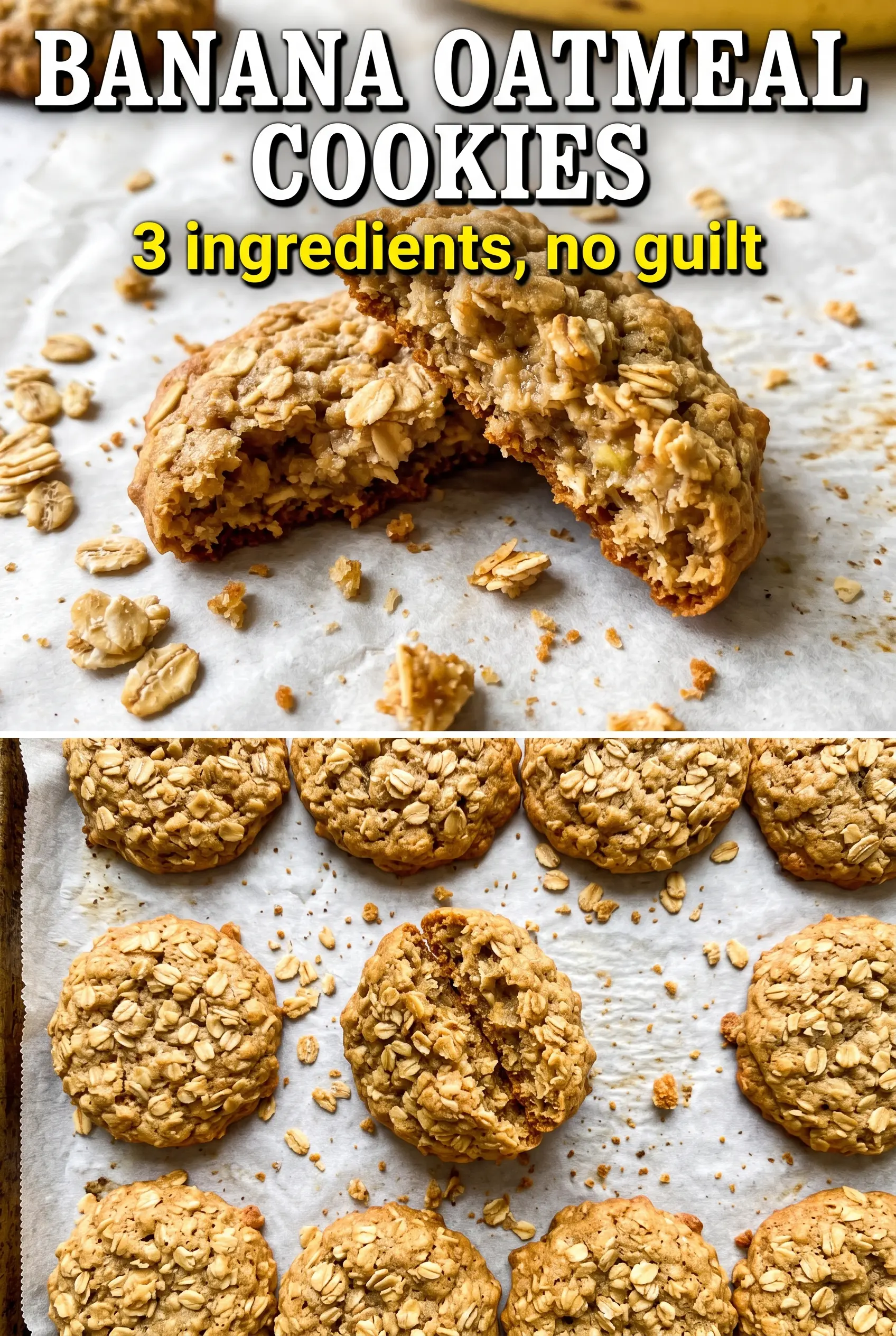
Banana oatmeal cookies bake up soft, chewy, and a little bit rustic, with golden edges and a moist center that stays tender long after they cool. They taste like a cross between breakfast oats and a simple cookie, which is exactly why they disappear fast from the cookie jar.
The key is using bananas that are fully mashed and naturally sweet, then keeping the oat-to-banana ratio balanced so the cookies hold together without turning cakey. A short bake at 350°F sets the edges before the centers dry out, and the cookies finish with that pleasant bendy chew instead of a crumbly texture.
Below, I’ll walk through the small details that matter here, including how to keep the cookies from spreading too much and what to swap if you want a different mix-in. There’s also a storage note, because these are the kind of cookies that stay useful for a few days after baking.
These came out soft in the middle with just enough chew on the edges, and the bananas kept them moist for days. I loved that the oats held everything together without needing flour.
Banana oatmeal cookies with chewy centers and golden edges are worth keeping on hand for quick snacks or lunchbox treats.
The Reason Banana Cookies Stay Soft Instead of Turning Dry
Banana cookies fail when the batter gets overloaded with oats or baked until the tops look firm instead of the centers just setting. Bananas bring a lot of moisture, but that moisture needs help from the oats to turn into a cookie that holds its shape. If you add too many oats, the texture goes dense and dry; too few, and the cookies spread into pancakes.
The other thing that matters here is how ripe the bananas are. Brown-speckled bananas give you sweeter cookies and a softer crumb, while under-ripe bananas taste flat and need more sweetness to carry the dough. A gentle hand when mixing keeps the oats from getting smashed and pasty.
- Ripe bananas — The darker and softer they are, the sweeter and more flavorful the cookies will be. If yours are still mostly yellow, the cookies will bake up less sweet and a little firmer.
- Rolled oats — Old-fashioned oats hold their shape and give the cookies chew. Quick oats can work in a pinch, but the texture gets softer and more compact.
- Honey or maple syrup — This adds just enough extra sweetness and helps the cookies brown. Maple gives a deeper note; honey makes the flavor a little rounder.
- Chocolate chips or raisins — Both work, but chocolate gives you richer pockets of melt while raisins lean more breakfast-like. Add them after the oats so they stay evenly distributed.
What Each Ingredient Is Actually Doing in This Recipe
- Primary ingredient (the star) — Quality matters most. Choose the best you can find.
- Cooking medium (oil, butter, or broth) — This carries flavors and prevents dryness.
- Seasonings (salt, pepper, spices, herbs) — Layer flavors so nothing overpowers. Build depth gradually.
- Aromatics (garlic, onion, herbs) — Cook with fat to bloom flavors. Become the foundation.
- Supporting ingredients — Complement the main ingredient without overpowering it.
- Sauce or liquid (if applicable) — Brings flavors together. Balance richness with acid.
- Acid (lemon, vinegar, wine, or other) — Brightens and prevents flat-tasting results.
- Final finish (garnish, glaze, or sauce) — Prevents one-dimensional taste and adds visual appeal.
What Happens in the Bowl Before the Oven Ever Sees Them
Mash the bananas until they look like pudding, with no large chunks left behind. Any banana pieces left in the bowl can leave soft pockets that make the cookies bake unevenly. Stir in the sweetener, vanilla, cinnamon, and salt first so the flavor is evenly spread before the oats go in.
When you fold in the oats, stop mixing as soon as everything looks coated. Overmixing crushes the oats and makes the dough heavy. Scoop the dough onto parchment, flatten each mound slightly with your fingers, and bake until the edges are golden and the centers no longer look wet. If they come out too soft, give them another minute or two, but don’t wait for deep browning — that’s how banana cookies lose their moisture.
Mashing the Bananas Smooth
Mash the bananas in a large bowl until the mixture is smooth and glossy, almost like a thick puree. Small banana chunks sound harmless, but they create wet spots that bake unevenly and can make the cookies fragile. A fork works fine, but a potato masher gets you there faster if your bananas are extra soft.
Mixing the Wet Ingredients
Stir in the honey or maple syrup, vanilla, cinnamon, and salt until the mixture looks unified and loose. At this stage the bowl should smell strongly of banana and cinnamon, with no streaks of syrup left behind. If the mixture looks watery, the bananas were very large; that’s fine, but expect to use the oats on the fuller side of the range.
Adding the Oats and Mix-Ins
Fold in the rolled oats, chocolate chips, and walnuts if you’re using them. The dough should look thick and spoonable, not pourable. If it still seems wet, let it sit for 5 minutes so the oats can absorb some moisture before you portion it out.
Baking Until the Centers Set
Drop rounded tablespoons onto the lined sheet and flatten them slightly so they bake into cookies instead of mounds. Bake until the edges look lightly browned and the centers have lost their raw sheen. Let them cool on the pan for 5 minutes; they’re fragile when hot and firm up as they sit, which keeps you from breaking them apart on the first move.
How to Adjust These Cookies Without Losing the Soft, Chewy Texture
Make them dairy-free and naturally vegan
Use maple syrup instead of honey and stick with chocolate chips that don’t contain dairy. The cookies will taste slightly less floral and a little more caramel-like, but the texture stays the same because the moisture is coming from the bananas.
Swap the chocolate for a breakfast-style cookie
Use raisins, dried cranberries, or chopped dates instead of chocolate chips. Raisins give you a softer, sweeter bite, while dates make the cookies taste richer and stickier in the best way.
Add nuts for more crunch
Chopped walnuts add a nice contrast against the soft center, but don’t overdo them or the dough gets crumbly. A quarter cup is enough to bring in texture without changing the structure of the cookie.
Storage and Reheating
- Refrigerator: Store in an airtight container for up to 5 days. They stay soft, though the oats continue to absorb moisture and the cookies become a little denser by day two.
- Freezer: These freeze well for up to 2 months. Freeze in a single layer first, then transfer to a bag or container so they don’t stick together.
- Reheating: Warm a cookie in the microwave for about 10 seconds or let it sit at room temperature for a few minutes. Don’t overheat them or the chocolate turns greasy and the banana aroma fades.
Questions I Get Asked About This Recipe
Banana Oatmeal Cookies
Ingredients
Equipment
Method
- Preheat your oven to 350°F and line a sheet pan with parchment paper to prevent sticking and promote even browning.
- Mash the ripe bananas completely smooth in a large bowl until there are no lumps.
- Stir in honey or maple syrup, vanilla extract, cinnamon, and salt until fully combined and glossy.
- Fold in the rolled oats, chocolate chips or raisins, and chopped walnuts if using until a thick dough forms with oats visible throughout.
- Drop rounded tablespoons of dough onto the prepared sheet, spacing them about 1 inch apart, then flatten slightly so they bake evenly.
- Bake for 12–15 minutes at 350°F until the edges are golden and the centers are set, with a slightly moist look in the middle.
- Cool on the pan for 5 minutes before transferring to help the cookies finish setting without over-browning.