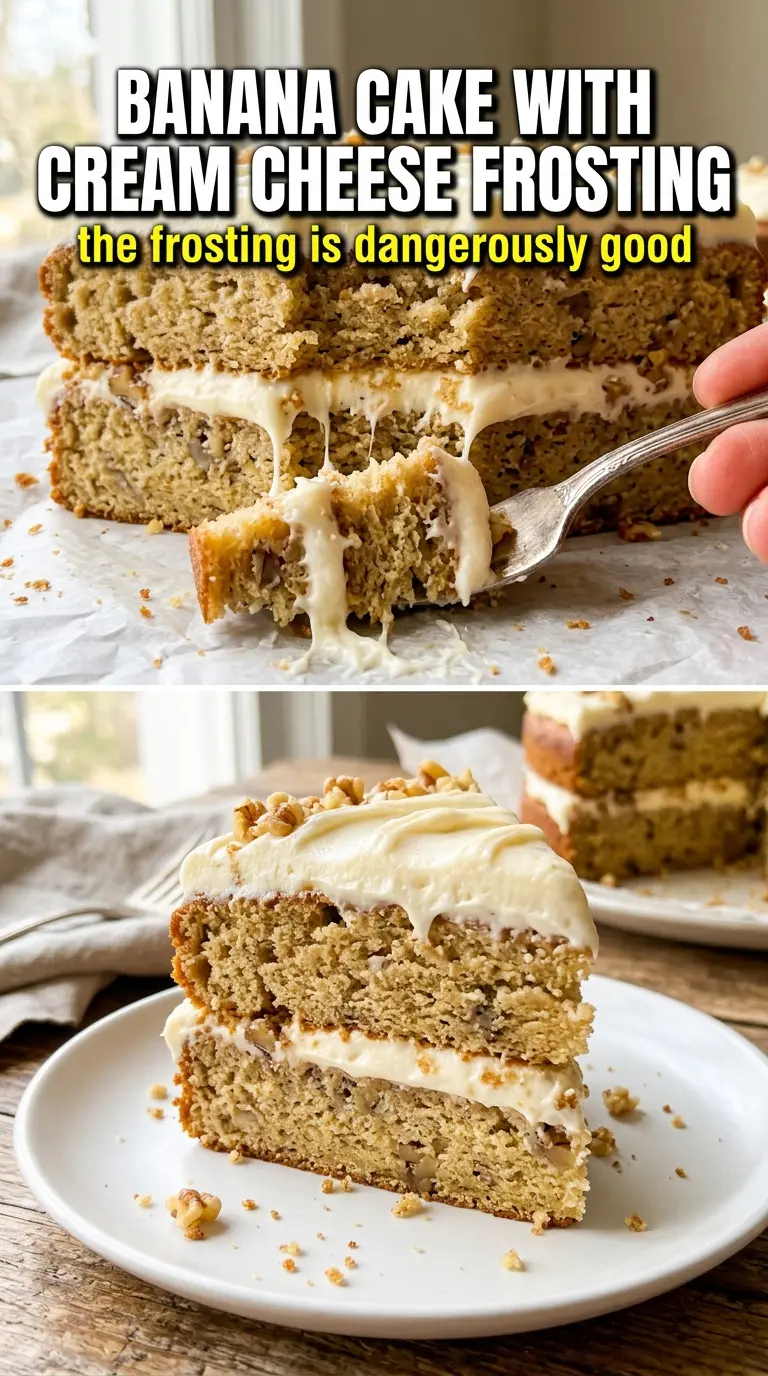
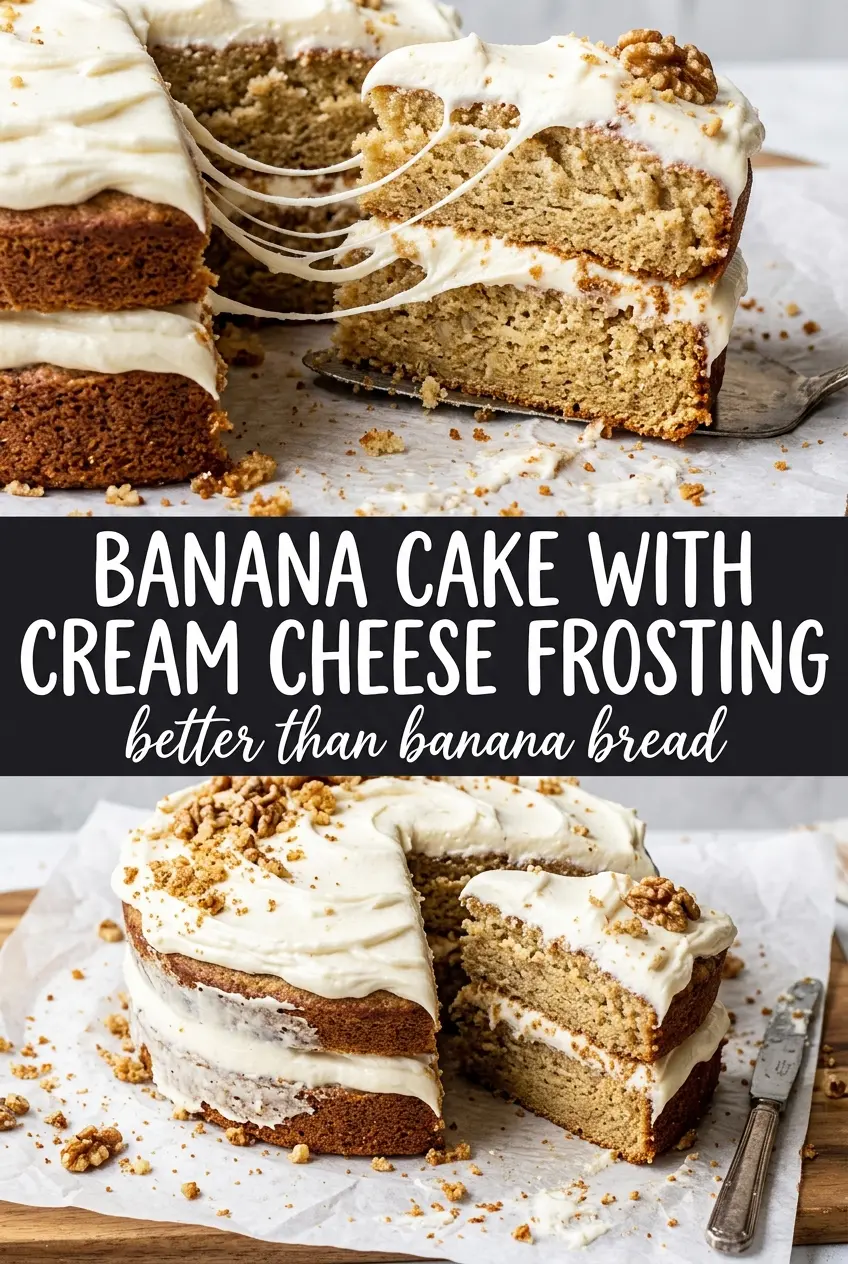
Banana cake with cream cheese frosting earns its place in the rotation when you want a cake that stays soft for days and tastes even better after it settles under a thick layer of tangy frosting. The crumb is tender and plush, with enough banana flavor to taste like the real thing instead of a vague spice cake pretending to be banana. The frosting should land somewhere between spreadable and swoopable: thick enough to hold soft ridges, but not stiff or sugary.
The trick is the sour cream in the batter. It keeps the cake moist without making it heavy, and it helps the banana flavor stay rounded instead of flat. I also like to alternate the dry ingredients with the sour cream so the batter doesn’t turn gummy from overmixing. That small bit of restraint is what gives you a cake that slices cleanly but still feels soft when you take a bite.
Below, I’ve included the detail that matters most for this cake: how to keep the frosting fluffy instead of loose, plus a few smart swaps and storage notes for making it ahead.
The cake came out unbelievably moist, and the cream cheese frosting held its shape without sliding off. I used very ripe bananas and the flavor was spot on the next day too.
Save this banana cake with cream cheese frosting for the days when you want a soft 9×13 cake with thick, tangy frosting and no fussy layers.
The Part That Keeps Banana Cake from Turning Dense
Banana cake usually goes wrong in one of two ways: it gets heavy from overmixing, or it turns bland because the batter was built to behave like vanilla cake with a banana accessory. This version avoids both problems by leaning on ripe bananas for flavor and sour cream for moisture, then stopping the mixing as soon as the flour disappears. The cake should bake up soft and springy, not tight or gummy.
The other piece people miss is the leavening balance. Baking soda handles the acidity from the sour cream and bananas, while baking powder gives the cake lift in the oven. If the middle sinks, the pan was pulled too soon or the batter was overworked enough to knock out too much of that air.
- Ripe bananas — Use bananas with deep brown freckles or mostly black skins. They mash smoothly and bring the strongest flavor. Under-ripe bananas bake up dull and dry.
- Sour cream — This keeps the crumb tender and gives the cake its plush texture. Plain full-fat Greek yogurt works in a pinch, but the cake will be a little less rich.
- Cinnamon — Just enough to support the banana without turning the cake into spice cake. Leave it out if you want a cleaner banana flavor, but don’t increase it unless you want the frosting to taste less tangy by comparison.
- Butter and sugar — Creaming them first adds lightness before the bananas and sour cream go in. If you skip that step, the cake still works, but the crumb won’t be as soft and airy.
What Each Ingredient Is Actually Doing in This Recipe
- Primary ingredient (the star) — Quality matters most. Choose the best you can find.
- Cooking medium (oil, butter, or broth) — This carries flavors and prevents dryness.
- Seasonings (salt, pepper, spices, herbs) — Layer flavors so nothing overpowers. Build depth gradually.
- Aromatics (garlic, onion, herbs) — Cook with fat to bloom flavors. Become the foundation.
- Supporting ingredients — Complement the main ingredient without overpowering it.
- Sauce or liquid (if applicable) — Brings flavors together. Balance richness with acid.
- Acid (lemon, vinegar, wine, or other) — Brightens and prevents flat-tasting results.
- Final finish (garnish, glaze, or sauce) — Prevents one-dimensional taste and adds visual appeal.
How to Build the Batter and Frosting So They Stay Light
Creaming the Base
Beat the butter and sugar until the mixture looks pale and fluffy, not just combined. That air is part of the cake’s lift. Add the eggs one at a time if you’re working slowly, then mix in the vanilla and mashed bananas. The batter may look a little loose at this point, and that’s fine.
Alternating Dry and Wet Ingredients
Stir in the flour mixture and sour cream in alternating additions, starting and ending with flour. This keeps the batter smooth and prevents the sour cream from making pockets of wet flour at the bottom of the bowl. Stop mixing as soon as the flour streaks disappear; if you keep going, the cake turns tough instead of tender.
Baking to the Right Set
Pour the batter into a greased 9×13 pan and bake until the top springs back lightly and a toothpick comes out clean or with a few moist crumbs. The edges should pull just slightly from the pan. If the center still looks shiny, it needs a few more minutes; a sunken middle usually means it was underbaked rather than “extra moist.”
Whipping the Frosting Until It Holds
Beat the cream cheese and butter until completely smooth before adding the powdered sugar. If either one has lumps, the frosting will never turn silky. Add the sugar gradually, then finish with vanilla and cream until it’s thick enough to spread in ridges. If it looks loose, chill it for 10 to 15 minutes before frosting the cake.
Banana layer cake instead of a sheet cake
Divide the batter between two 8-inch round pans and start checking a little earlier, since thinner layers bake faster. You’ll get a more celebration-style cake with more frosting in every slice, but the layers need to cool completely before stacking or the frosting will slide.
Walnut banana cake
Fold in about 3/4 cup chopped walnuts at the end for a little crunch and a more bakery-style finish. Toast them first if you want deeper flavor; raw walnuts work, but they taste flatter against the frosting.
Dairy-free version
Use a plant-based butter and a thick dairy-free yogurt in place of the sour cream, then frost with a dairy-free cream cheese style frosting. The cake still stays soft, but the frosting won’t have quite the same tang or structure as the original.
Less-sweet frosting
Drop the powdered sugar slightly and add a bit more cream only if needed to keep the frosting spreadable. The frosting will taste tangier and softer, which works well if your bananas are extra ripe and sweet.
Storage and Reheating
- Refrigerator: Store covered for up to 5 days. The frosting firms up in the fridge, but the cake stays moist.
- Freezer: Freeze unfrosted cake tightly wrapped for up to 2 months. Frosting can be frozen separately, but the texture is best when freshly made.
- Reheating: Let slices come to room temperature before serving. If you warm it, do it briefly and gently; too much heat softens the frosting and makes the crumb feel greasy.
Answers to the Questions Worth Asking
Banana Cake with Cream Cheese Frosting
Ingredients
Equipment
Method
- Preheat the oven to 350°F and grease a 9x13 pan so it releases easily.
- Beat the softened butter and sugar until fluffy, about 2–3 minutes, then mix in the eggs, vanilla extract, and mashed bananas until combined.
- Mix the flour mixture (flour, baking soda, baking powder, salt, and cinnamon) and then alternate folding it with the sour cream, starting and ending with flour, until just combined and no dry streaks remain.
- Pour the batter into the greased 9x13 pan and bake for 30–35 minutes, until a toothpick comes out clean with a few moist crumbs.
- Beat the softened cream cheese and butter until smooth, then gradually add the powdered sugar, vanilla extract, and heavy cream until thick and fluffy.
- Frost the completely cooled cake generously with the cream cheese frosting, spreading in smooth swoops across the entire surface so the topping forms soft peaks and coverage.