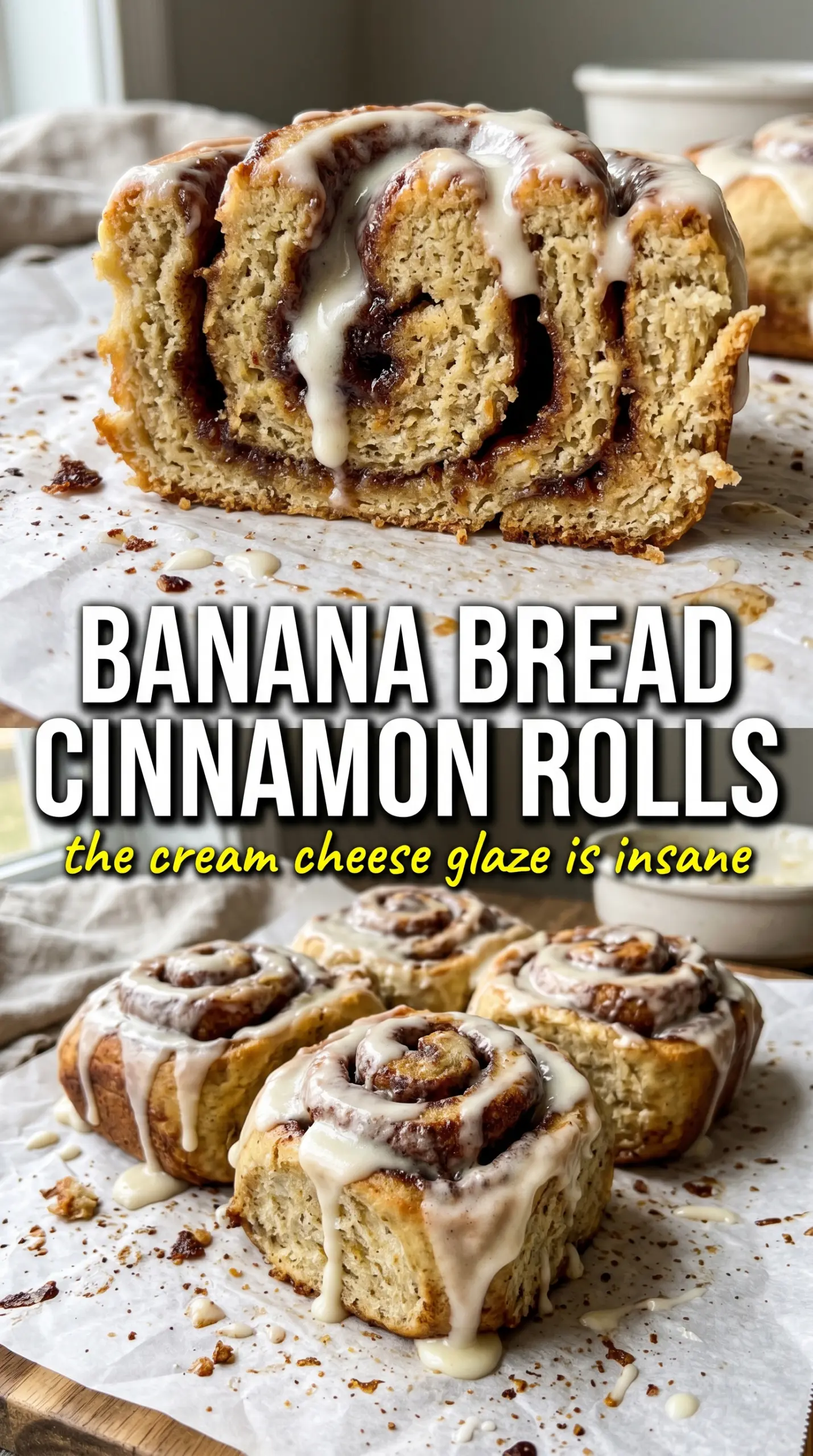
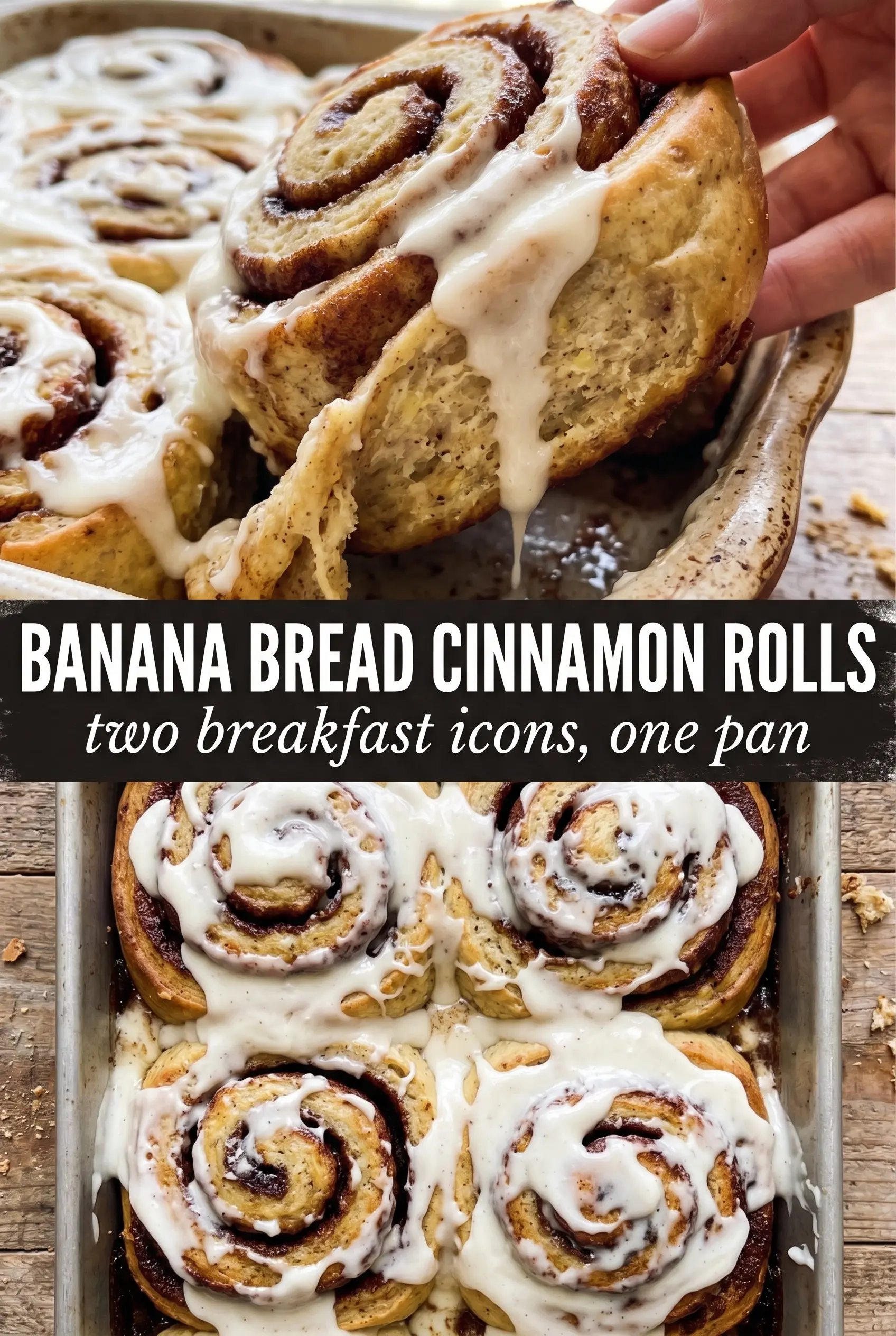
Pillowy banana bread cinnamon rolls bake up soft, tall, and tender, with a swirl that stays neat instead of collapsing into a sugary puddle. The banana in the dough gives them a mellow sweetness and a little extra moisture, while the brown sugar-cinnamon filling keeps the center gooey without making the rolls heavy. Once the brown butter cream cheese frosting hits the warm pan, it melts into the spirals and settles into every ridge.
Banana changes the dough in a good way, but it also changes the balance. Too much extra flour and the rolls turn dense; too little and the dough gets sticky and hard to shape. The sweet spot here is a smooth, slightly tacky dough that still pulls cleanly from the bowl after kneading. Instant yeast keeps the rise moving without a long wait, and the first rise gives the banana time to soften the crumb instead of weighing it down.
Below, I’ve included the one detail that keeps the filling from leaking out, plus the frosting trick that makes these taste closer to banana bread than a standard cinnamon roll. If you’ve ever wanted a breakfast pan that feels special but still familiar, this is the one to make.
The dough rose beautifully and the rolls baked up so soft. I was worried the banana would make them too wet, but the texture was perfect and the brown butter frosting took them over the top.
Save these banana bread cinnamon rolls for the morning when you want soft spirals, brown butter frosting, and the flavor of banana bread in every bite.
The Banana Trick That Keeps These Rolls Soft, Not Heavy
Banana bread dough can go wrong fast if the banana gets treated like just another wet ingredient. Bananas vary a lot in size and moisture, so the dough needs enough flour to become elastic, not enough to turn dry and stiff. The goal is a soft dough that still springs back when you press it. If it feels more like batter than dough, add flour a spoonful at a time until it starts to pull away from the bowl.
The other place people miss is the rise. Banana adds weight, so the dough needs a full hour to get puffy before it’s rolled out. If you rush that first rise, the rolls bake up compact and the spirals get compressed. Give the dough time to double and the finished rolls will tear apart in those soft, bakery-style layers.
What Each Ingredient Is Actually Doing in the Dough, Filling, and Frosting
- Ripe bananas — These bring moisture, sweetness, and that banana bread flavor without needing extra extract. Use bananas with plenty of brown spots; pale bananas won’t give you the same aroma or softness.
- Instant yeast — This gives the dough a reliable rise without blooming in a separate bowl. Active dry yeast works too, but it needs a little extra time in the warm milk before you add the rest of the ingredients.
- Warm milk — This helps the yeast wake up and makes the dough richer than water ever would. Keep it warm, not hot; anything above about 120°F can slow or kill the yeast.
- Brown sugar and cinnamon — Brown sugar melts into a deeper, stickier filling than white sugar, which matters here because the banana dough already brings sweetness. Cinnamon needs to be spread evenly so every slice bakes with a full spiral of flavor.
- Browned butter cream cheese frosting — Browning the butter gives the frosting a nutty edge that keeps it from tasting flat. Let the browned butter cool before beating it with the cream cheese, or the frosting turns loose and glossy instead of thick and spreadable.
Building the Spiral So the Filling Stays Put
Mixing and Kneading the Banana Dough
Start by combining the warm milk, yeast, and sugar and let it sit until it looks a little foamy. That tells you the yeast is active. Add the mashed bananas, butter, egg, flour, and salt, then knead until the dough is smooth and elastic. It should feel soft and slightly tacky, not wet enough to smear across your hands. If the banana was extra large and the dough sticks hard to the bowl, add flour one spoonful at a time until it becomes manageable.
Rolling and Filling Without Leaks
Roll the dough into a 12×18 rectangle with even thickness from edge to edge. Spread the softened butter all the way to the corners, then sprinkle on the brown sugar and cinnamon in an even layer. The key is tight rolling from the long side, but not so tight that the dough stretches and tears. If the seam won’t seal, pinch it closed before slicing, or the rolls can unwind in the pan.
Proofing and Baking for a Tall, Tender Finish
Place the sliced rolls in a greased 9×13 pan and let them puff for 30 minutes. They don’t need to double again, just get visibly fuller and touching each other slightly. Bake until the tops are golden and the centers look set, usually 20 to 25 minutes. Pull them when the edges are lightly bronzed; if you wait for a deep brown top, the centers usually overbake and lose that soft banana-bread crumb.
Frosting While the Rolls Are Still Warm
Beat the browned butter, cream cheese, powdered sugar, milk, and vanilla until smooth. Spread it over the rolls right away so it melts into the spirals instead of sitting on top like a thick lid. Warm rolls absorb the frosting best. If the frosting seems too stiff, add milk a teaspoon at a time. If it looks runny, it usually means the browned butter was too warm when it went in.
How to Adapt These Rolls Without Losing the Banana Bread Feel
Dairy-Free Version
Use plant-based butter in the dough, filling, and frosting, plus an unsweetened non-dairy milk. The rolls will still rise and bake up soft, but the frosting won’t have quite the same tang unless you use a dairy-free cream cheese with some bite.
Make Them a Little Less Sweet
Cut the sugar in the dough by 1 tablespoon and reduce the frosting sugar slightly if you like a softer finish. The banana already brings plenty of sweetness, so the rolls still taste complete, just a little less dessert-like.
Add Chopped Nuts
A handful of chopped toasted pecans or walnuts sprinkled over the filling gives the rolls more crunch and leans even harder into banana bread territory. Keep the layer light, or the filling gets bulky and the rolls can split while baking.
Storage and Reheating
- Refrigerator: Store covered for up to 4 days. The rolls stay soft, but the frosting firms up in the fridge.
- Freezer: Freeze baked, unfrosted rolls tightly wrapped for up to 2 months. Frost after thawing and warming so the topping stays smooth.
- Reheating: Warm individual rolls in the microwave for 15 to 20 seconds or the pan, covered with foil, in a low oven. Don’t blast them uncovered or the edges dry out before the center heats through.
Answers to the Questions Worth Asking
Banana Bread Cinnamon Rolls
Ingredients
Equipment
Method
- In a bowl, mix warm milk, instant yeast, and sugar, then let sit for 5 minutes until foamy. Visual cue: the surface should look bubbly and active.
- Add mashed ripe bananas, softened butter, egg, all-purpose flour, and salt, then knead until smooth. Visual cue: dough should feel elastic and no dry flour patches remain.
- Cover and let rise for 1 hour until puffy and increased in size. Visual cue: dough should spring back slowly when gently poked.
- Roll the dough into a 12x18 rectangle and spread with softened butter. Visual cue: cover the surface evenly edge to edge.
- Sprinkle brown sugar and cinnamon evenly over the buttered dough. Visual cue: you should see a uniform brown speckled layer.
- Roll up tightly from the long edge into a log, then slice into 12 rolls. Visual cue: you should see a clear spiral interior at the cut face.
- Place the rolls in a greased 9x13 pan and let rise for 30 minutes. Visual cue: rolls should look taller and slightly touching in the pan.
- Bake at 375°F for 20–25 minutes until golden. Visual cue: tops should turn deep golden brown with lightly set edges.
- Beat browned butter, cream cheese, powdered sugar, milk, and vanilla until smooth, then spread over warm rolls immediately. Visual cue: frosting will melt and pool into the swirls and corners.