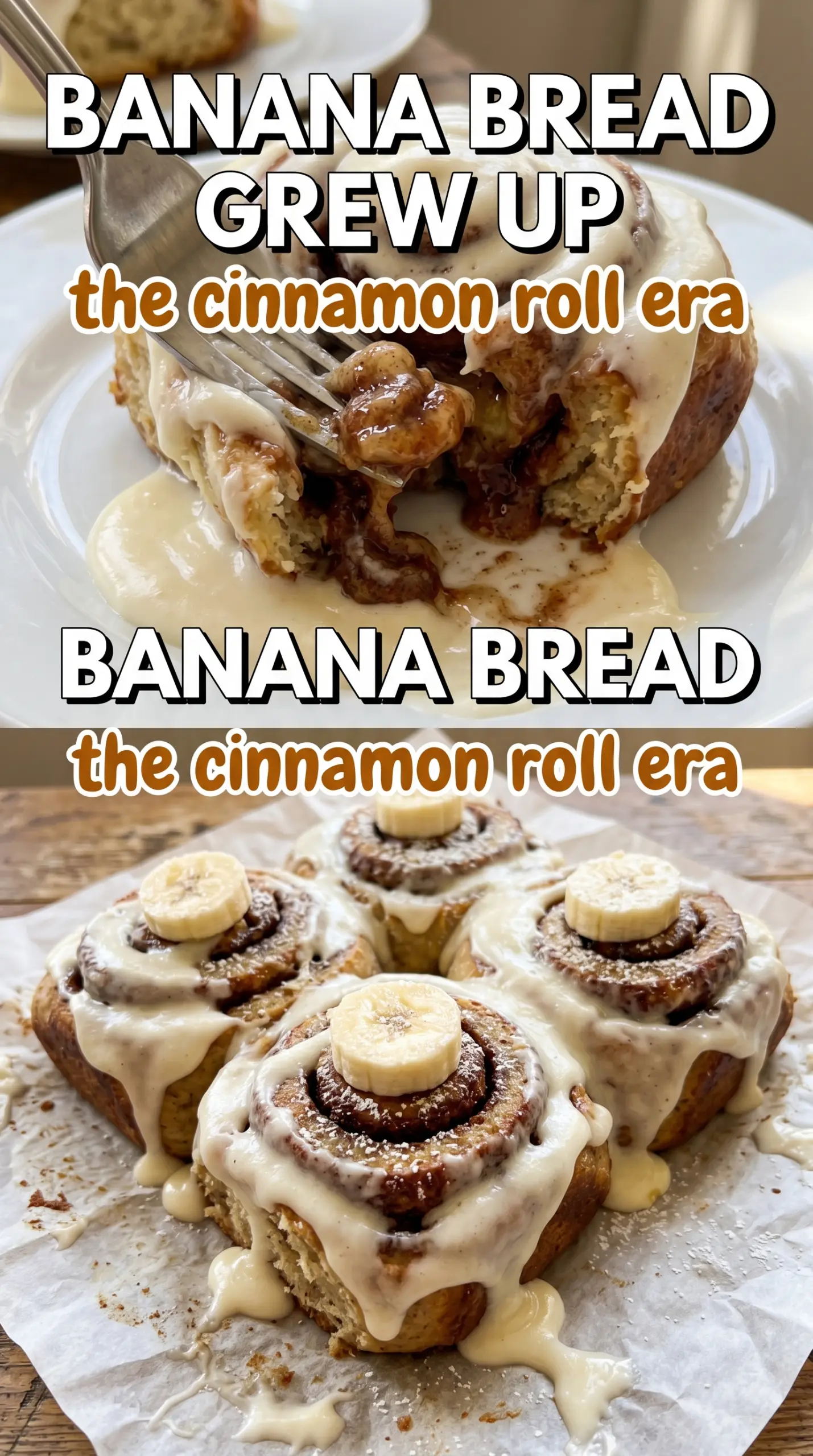
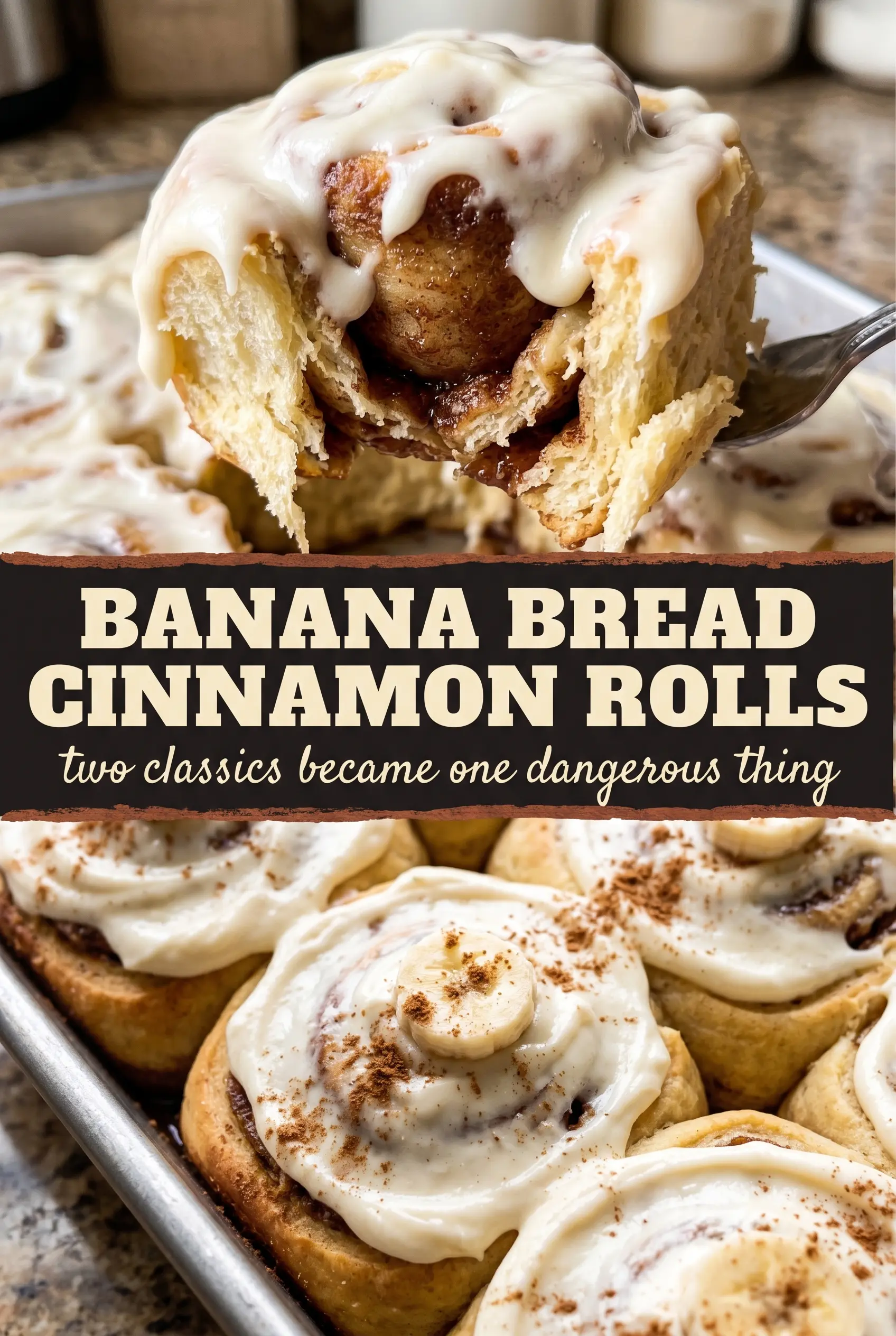
Banana bread cinnamon rolls hit that sweet spot between a soft breakfast roll and a slice of banana bread with a sticky cinnamon center. The dough bakes up tender and fragrant, the spirals stay plush, and the brown butter cream cheese frosting melts into every seam so you get banana, spice, and tang in one bite. They’ve got the comfort of classic cinnamon rolls, but the banana in the dough gives them a deeper, warmer sweetness that makes them stand out from the usual pan.
The trick is using ripe bananas for flavor without turning the dough heavy. You want mashed bananas that are soft and speckled, not watery, and the milk should be warm, not hot, so the yeast wakes up without getting stressed. Brown butter in the frosting pulls the whole thing together; it adds a toasted note that keeps the rolls from tasting flat or overly sweet.
Below you’ll find the small details that matter most, from getting the dough smooth without overflouring it to slicing clean spirals that rise evenly in the pan. If you’ve ever wanted banana bread and cinnamon rolls in the same pan, this is the version that actually delivers both.
The dough was soft and easy to roll, and the banana flavor came through without making the centers gummy. That brown butter frosting was the part everyone kept scraping off the pan.
Save these banana bread cinnamon rolls for the morning when you want soft swirls, brown butter frosting, and a pan that disappears fast.
The Banana Trick That Keeps These Rolls Soft, Not Dense
Banana can make dough taste wonderful, but it can also make it heavy if you treat it like a swap you can pile in without adjusting anything else. The goal here is a dough that still behaves like cinnamon roll dough: elastic, smooth, and able to hold a tight spiral. That’s why the banana gets paired with instant yeast and warm milk instead of being left to do all the work on its own.
The other thing that matters is flour restraint. Too much flour is the fastest way to lose the soft, pillowy texture that makes these worth baking. Stop kneading when the dough feels supple and slightly tacky, not dry. It should clear the bowl and still have a little bounce when you press it.
- Ripe bananas — The darker and softer they are, the more banana flavor you get. If they’re frozen, thaw them first and drain off any excess liquid so the dough doesn’t turn sticky and slack.
- Instant yeast — This gives the dough a reliable rise without a long proofing window. If you only have active dry yeast, bloom it in the warm milk for 5 to 10 minutes before adding the rest of the dough ingredients.
- Warm milk — Warm to the touch, not hot. If the milk is too hot, it can slow the yeast or kill it, and the dough won’t rise with the same lift.
- Butter in the dough — This is what keeps the crumb tender. Softened butter blends in cleanly; melted butter can make the dough greasier and harder to shape.
What Each Ingredient Is Actually Doing in This Roll
- Flour (the structure base) — All-purpose creates the dough structure. Protein content matters for elasticity.
- Yeast (the rise) — This creates gas bubbles that make rolls light and airy. Proof it properly first.
- Warm liquid (milk or water) — This activates yeast and hydrates flour. Temperature matters—too hot kills yeast.
- Sugar (the yeast food) — Yeast eats sugar to ferment and create rise. A little goes a long way.
- Butter (the richness and flakiness) — This adds flavor and creates tender, flaky texture. Don’t skip it.
- Salt (the flavor and control) — Salt controls fermentation and enhances flavor. Too much slows yeast down.
- Filling (if applicable, cinnamon sugar or savory) — This adds flavor and prevents rolls from becoming one-dimensional.
- Proper proofing (rise time matters) — Underproofed rolls are dense. Overproofed rolls are gummy. Time is everything.
Getting the Spiral Right Before the Pan Goes Into the Oven
Mixing the banana dough
Stir the mashed bananas, warm milk, yeast, and sugar first and give it a short rest so the yeast starts moving. Once the butter, egg, flour, and salt go in, knead until the dough turns smooth and elastic. If it looks shaggy at first, that’s normal. What you’re watching for is a dough that stops tearing and starts stretching.
Rolling the filling evenly
Roll the dough into a rectangle with even thickness so the rolls bake at the same pace. Spread the butter all the way to the edges, then scatter the brown sugar and cinnamon in a thin, even layer. If the filling piles up in spots, it leaks out and leaves empty patches inside the swirls.
Slicing and proofing the rolls
Roll the log tightly so the center stays defined, then slice into 12 even pieces with a sharp knife or unflavored dental floss. Place them cut-side up in a greased 9×13 pan with a little room to expand. During the second rise, the rolls should look puffy and nearly touching. If they still look compact, they need more time.
Baking until the tops just turn golden
Bake at 375°F until the tops are golden and the centers look set but still soft. Pull them before the edges get dark; overbaking is what turns cinnamon rolls dry instead of plush. A light press on the center roll should feel springy, not wet. Let them sit for a few minutes before frosting so the topping melts instead of sliding off.
What the Brown Butter and Cream Cheese Are Doing in the Frosting
The frosting isn’t just there to sweeten the rolls. Brown butter gives it a nutty, toasted edge that plays up the banana flavor, while cream cheese keeps it tangy enough to balance the sugar. Together they make the topping taste richer and less one-note than a standard butter glaze.
Softened cream cheese matters here because cold cream cheese leaves little lumps behind. Brown butter should be cooled slightly before beating it in, or it can melt the cream cheese and turn the frosting loose. Powdered sugar thickens it, and just enough milk loosens it into something spreadable. The goal is a frosting that settles into the spirals without disappearing completely.
Make Them Without Dairy
Use a plant-based butter in both the dough and filling, and swap the milk for an unsweetened non-dairy milk. The frosting changes the most: use a dairy-free cream cheese that’s meant for baking, and expect a slightly softer finish with the same tangy contrast.
Add Chocolate Chips to the Filling
A small handful of mini chocolate chips works better than big chips because they stay tucked into the swirl. You’ll get sweeter pockets and a more dessert-like roll, but the banana flavor still comes through if you don’t overdo it.
Turn Them Into Overnight Rolls
Shape the rolls, cover the pan tightly, and refrigerate overnight after the second rise starts, then bake them the next morning after they’ve warmed on the counter a bit. This is the best move if you want fresh rolls without an early start, and it keeps the texture just as soft.
Use a Less Sweet Glaze
If you want the banana bread side to lead, cut the powdered sugar back a little and loosen the frosting with an extra splash of milk. You’ll get more tang and brown butter flavor, with less of the full frosting-heavy finish.
Storage and Reheating
- Refrigerator: Store covered for up to 4 days. The rolls stay soft, but the frosting firms up in the fridge.
- Freezer: Freeze unfrosted rolls for the best texture, wrapped well and stored up to 2 months. Frosting can be made fresh after reheating.
- Reheating: Warm individual rolls in the microwave for 20 to 30 seconds or cover the pan with foil and heat in a 300°F oven until warmed through. Don’t blast them uncovered in high heat or the edges dry out before the center softens.
Questions I Get Asked About This Recipe
Banana Bread Cinnamon Rolls
Ingredients
Equipment
Method
- Mix mashed bananas, warm milk, instant yeast, and sugar, then let rest 5 minutes until foamy and aromatic.
- Add softened butter, egg, flour, and salt, then knead until smooth, elastic, and no dry flour remains.
- Cover the dough and let it rise for 1 hour until doubled in size.
- Roll the dough into a rectangle, keeping an even thickness so the layers bake uniformly.
- Spread softened butter over the dough, then sprinkle brown sugar and cinnamon in an even layer.
- Roll up tightly into a log, keeping the seam on the bottom to prevent unspooling.
- Slice into 12 rolls and place them in a greased 9x13 pan with cut sides facing up.
- Cover and let rise for 30 minutes until puffy.
- Bake at 375°F for 20–25 minutes until the tops are deep golden and the center rolls feel set.
- Beat brown butter, cream cheese, powdered sugar, milk, and vanilla until smooth, then spread over warm rolls so the frosting melts into every swirl.