Golden chicken thighs tucked into a creamy Parmesan sauce with sun-dried tomatoes and spinach is the kind of dinner that lands on the table looking like you put in far more work than you did. The skin stays crisp where it peeks above the sauce, the tomatoes bring a little sweet-tart chew, and the whole pan smells rich and savory before it even comes out of the oven. It’s the sort of baked chicken that gets scraped clean because every bite has something going on.
What makes this version work is the order. The chicken gets a hard sear first, which builds flavor and gives you that deep color you can’t fake later in the oven. Then the sauce comes together in the same pan, so the browned bits from the chicken melt into the cream instead of being left behind. The spinach goes in at the end so it stays bright and doesn’t disappear into the sauce.
Below, I’ve laid out the exact points where people usually rush and how to avoid them, plus a few swaps that keep the dish balanced if you need to work with what’s in the fridge.
The chicken skin stayed crisp even after baking, and the sauce thickened up into this glossy, restaurant-style coating. I used the extra sauce over pasta the next night and it was even better.
Pin this baked Tuscan chicken for a golden, creamy chicken dinner with sun-dried tomatoes and spinach.
The Trick to Keeping the Chicken Skin Crisp Under Cream Sauce
The mistake with baked chicken in a creamy sauce is putting the meat into the sauce too early or covering the pan so tightly that the skin steams. Here, the chicken gets seared first, then finishes in the oven uncovered. That gives the thighs a head start on color and keeps the skin from turning rubbery once the sauce goes in.
Bone-in, skin-on thighs matter here because they stay juicy through the sear and the bake. You can use boneless thighs in a pinch, but they’ll cook faster and won’t give you the same rich pan drippings. The sauce also needs a short simmer before baking so the cream and Parmesan come together instead of separating in the oven.
What Each Ingredient Is Actually Doing in This Pan
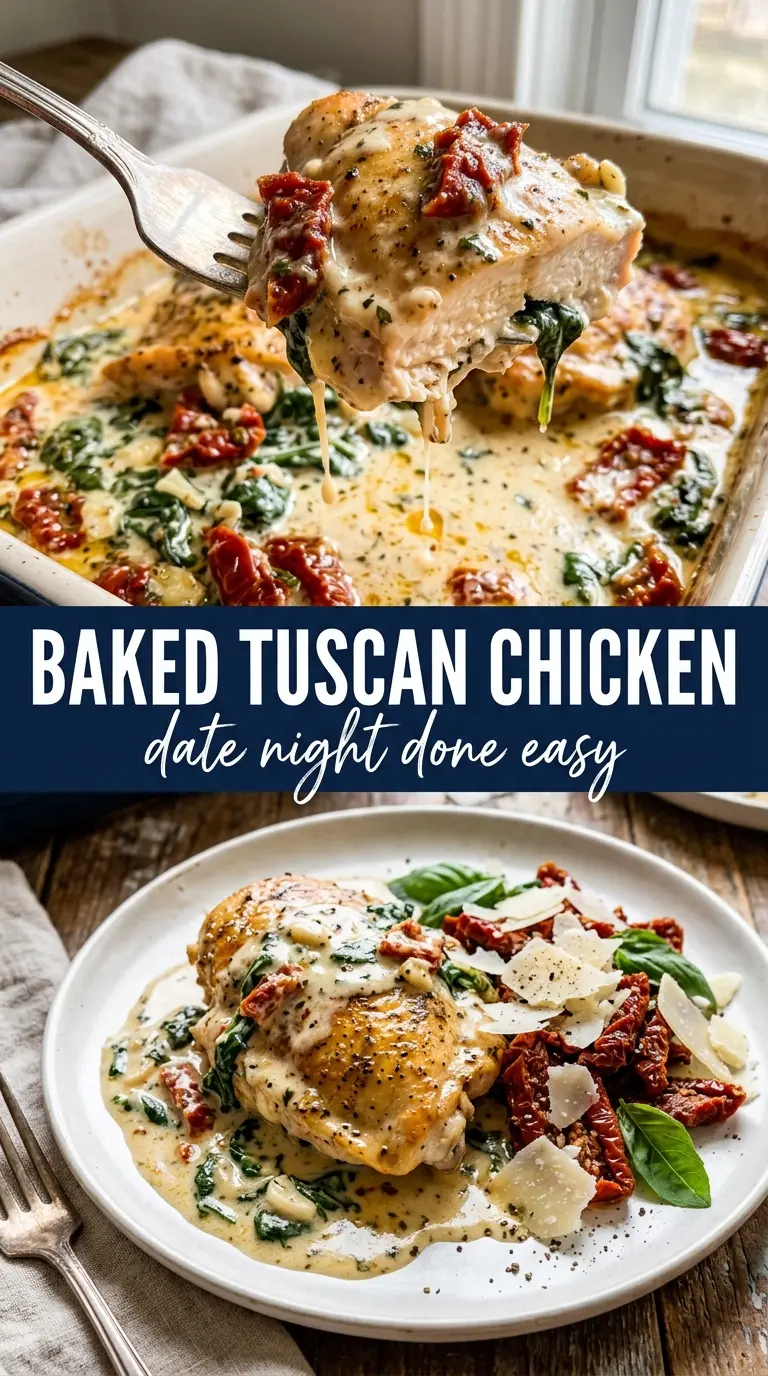
- Bone-in, skin-on chicken thighs — These bring the best texture and the most flavor. The skin crisps in the skillet, and the bones help the meat stay tender through baking. If you swap in boneless thighs, cut the bake time down a few minutes and expect less built-in richness.
- Sun-dried tomatoes in oil — These give the sauce its sweet, concentrated tomato note and a little chew. Drain them, but don’t rinse them; that oil carries extra flavor. Jarred tomatoes packed dry can work, but soak them briefly in hot water first so they don’t stay leathery.
- Heavy cream and Parmesan — This is the backbone of the sauce. Heavy cream holds up in the oven better than half-and-half, and freshly grated Parmesan melts smoother than the shelf-stable kind. If the sauce looks grainy, the heat was too high when the cheese went in.
- Fresh baby spinach — It softens fast and balances the richness without making the sauce watery. Add it at the end, just until wilted, or it will turn dull and lose its shape.
- Smoked paprika and red pepper flakes — These don’t make the dish spicy-hot; they deepen the sauce and keep the cream from tasting flat. If you want a milder pan, cut the red pepper flakes in half, but keep some heat in there because it lifts the Parmesan.
Building the Sauce in the Same Pan the Chicken Used
Seasoning and Searing the Thighs
Heat the oil until it shimmers, then lay the thighs in skin-side down and leave them alone long enough to build a deep golden crust. If you move them too early, the skin tears and sticks. The chicken doesn’t need to be cooked through at this stage; you’re building flavor and texture, not finishing the job yet. Flip only when the skin releases easily and looks bronze, not pale gold.
Pulling Flavor from the Pan
Once the chicken comes out, the garlic goes in for just about 30 seconds. Any longer and it can burn before the broth goes in. Stir in the sun-dried tomatoes, then pour in the chicken broth and scrape up every browned bit from the bottom of the skillet. Those bits are the backbone of the sauce, and if they stay stuck, the final pan will taste flatter.
Finishing the Cream Sauce
Add the cream, Parmesan, Italian seasoning, and red pepper flakes, then let the sauce simmer gently until it starts to thicken enough to coat a spoon. Keep the heat low enough that the surface trembles instead of boiling hard. High heat can split the cream or make the cheese clump, and once that happens it’s hard to bring the sauce back. Stir in the spinach only after the sauce is smooth.
Baking Until the Thighs Are Done
Set the seared chicken back into the sauce skin-side up so the top stays above the liquid. Bake uncovered until the thickest part reaches 165°F and the sauce is bubbling at the edges. If the skin looks pale at the end, give it a minute or two under the broiler, but watch it closely. The line between crisp and burned is short.
How to Adapt This for the Night You Need a Small Change
Make It Dairy-Free Without Losing the Creamy Finish
Use canned full-fat coconut milk in place of the cream and skip the Parmesan, then add a little extra salt and a spoonful of nutritional yeast if you want more savory depth. The sauce won’t taste exactly the same, but it will still be rich and spoonable. Keep the heat low, because coconut milk can separate if it boils hard.
Use Chicken Breasts When That’s What You Have
Chicken breasts work, but they dry out faster, so pound them to an even thickness and start checking early. Sear them the same way, then shorten the bake time and pull them as soon as they hit temperature. You’ll lose a little of the natural richness you get from thighs, so the sauce matters even more here.
Make It Gluten-Free as Written
This recipe is naturally gluten-free as long as your broth and Parmesan are certified gluten-free. The technique doesn’t need changing, which is part of why it’s such a dependable dinner. If you serve it with pasta or bread on the side, pick a gluten-free version there rather than touching the pan sauce.
Stretch It Into a Bigger Pan Dinner
Add a few extra handfuls of spinach or more sun-dried tomatoes if you want the sauce to feel fuller, but don’t double the cream unless you’re also using a larger skillet. The chicken should still sit partly above the sauce so the skin bakes instead of steams. This version serves beautifully over rice, mashed potatoes, or pasta.
Storage and Reheating
- Refrigerator: Store leftovers in an airtight container for up to 4 days. The chicken skin softens, but the sauce holds up well.
- Freezer: The sauce can separate after freezing, so I don’t recommend freezing the finished dish. If you need to freeze anything, freeze the cooked chicken separately and make the sauce fresh.
- Reheating: Warm gently in a covered skillet over low heat with a splash of broth or cream. Don’t blast it in the microwave or the sauce can turn oily and the chicken can dry out.
Answers to the Questions Worth Asking
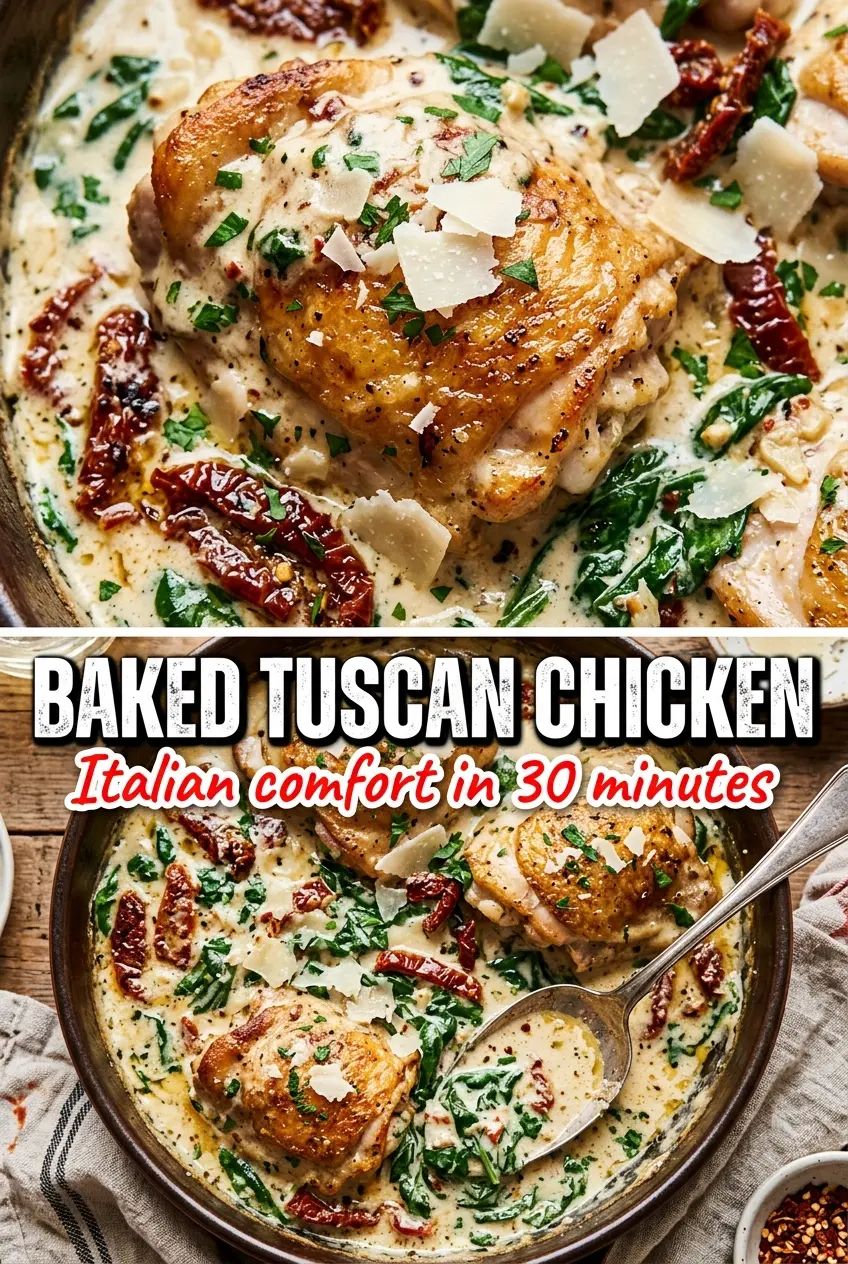
Baked Tuscan Chicken
Ingredients
Equipment
Method
- Preheat oven to 400°F and season the chicken thighs generously with salt, pepper, garlic powder, Italian seasoning, and smoked paprika.
- Heat olive oil in an oven-safe skillet over medium-high heat and sear the chicken skin-side down for 6-7 minutes until deeply golden.
- Flip the chicken and sear for 3 more minutes, then remove to a plate.
- Cook the minced garlic for 30 seconds, then add the sun-dried tomatoes and cook for 1 minute.
- Deglaze with chicken broth, scraping up browned bits from the skillet.
- Stir in heavy cream, Parmesan, Italian seasoning, and red pepper flakes, then simmer briefly until the sauce looks cohesive.
- Stir in the baby spinach until wilted, then nestle the chicken skin-side up into the sauce.
- Bake uncovered for 18-20 minutes, until the internal temperature reaches 165°F.
- Garnish with fresh basil, then serve.