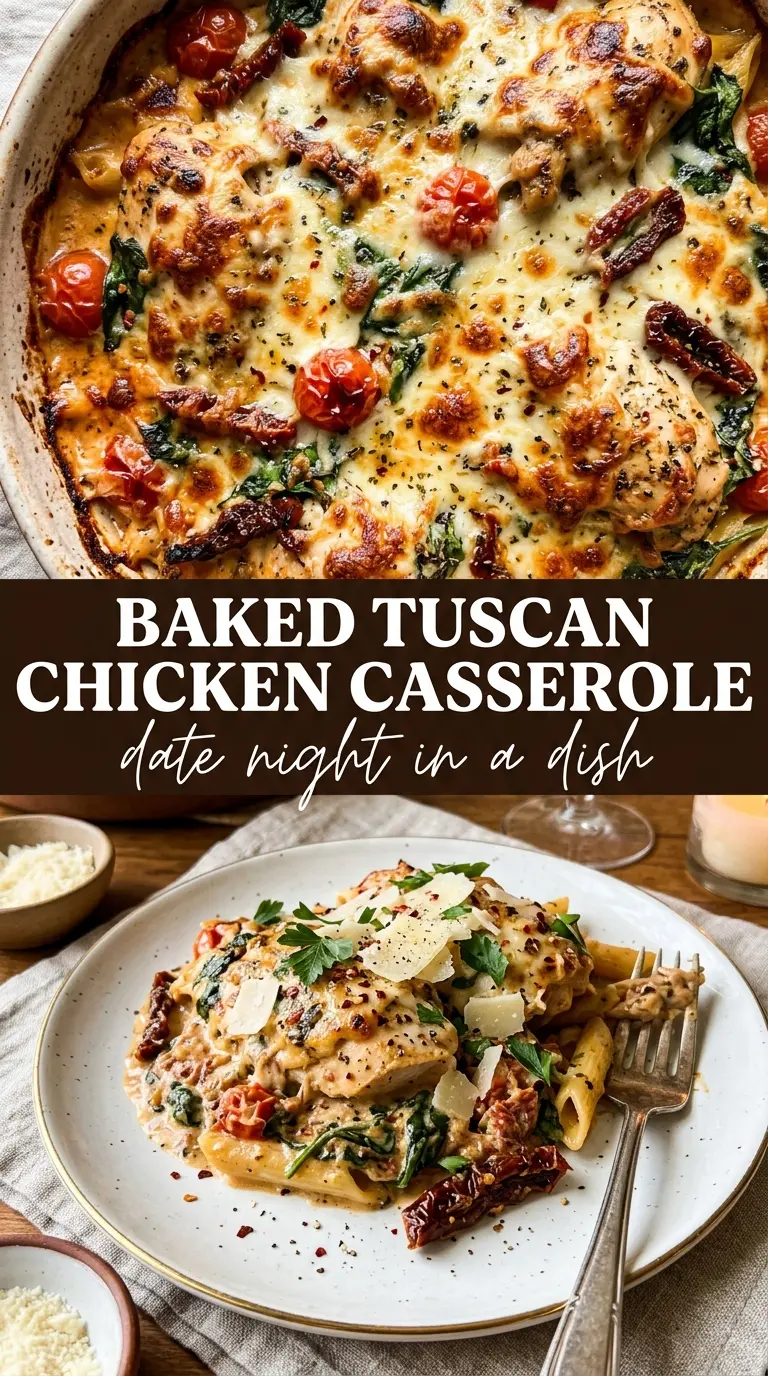
Golden chicken thighs tucked into a creamy sun-dried tomato and spinach sauce are the kind of dinner that looks like it took far more effort than it did. The skin turns crisp in the pan, then stays bronzed while the sauce bubbles up around it in the oven, thickening into a silky Parmesan finish with little bursts of tomato and garlic in every bite. It’s rich without feeling heavy, and it lands on the table like a full meal, not just a main dish.
The part that makes this casserole work is the order. The chicken gets a hard sear first, which builds flavor in the pan and keeps the skin from going soft before baking. Then the sauce is made right in the same skillet, so every browned bit from the chicken becomes part of the final dish. Heavy cream and Parmesan need gentle heat, not a boil, or the sauce can turn grainy instead of smooth.
Below you’ll find the exact timing for getting the chicken cooked through without drying it out, plus a few smart swaps if you need to adapt the casserole for what’s in your kitchen.
The chicken skin stayed crisp, and the sauce thickened into that perfect creamy texture without separating. I served it with crusty bread, and my husband asked if I could make it again the next night.
Save this baked Tuscan chicken casserole for the nights when you want crisp chicken, creamy sauce, and one pan that does the whole job.
The Sear Is What Keeps This Casserole from Turning Soft
The biggest mistake with creamy chicken bakes is skipping the sear or rushing it. Skin-on thighs need enough time in the skillet to render some fat and take on deep color, because that first stage sets the texture for the whole dish. If you move the chicken too early, the skin sticks, tears, and ends up pale under the sauce.
Using thighs instead of breasts matters here. Thighs stay juicy through the bake time and can handle the heat needed to finish the sauce without drying out. The sauce is also built in the same pan, which means the browned bits left behind do the heavy lifting for flavor instead of relying on extra seasoning later.
- Chicken thighs — Bone-in, skin-on thighs are the best fit because they stay moist and keep their shape in a saucy bake. Boneless thighs work too, but they cook faster and won’t give you the same crisp skin or deep pan flavor.
- Sun-dried tomatoes in oil — These bring concentrated tomato flavor and a little richness. Drain them well, then slice them so they spread through the sauce instead of clumping in one bite.
- Heavy cream — This is what gives the sauce its body and keeps it from breaking in the oven. Half-and-half can work in a pinch, but the sauce will be thinner and a little less stable.
- Parmesan — Use finely grated Parmesan, not the shelf-stable powder. Freshly grated cheese melts into the sauce more smoothly and gives it that savory finish without a gritty texture.
- Spinach — Baby spinach wilts fast and folds into the sauce cleanly. If you use regular spinach, strip the stems and chop it first so you don’t end up with tough pieces.
What Each Ingredient Is Actually Doing in This Recipe
- Primary ingredient (the star) — Quality matters most. Choose the best you can find.
- Cooking medium (oil, butter, or broth) — This carries flavors and prevents dryness.
- Seasonings (salt, pepper, spices, herbs) — Layer flavors so nothing overpowers. Build depth gradually.
- Aromatics (garlic, onion, herbs) — Cook with fat to bloom flavors. Become the foundation.
- Supporting ingredients — Complement the main ingredient without overpowering it.
- Sauce or liquid (if applicable) — Brings flavors together. Balance richness with acid.
- Acid (lemon, vinegar, wine, or other) — Brightens and prevents flat-tasting results.
- Final finish (garnish, glaze, or sauce) — Prevents one-dimensional taste and adds visual appeal.
Building the Sauce Before the Chicken Finishes
Seasoning and Searing the Thighs
Pat the chicken dry before seasoning it so the skin can brown instead of steam. The skillet needs to be hot enough that the chicken sizzles the second it hits the pan, and the skin should release on its own after 6 to 7 minutes. If it sticks, it isn’t ready yet. Flip it once the skin is deep gold and crisp on the surface, then sear the second side just long enough to add color.
Using the Same Pan for the Sauce
After the chicken comes out, keep the pan on the stove and go straight in with garlic and sun-dried tomatoes. They only need about a minute, just until the garlic smells fragrant and not raw. Pour in the broth to loosen the browned bits, then stir in the cream and Parmesan over low heat. If the sauce looks grainy, the pan was too hot when the cheese went in.
Finishing in the Oven
Return the chicken skin-side up so the top stays above the sauce and keeps some of its texture. Bake uncovered until the chicken hits 165°F at the thickest part and the sauce is bubbling around the edges. The sauce will look a little loose when it first comes out, then thicken as it rests for a few minutes. Stir the spinach in at the very end so it wilts without turning dull and overcooked.
Make It Broader or Lighter
You can use boneless, skinless chicken thighs if that’s what you have, but shorten the bake time and expect a softer finish since there’s no skin to crisp. The sauce still works, but the casserole will be a little less rich and a little faster to cook.
Dairy-Free Version
Use full-fat canned coconut milk instead of cream and skip the Parmesan, then add a little extra salt and a spoonful of nutritional yeast if you want more savory depth. The sauce will taste a touch different and won’t be as classic, but it still comes together with a creamy finish.
Lower-Carb Serving Ideas
This already fits a low-carb dinner well on its own, but it pairs especially well with roasted cauliflower, zucchini, or a simple salad. The sauce is rich enough that you don’t need pasta to make it feel complete.
Storage and Reheating
- Refrigerator: Store for up to 4 days. The sauce will thicken as it chills.
- Freezer: It freezes, but the cream sauce can separate a little when thawed. For the best texture, freeze only if needed and thaw overnight in the refrigerator.
- Reheating: Reheat gently in a covered skillet over low heat with a splash of broth or cream. High heat can split the sauce and dry out the chicken before the center is warm.
Questions I Get Asked About This Recipe
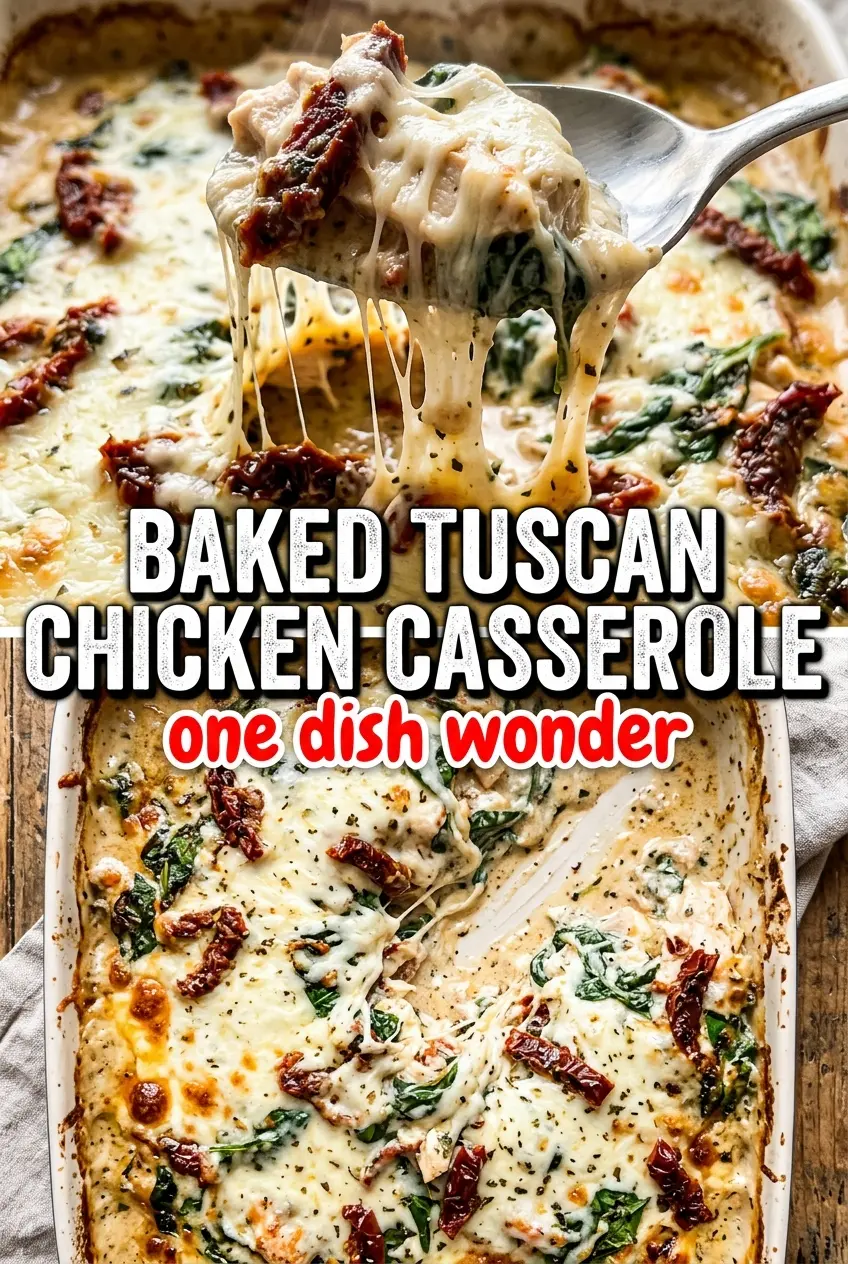
Baked Tuscan Chicken Casserole
Ingredients
Equipment
Method
- Preheat the oven to 400°F. Season the chicken thighs with salt, pepper, garlic powder, Italian seasoning, and smoked paprika.
- Heat olive oil in a large oven-safe skillet or braiser over medium-high heat. Sear the chicken skin-side down for 6-7 minutes until deeply golden.
- Flip the chicken and sear for 3 more minutes until the second side is browned. Remove the chicken from the pan.
- Cook the garlic and sun-dried tomatoes in the same pan for 1 minute. Pour in the chicken broth and deglaze, scraping up browned bits.
- Stir in the heavy cream, Parmesan, Italian seasoning, and red pepper flakes. Cook just until the sauce looks cohesive and starts to thicken.
- Return the chicken skin-side up to the pan, nestling it into the sauce. Transfer to the oven uncovered and bake for 20-22 minutes until the chicken reaches 165°F.
- Stir the baby spinach into the sauce until wilted. The sauce should bubble around the chicken with visible tomato and herb pieces.
- Garnish with fresh basil and serve. The top of the chicken should be golden with Parmesan browned at the edges.