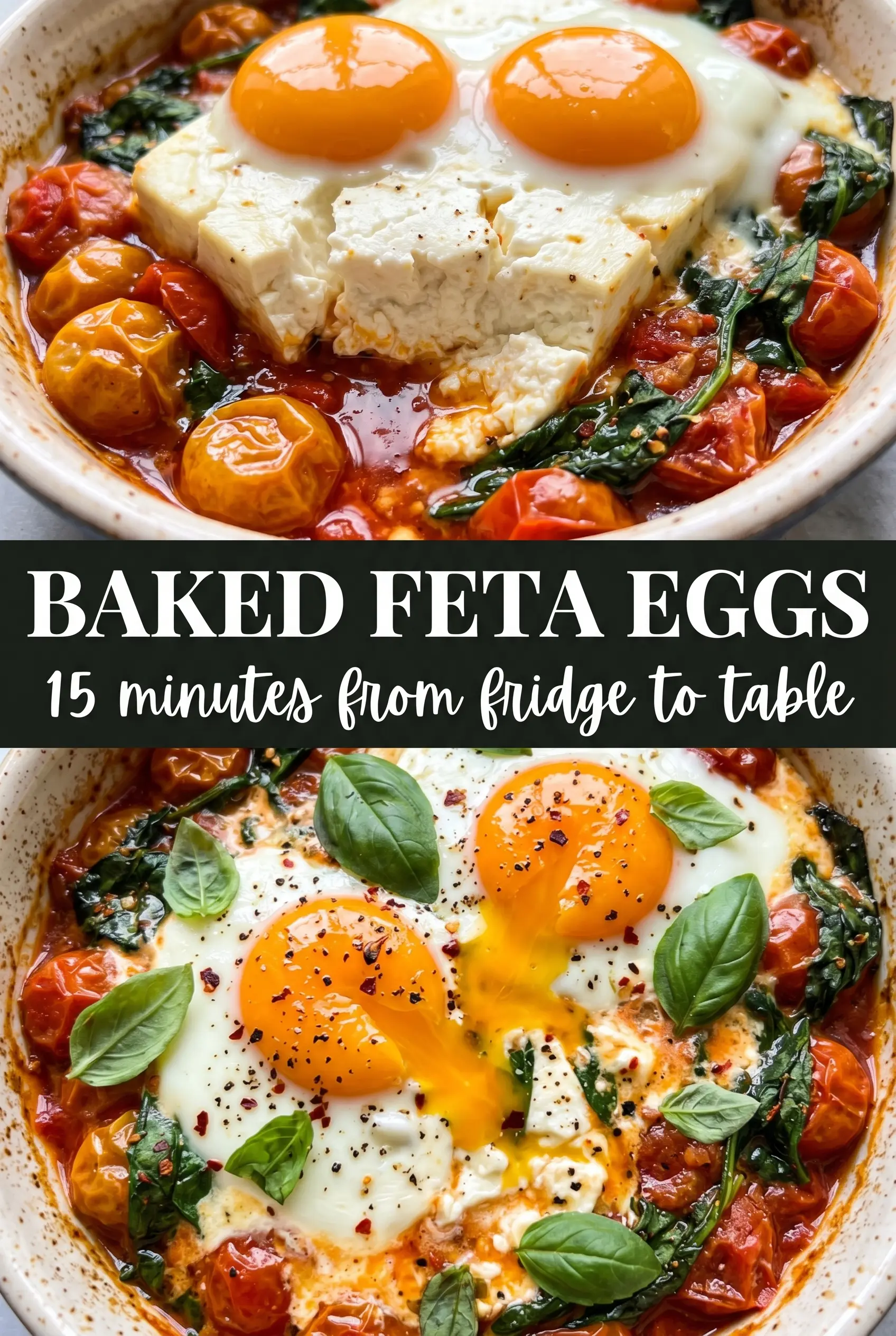
Golden feta, blistered cherry tomatoes, and soft-set eggs come together in one small baking dish, and the result is bigger than the ingredient list. The feta turns creamy and salty as it warms, the tomatoes collapse into a juicy, garlicky sauce, and the eggs finish right on top with yolks that stay runny enough to soak into bread. It’s the kind of breakfast that feels low-effort but still lands like you paid attention.
What makes this version work is the order. The feta and tomatoes get a head start so the cheese loosens and the tomatoes burst before the eggs go in. If you bake everything at once, the whites need too long and the yolks overcook. The little pool of olive oil matters too; it carries the garlic, keeps the dish from drying out, and helps the feta melt instead of turning rubbery.
Below, I’ve included the small details that make the difference between a baked dish that’s just fine and one you’ll make again: how to tell when the base is ready for the eggs, what to swap if you only have crumbled feta, and how to keep the yolks soft without leaving the whites underdone.
The feta turned creamy instead of dry and the tomatoes made the best little sauce around the eggs. I baked it the full 15 minutes and the yolks were still perfect for dipping bread.
Baked feta eggs are the kind of breakfast that turns pantry staples into something worth slowing down for.
The Part Most People Rush: Let the Feta Melt Before the Eggs Go In
The biggest mistake with baked feta eggs is cracking the eggs into a dish that hasn’t had enough time to soften. Feta needs that first bake to turn creamy and mingle with the tomatoes; otherwise you end up with dry, salty chunks sitting under barely set eggs. The goal is a hot, bubbling base with tomatoes that have started to collapse and release their juices.
Once that happens, the spoon wells matter. They give the eggs a place to settle so the whites stay a little more contained instead of sliding everywhere. If the dish looks a bit loose when the eggs go in, that’s fine. The second bake is short, and the eggs finish best in the heat already trapped in the baking dish.
What Each Ingredient Is Actually Doing in This Dish

- Block feta cheese — Use a block, not pre-crumbled feta. A block softens into a creamy base as it bakes, while crumbles dry out faster and give you a grainier texture. If block feta is all you can find, pat it dry and leave it in one piece in the center of the dish.
- Cherry tomatoes — These bring the juice that turns the feta into a sauce. Halving them helps them burst faster, and that matters in a short bake. Grape tomatoes work too, but they’re a little firmer and may need another minute or two before the eggs go in.
- Olive oil — Don’t skip the oil. It helps the tomatoes roast instead of steam, carries the garlic and pepper flakes, and keeps the feta from baking into a stiff slab. Use a decent olive oil here because the flavor comes through.
- Garlic and red pepper flakes — Add these before the first bake so they bloom in the hot oil. Raw garlic stirred in at the end tastes sharper and less integrated. If you’re sensitive to heat, cut the pepper flakes in half; the dish still has plenty of punch from the feta.
- Eggs — Crack them into the hot base after the first bake so the whites can set without overcooking the yolks. Cold eggs from the fridge are fine, but they may need the full 7 minutes. Watch the whites, not the clock.
- Fresh basil or parsley — Add this at the end for freshness. It lifts the saltiness of the feta and keeps the dish from feeling heavy. Basil gives it a softer, sweeter finish; parsley keeps it brighter.
Building the Base So the Eggs Finish Right
Warming the Feta and Tomatoes First
Start with the feta in the center of a small oven-safe dish and scatter the tomatoes around it. Drizzle everything with olive oil, then add the garlic, red pepper flakes, and a good pinch of salt and black pepper. Bake at 400°F for about 10 minutes, until the tomatoes blister and the feta looks soft at the edges. If the tomatoes haven’t started to wrinkle, they need more time before the eggs go in.
Making the Wells for the Eggs
Pull the dish from the oven and use a spoon to make four shallow wells in the softened feta-tomato mixture. Don’t dig all the way to the bottom of the pan; you just want little pockets that help hold the eggs in place. If you skip this, the whites spread out more and cook unevenly. The base should still be hot enough that you can hear a little sizzle when the eggs hit it.
Finishing Without Overcooking the Yolks
Crack one egg into each well and return the dish to the oven for 5 to 7 minutes. The whites should look set at the edges and mostly opaque, while the yolks still wobble when you nudge the pan. If you wait until the yolks look firm in the oven, they’ll carry over and lose that runny center by the time you serve. Pull the dish as soon as the whites are done.
How to Adapt Baked Feta Eggs Without Losing the Good Part
Make It Dairy-Free
Swap the feta for a firm vegan feta-style cheese that bakes well, or use a thick layer of seasoned cashew cream if you want a softer base. You’ll lose some of the salty tang that makes the original pop, so add an extra pinch of salt and a little lemon zest after baking.
Add Spinach Without Making It Watery
Tuck a handful of baby spinach around the feta before the first bake. It wilts fast and adds volume without changing the texture much. Don’t add too much, or the extra moisture can dilute the tomato juices and make the dish less concentrated.
Use Crumbled Feta in a Pinch
Crumbled feta works if that’s what you have, but it won’t melt into the same creamy base. Press it together lightly in the center of the dish so it behaves a little more like a block, then reduce the first bake by a minute and keep an eye on drying at the edges.
Make It a Heartier Breakfast
Add cooked chickpeas, sautéed onions, or a few slices of roasted potato to the pan before baking. Those additions soak up the tomato-feta juices and turn the dish into a more filling meal, but they also absorb moisture, so keep the olive oil generous.
Storage and Reheating
- Refrigerator: Store leftovers in an airtight container for up to 2 days. The yolks will firm up, but the tomato-feta base stays flavorful.
- Freezer: I don’t recommend freezing this dish. Eggs turn rubbery and the tomatoes lose their texture after thawing.
- Reheating: Warm leftovers gently in a low oven or in a covered skillet over low heat. High heat pushes the eggs from softly set to tough fast.
Answers to the Questions Worth Asking
Baked Feta Eggs
Ingredients
Equipment
Method
- Preheat the oven to 400°F. Place the feta block in the center of a small oven-safe baking dish.
- Scatter the halved cherry tomatoes around the feta. Drizzle olive oil over everything, then add the minced garlic and red pepper flakes.
- Bake at 400°F for 10 minutes until the feta softens and the tomatoes blister. You should see the feta begin to melt into a glossy pool around the tomatoes.
- Remove the dish from the oven and use a spoon to create 4 wells in the feta-tomato mixture. Keep the melted feta intact so the wells hold their shape.
- Crack one egg into each well, return to the oven, and bake at 400°F for 5–7 minutes until the whites are set but the yolks are still runny. Look for glossy, intact yolks and a bubbling, melted feta border.
- Garnish with fresh basil or parsley and serve with crusty bread. Taste and adjust with salt and black pepper if needed before eating.