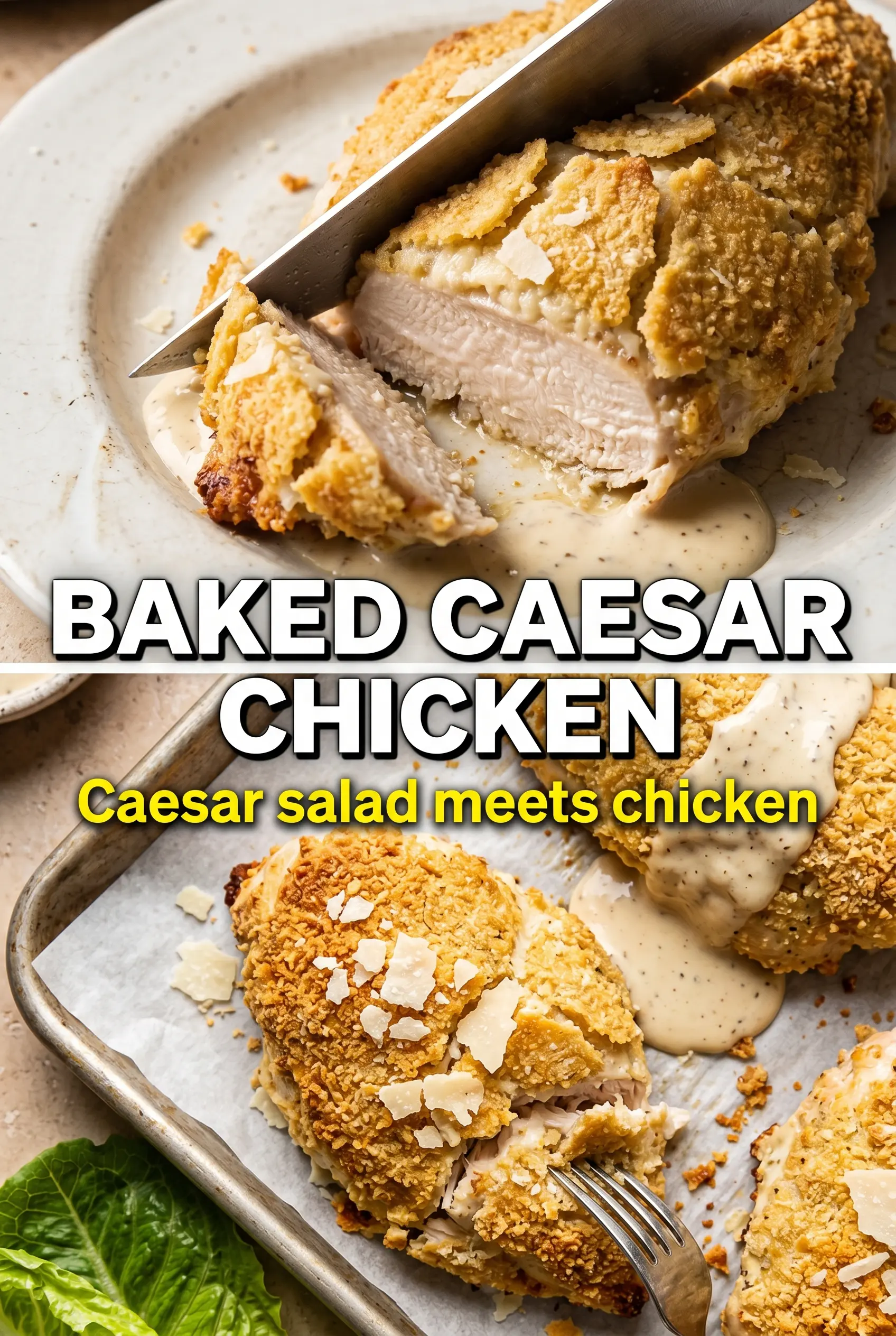
Golden, caramelized Caesar chicken is one of those dinners that looks like you worked a lot harder than you did. The chicken stays juicy under a sharp Parmesan crust, and the edges turn crisp and deeply savory in the oven. It’s the kind of main dish that lands on the table smelling like garlic, cheese, and toasted breadcrumbs, then disappears fast because it checks every box: fast prep, big flavor, and no complicated steps.
What makes this version work is the short marinade. Caesar dressing already brings salt, fat, acid, and seasoning, so the chicken picks up flavor in just 20 minutes without needing a long soak. The panko-Parmesan topping bakes into a crackly crust that keeps the top from drying out while the chicken cooks through. I also like a hit of lemon zest in the marinade because it keeps the richness from tasting heavy.
Below, I’ve included the one step that keeps the crust crisp instead of soggy, plus a few smart swaps for different Caesar dressings and chicken cuts. If you’ve ever had baked chicken go pale and bland, this method fixes that problem.
The chicken stayed juicy and the Parmesan-panko topping got crisp instead of soggy. I used store-bought Caesar dressing and it still tasted like something from a restaurant.
Save this Baked Caesar Chicken for a crispy, savory chicken dinner with a golden Parmesan crust and fresh romaine on the side.
The Part That Keeps the Crust Crisp Instead of Greasy
Caesar dressing does a lot of the seasoning work here, but it also brings enough moisture that the topping can slump if you pile everything on too early. The fix is to let the chicken sit in the dressing mixture long enough to pick up flavor, then press the panko-Parmesan topping on right before baking. That keeps the crumbs dry enough to toast instead of soaking through.
The oven temperature matters too. At 400°F, the top browns before the chicken dries out, which is exactly what you want with boneless breasts. If the crust is going dark before the middle is done, the pan is probably too high in the oven or the chicken breasts are uneven in size.
- Caesar dressing — This is the base seasoning and marinade in one. Store-bought works fine here, but use one you actually like eating because the flavor carries all the way through the chicken.
- Parmesan cheese — Freshly grated Parmesan melts and browns better than the shelf-stable kind. It also gives the crust that salty, nutty finish that makes this dish taste complete.
- Panko breadcrumbs — Panko stays lighter and crisper than regular breadcrumbs. If you use fine crumbs, the topping turns denser and loses that crackled texture.
- Lemon zest — This doesn’t make the chicken taste lemony; it sharpens the richness. Skip the juice here, since too much acid can thin the dressing mixture and keep the topping from clinging well.
What Each Ingredient Is Actually Doing in This Recipe

- Primary ingredient (the star) — Quality matters most. Choose the best you can find.
- Cooking medium (oil, butter, or broth) — This carries flavors and prevents dryness.
- Seasonings (salt, pepper, spices, herbs) — Layer flavors so nothing overpowers. Build depth gradually.
- Aromatics (garlic, onion, herbs) — Cook with fat to bloom flavors. Become the foundation.
- Supporting ingredients — Complement the main ingredient without overpowering it.
- Sauce or liquid (if applicable) — Brings flavors together. Balance richness with acid.
- Acid (lemon, vinegar, wine, or other) — Brightens and prevents flat-tasting results.
- Final finish (garnish, glaze, or sauce) — Prevents one-dimensional taste and adds visual appeal.
Building the Chicken So the Top Browns and the Middle Stays Juicy
Mixing the Marinade
Stir the Caesar dressing, half the Parmesan, garlic powder, and lemon zest into a smooth coating. The mixture should look thick and spoonable, not runny. If your dressing is especially loose, hold back a spoonful and add it only if the chicken needs more coverage.
Coating and Resting
Turn the chicken in the marinade until every side is coated, then let it rest for 20 minutes. That short rest is enough for the surface to season without turning the chicken mushy. If you leave it much longer with a very acidic dressing, the outside can start to soften in an odd way before it bakes.
Adding the Crust
Mix the remaining Parmesan with the panko and press it firmly over the top of each breast. Don’t just sprinkle it on; a light press helps it stick and form a real crust. Grease the baking dish so the underside doesn’t glue itself down, and bake until the topping is golden and the thickest part of the chicken reaches 165°F.
Finishing for the Table
Let the chicken rest for a few minutes after it comes out of the oven. That keeps the juices where they belong instead of running out the second you cut in. Serve it with chopped romaine, croutons, an extra drizzle of Caesar dressing, and shaved Parmesan for the full salad-meets-dinner effect.
How I’d Change This Without Losing What Makes It Work
Make It Gluten-Free
Use gluten-free panko or crushed gluten-free crackers in place of regular panko. You’ll still get a crisp top, though the texture is a little more delicate, so press it on gently and don’t overbake.
Use Chicken Thighs Instead
Boneless skinless thighs work well if you want a juicier result with a little more richness. They usually need a few extra minutes in the oven, so cook to temperature rather than relying on the clock alone.
Dairy-Free Adjustment
Choose a dairy-free Caesar-style dressing and skip the Parmesan, then use a mix of panko, nutritional yeast, and a little extra salt for the topping. It won’t taste exactly the same, but you’ll still get a savory, toasty crust.
Storage and Reheating
- Refrigerator: Store leftovers in an airtight container for up to 3 days. The crust will soften a little, but the flavor holds up well.
- Freezer: You can freeze the baked chicken, but the topping won’t stay crisp. Wrap portions tightly and freeze for up to 2 months for the best texture.
- Reheating: Warm it in a 350°F oven until heated through. The oven brings back some texture; the microwave makes the crust soggy fast.
Questions I Get Asked About This Recipe
Baked Caesar Chicken
Ingredients
Equipment
Method
- Mix together Caesar dressing, 1/2 cup Parmesan, garlic powder, and lemon zest until combined. Marinate the chicken in the mixture for 20 minutes.
- Preheat the oven to 400°F and grease a baking dish. Place the marinated chicken in the dish.
- Mix the remaining 1/4 cup Parmesan with panko breadcrumbs and press the mixture over the top of each breast. Keep the coating firmly in place for best browning.
- Bake for 22-25 minutes at 400°F until the crust is golden and internal temperature reaches 165°F. Look for a caramelized, crackled top as a visual cue.
- Serve the chicken topped with chopped romaine, croutons, and an extra drizzle of Caesar dressing. Finish with shaved Parmesan for a fresh, sharp finish.