Golden hashbrown casserole with bacon and eggs earns its place on the breakfast table because it gives you crisp edges, a creamy center, and enough heft to keep everyone full past the first cup of coffee. The potatoes on the bottom turn into a sturdy, salty base while the egg mixture bakes into the cheese and bacon above it, so each scoop comes out with a little bit of everything.
The key is starting with thawed hash browns and not packing them down too tightly. That lets the bottom layer bake instead of steaming, which is what keeps the corners crisp. The eggs get whisked with milk and cheese before they go into the dish, so the filling sets into a sliceable custard instead of baking up dry and bouncy.
Below, I’ve included the little details that matter most: how to keep the casserole from turning watery, which cheese gives the best melt, and what to do if you want to make it ahead for a busy morning.
The edges came out crisp and the center set perfectly at 50 minutes. I loved that the bacon stayed on top instead of disappearing into the eggs, and the whole pan sliced cleanly for breakfast the next day.
Save this bacon, egg, and hashbrown casserole for mornings when you want a crisp-topped breakfast bake with a cheesy center.
The Difference Between a Crisp Bottom and a Soggy Breakfast Bake
The mistake most breakfast casseroles make is loading everything in while the potatoes are still icy or wet. Frozen hash browns need to be fully thawed before they go into the pan, and they need to sit in an even layer, not mounded up. That bottom layer is where the texture lives.
Another common failure is overpacking the dish. When the potatoes are pressed down hard, they steam instead of brown, and you lose that sturdy base that makes the casserole easy to cut. A light press is enough to level them. Let the oven do the rest.
- Thawed hash browns — This matters more than almost anything else. If there’s excess moisture, pat the potatoes dry with paper towels before layering them.
- Bacon — Cook it until the fat renders and the strips are crisp enough to crumble. Soft bacon turns chewy after baking.
- Eggs and milk — The milk softens the eggs so the casserole sets tender instead of rubbery. Whole milk gives the best texture, but 2% works if that’s what you keep on hand.
- Sharp cheddar — Use a cheese with real flavor here. Mild cheddar melts fine, but sharp cheddar stands up to the potatoes and bacon instead of disappearing.
What Each Ingredient Is Doing in the Pan

- Frozen shredded hash browns — These create the base and soak up some of the egg mixture without falling apart. If you swap in diced potatoes, the casserole will bake up firmer and less layered.
- Bacon — It brings salt, smoke, and enough fat to keep the casserole from tasting flat. Reserve a few whole strips for the top so you get that visual cue and a little extra crunch.
- Eggs — They bind the whole dish and turn the filling into a sliceable bake. Whisk them well so the whites and yolks are fully combined before they hit the pan.
- Whole milk — It loosens the eggs just enough to keep the center tender. Half-and-half makes it richer, while skim milk can leave the casserole a little lean and dry.
- Sharp cheddar — Half goes into the egg mixture and the rest goes on top, which gives you cheese through the center and that browned, savory crust up top.
- Green onions — Add them after baking so they stay bright and fresh. Baking them in from the start mutes their flavor.
Building the Layers So the Center Sets and the Top Browns
Pressing the Potato Base
Spread the thawed hash browns in an even layer across the greased dish, then press them gently so they hold together without becoming compacted. You want the surface level, but not dense. If the potatoes are piled up in one spot, that section stays soft while the edges brown too quickly.
Getting the Bacon in the Right Place
Scatter the crumbled bacon over the potatoes before the egg mixture goes in. That keeps the bacon distributed through every slice, not floating just on top or sinking in one corner. Save a few whole strips for the finish so the top looks like a proper casserole and not just a pan of eggs.
Whisking the Egg Mixture
Whisk the eggs, milk, seasonings, and part of the cheddar until the mixture looks smooth and evenly yellow. The cheese should be folded in, not clumped in one spot, or you’ll get pockets of unmelted cheese at the center. Pour it slowly over the bacon and potatoes so it settles into the pan instead of breaking the layer underneath.
Baking Until the Center Is Set
Bake uncovered until the top is deeply golden and the center no longer sloshes when you nudge the pan. The casserole should jiggle slightly in the middle, but it shouldn’t look liquid. If the top is browning too fast before the center sets, cover it loosely with foil for the last part of the bake.
Three Ways to Adjust This Casserole Without Losing the Texture
Make-Ahead Breakfast for Busy Mornings
Assemble the casserole the night before, cover it tightly, and refrigerate it unbaked. In the morning, let it sit on the counter while the oven preheats so the center isn’t icy, then bake as directed. Cold casserole straight from the fridge usually needs a few extra minutes in the oven.
Gluten-Free and Naturally Friendly to That Crowd
This casserole is naturally gluten-free as written, which makes it an easy breakfast to serve without swapping anything major. Just double-check the bacon and the shredded hash browns if you’re using packaged versions, since add-ins sometimes bring in gluten where you don’t expect it.
Lighter Version with More Vegetables
Swap half the bacon for sautéed mushrooms or peppers if you want more vegetables in the pan. The casserole will still set the same way, but it won’t have quite the same smoky punch, so keep the cheddar sharp and season it well.
Extra-Cheesy Brunch Bake
If you want a richer top, add another half cup of cheddar during the last 10 minutes of baking. That gives you a darker, more blistered crust, but don’t add too much early or the top can turn greasy before the eggs finish setting.
Storage and Reheating
- Refrigerator: Keep leftovers covered for up to 4 days. The potatoes soften a bit, but the flavor holds well.
- Freezer: This freezes well in individual portions. Wrap tightly and freeze for up to 2 months for the best texture.
- Reheating: Reheat in a 325°F oven until warmed through, or microwave single slices in short bursts. High heat dries the eggs out fast, so go gentle if you want the center to stay tender.
Answers to the Questions Worth Asking
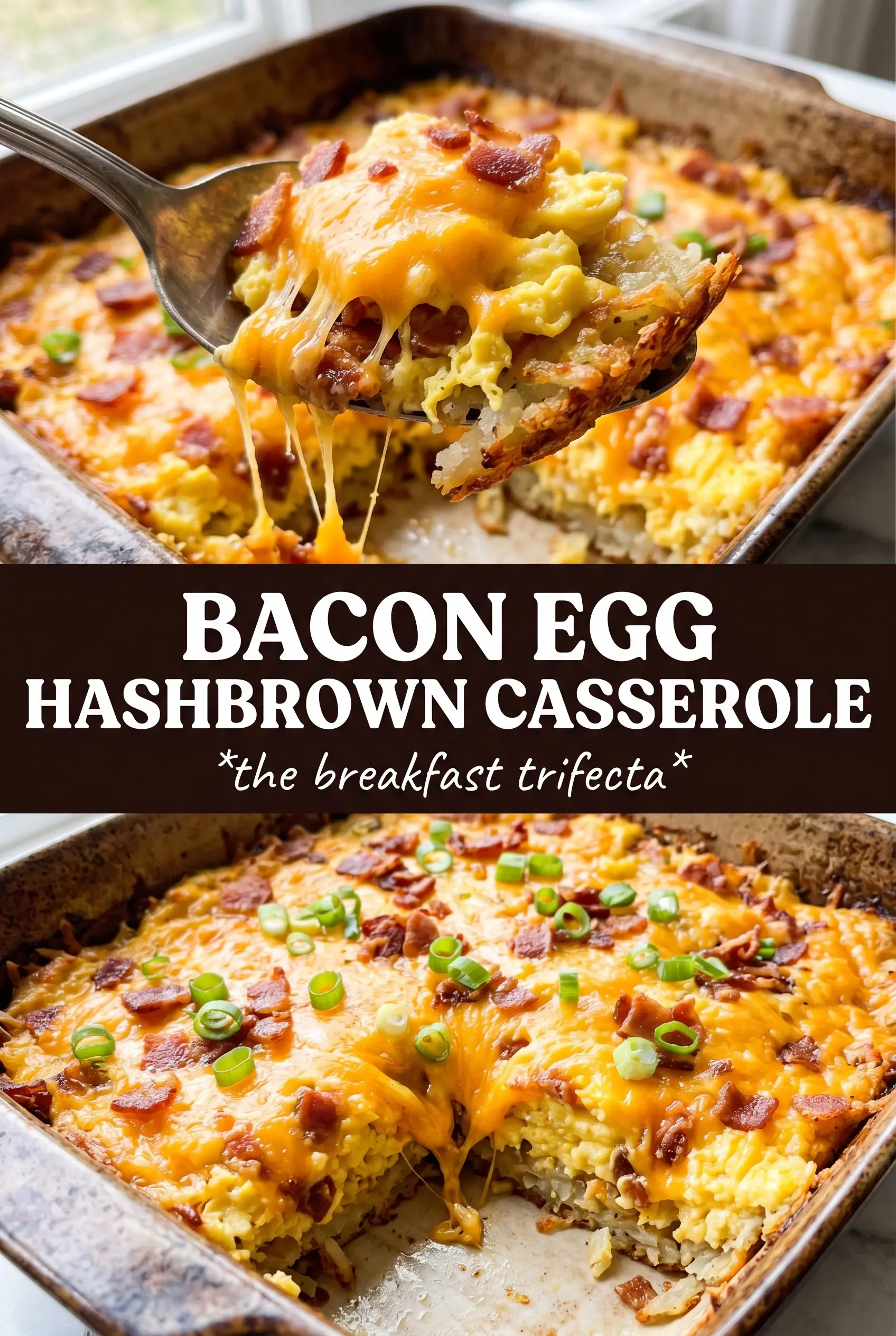
Bacon, Egg, and Hashbrown Casserole
Ingredients
Equipment
Method
- Preheat oven to 375°F and grease a 9x13 dish so the potatoes release cleanly after baking.
- Press thawed frozen shredded hash browns into an even layer across the bottom of the dish, covering the base completely.
- Scatter cooked and crumbled bacon over the hash browns so the flavor is distributed through the casserole.
- Whisk eggs, whole milk, garlic powder, onion powder, salt, and black pepper until smooth and well combined.
- Stir in 1.5 cups of shredded sharp cheddar, then pour the mixture over the bacon layer to reach the edges.
- Top with the remaining sharp cheddar and arrange a few whole bacon strips across the center so they stay visible while baking.
- Bake uncovered at 375°F for 45–50 minutes, until the eggs are set and the top is deeply golden.
- Garnish with sliced green onions right after baking so they stay bright and fresh.