Autumn chopped salad lands with that sweet-salty crunch that makes a bowlful disappear fast. The kale stays sturdy, the Brussels sprouts bring a clean bite, and the apple, pear, cranberries, and maple dressing keep every forkful bright instead of heavy. It eats like a main-dish salad if you want it to, but it also slides easily onto a holiday table or next to roasted chicken without feeling like an afterthought.
What makes this version work is the order. Massaging the kale with a spoonful of dressing softens the leaves just enough so the salad feels tender, not chewy, while the Brussels sprouts add volume and texture without turning soggy. The maple-Dijon vinaigrette is intentionally simple, which lets the fruit and nuts stay in charge and keeps the whole bowl tasting fresh.
Below you’ll find the one step that makes raw kale worth eating, plus a few smart swaps if you need to work with what’s already in your kitchen. The salad also holds for a short stretch after tossing, which makes it a practical make-ahead side when the rest of dinner is moving fast.
The kale softened up beautifully after the quick massage, and the dressing clung to every little chopped piece. I brought it to a potluck and the bowl was scraped clean before dinner even started.
Love the crunch and sweet-tart balance in this Autumn Chopped Salad? Save it to Pinterest for an easy make-ahead side with kale, pear, cranberries, and maple Dijon dressing.
The Trick to Keeping Raw Kale Tender Instead of Tough
Raw kale can turn a salad from crisp to downright stubborn if it goes into the bowl untouched. The fix here is simple: a quick massage with a little dressing before anything else. That tiny bit of acid and oil starts breaking down the leaves, which is why the salad eats like a chopped salad instead of a pile of rough greens.
The other thing that matters is chopping everything small and evenly. When the kale, Brussels sprouts, fruit, and nuts are all close in size, the dressing coats better and every bite tastes balanced. If you leave the greens in big ribbons, the heavier toppings slide to the bottom and the salad starts to feel uneven fast.
What Each Ingredient Is Doing in the Bowl
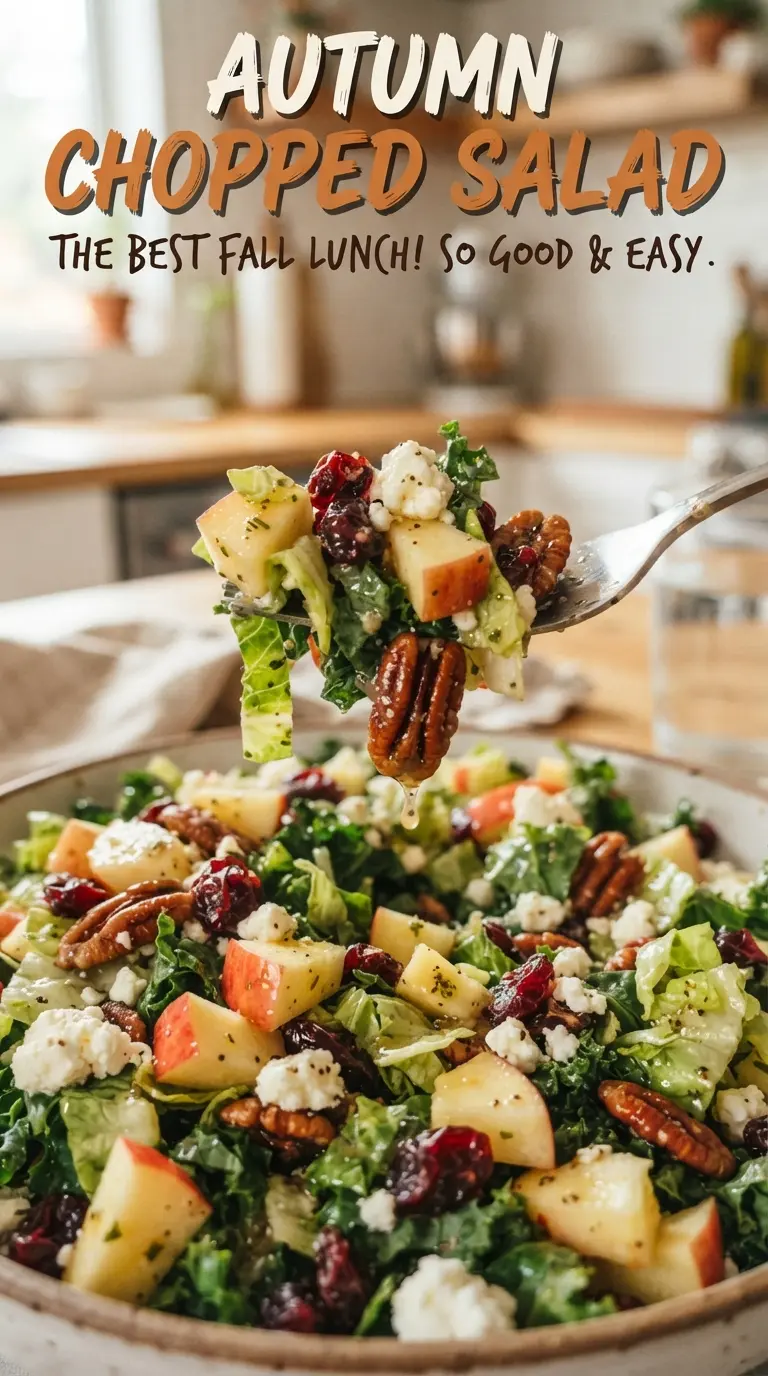
- Kale — This is the backbone of the salad, and it needs the massage step to turn from tough to tender. Curly or lacinato both work. If you use lacinato, slice it very thin because the leaves are softer and can look bulky if left too large.
- Shredded Brussels sprouts — These add a crisp, almost slaw-like bite and keep the salad from feeling too leafy. Bagged shredded sprouts work fine here, which saves time and still gives you the right texture.
- Apple and pear — The mix gives you a clean snap from the apple and a softer, juicy sweetness from the pear. Use a firm apple so the pieces hold their shape after tossing. If your pear is very ripe, dice it small so it doesn’t turn mushy.
- Candied pecans and pepitas — The pecans bring sweet crunch, while the pepitas add a toasted, savory bite that keeps the salad from leaning too sweet. If you only have plain pecans, toast them briefly in a dry skillet and add a pinch of salt.
- Maple, Dijon, and apple cider vinegar — This is the dressing that ties everything together. The mustard helps it emulsify, so the oil and vinegar don’t separate immediately, and the maple softens the sharp edges without making the salad cloying.
- Feta — The saltiness is what makes the fruit and dressing taste brighter. Goat cheese can stand in, but feta keeps its shape better and gives you those little briny pockets throughout the bowl.
Building the Salad So It Stays Crisp
Whisk the Dressing Until It Looks Cloudy
Start with the dressing in a small bowl or jar and whisk until the oil turns slightly opaque and the maple syrup is fully blended in. That cloudy look tells you the mustard has helped the vinaigrette come together. If you skip that step, the sweetener sinks and the salad ends up unevenly dressed.
Massage the Kale Just Enough
Add only a spoonful of the dressing to the kale and work it in with your hands for about a minute. The leaves should darken slightly and lose their rigid edge, but they shouldn’t collapse into a wet pile. If the kale looks shiny and limp, you’ve gone too far and the salad will lose its fresh crunch.
Toss Everything in the Right Order
Fold in the Brussels sprouts, fruit, cranberries, nuts, feta, and pepitas after the kale has softened. The goal is to coat, not crush. Pour in the remaining dressing a little at a time so you can stop once everything looks lightly dressed and glossy; too much at once can pool at the bottom and drown the delicate fruit.
Serve Before the Fruit Softens
This salad is best right after tossing, or after a short chill if you want the flavors to settle. After a couple of hours, the apples and pears start to give off juice and the nuts lose some of their snap. If you need to hold it, keep the dressing separate and combine them just before serving.
How to Adapt This Salad for Different Tables
Dairy-Free Version
Leave out the feta and add extra pepitas or a handful of sunflower seeds for another salty crunch. The salad turns cleaner and brighter without the cheese, though it loses a little of the creamy-salty contrast that feta gives each bite.
Make It Heartier for Dinner
Add shredded rotisserie chicken, roasted turkey, or chickpeas to turn this into a main dish. Chicken keeps the flavor profile neutral and lets the maple-Dijon dressing stay front and center, while chickpeas add more texture and make the salad vegetarian-friendly with better staying power.
Swap the Nuts for a Softer Crunch
Use toasted walnuts or sliced almonds if you don’t have candied pecans. You’ll lose some of the sweet coating, but the salad stays balanced and a little less dessert-like. If the nuts are salted, ease up on the feta or the whole bowl can taste too briny.
Storage and Reheating
- Refrigerator: Store the dressed salad for up to 2 hours if you want to keep the fruit crisp and the nuts crunchy. The kale will hold longer than most greens, but the apples and pears soften as they sit.
- Freezer: This salad doesn’t freeze well. The fresh fruit and greens turn watery and limp once thawed.
- Reheating: Reheating isn’t needed here. If you’ve chilled the salad, let it sit at room temperature for 10 to 15 minutes so the dressing loosens and the flavors wake up again.
Answers to the Questions Worth Asking
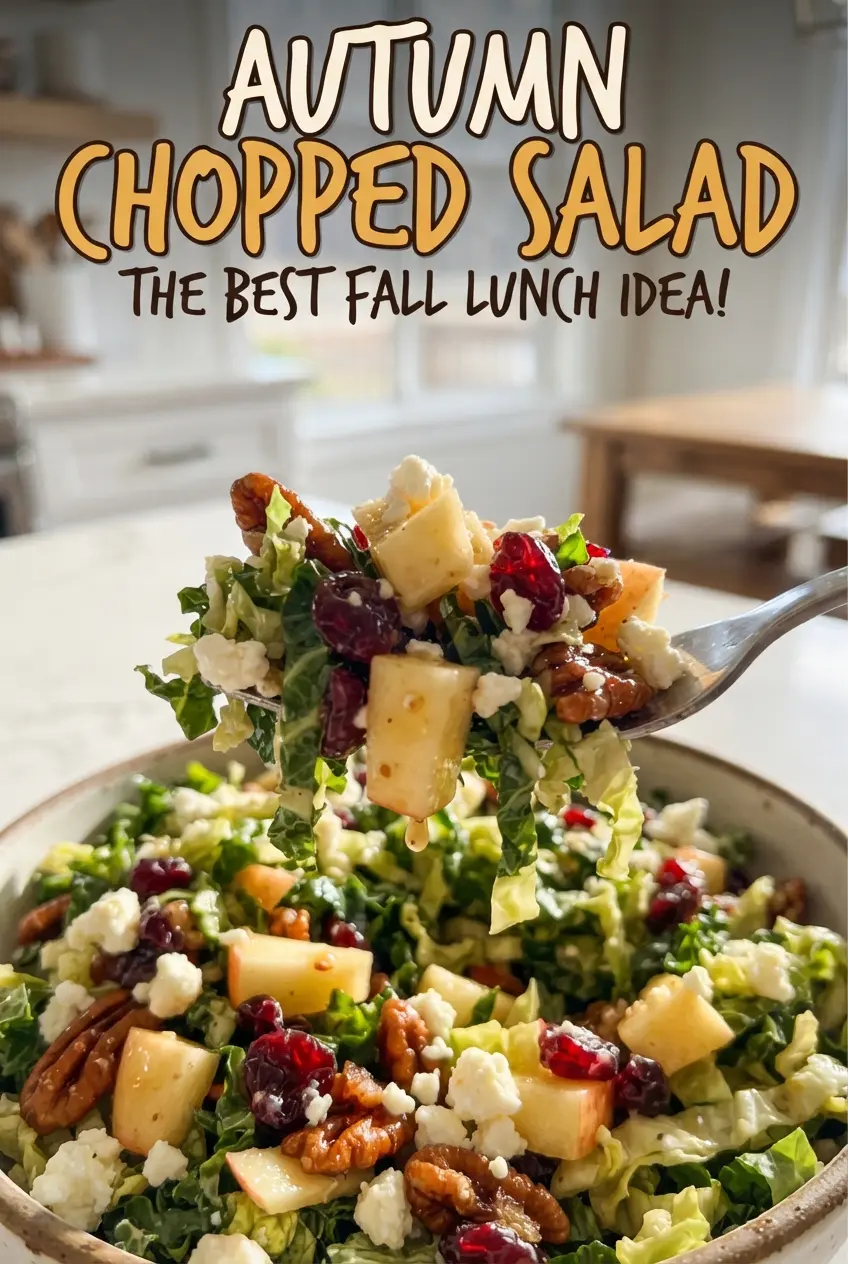
Autumn Chopped Salad
Ingredients
Method
- Whisk olive oil, apple cider vinegar, maple syrup, Dijon mustard, salt, and pepper until smooth. Visual cue: the dressing looks glossy and evenly combined.
- Add 1 tablespoon of the dressing to the finely chopped kale and massage for 1 minute until tender. Visual cue: the kale darkens slightly and looks softer with reduced volume.
- Add shredded Brussels sprouts, diced apple, diced pear, dried cranberries, chopped candied pecans, crumbled feta, and roasted pepitas to the bowl. Visual cue: the mix forms neat, colorful rows before mixing.
- Pour the remaining dressing over the salad. Visual cue: vinaigrette coats the chopped greens and fruit without pooling.
- Toss well and serve right away, or cover and chill up to 2 hours before serving. Visual cue: everything is evenly coated and the kale looks lightly glossy.