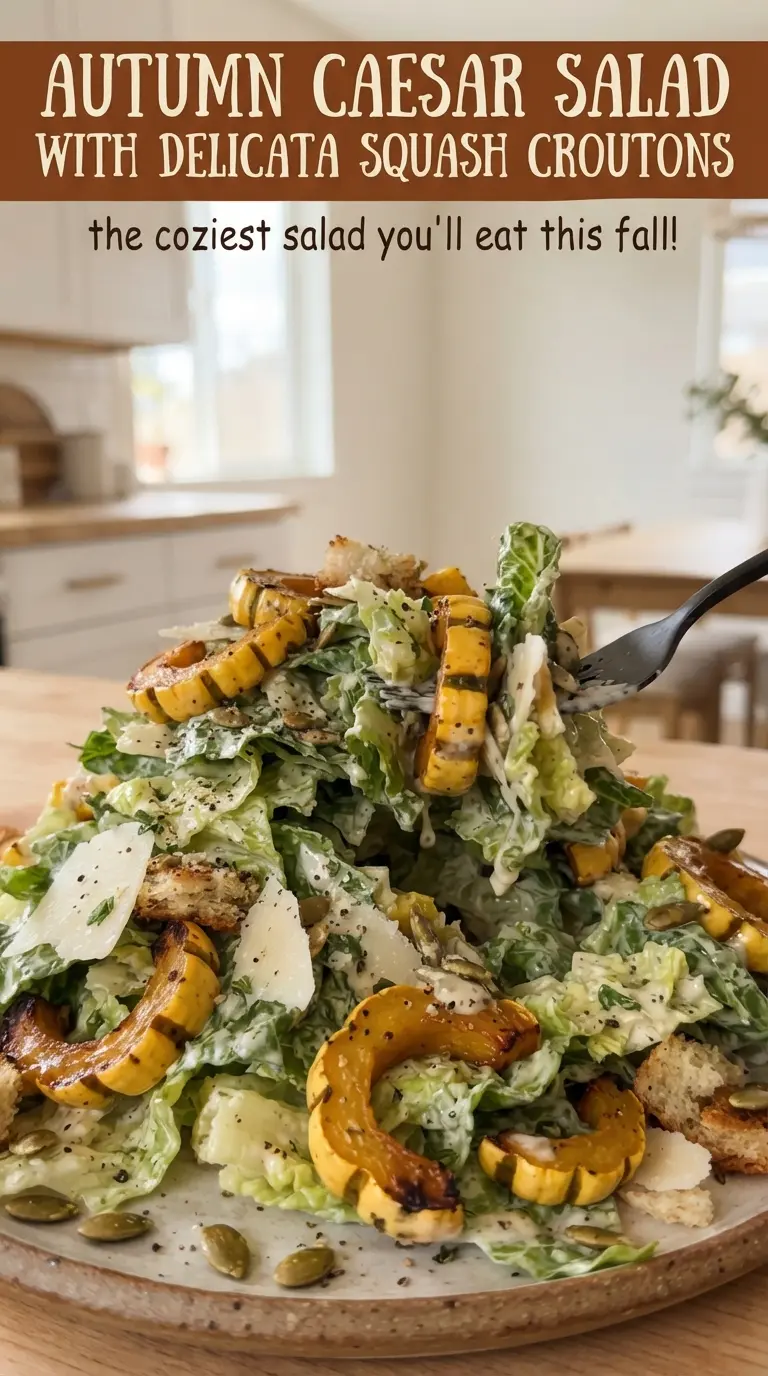
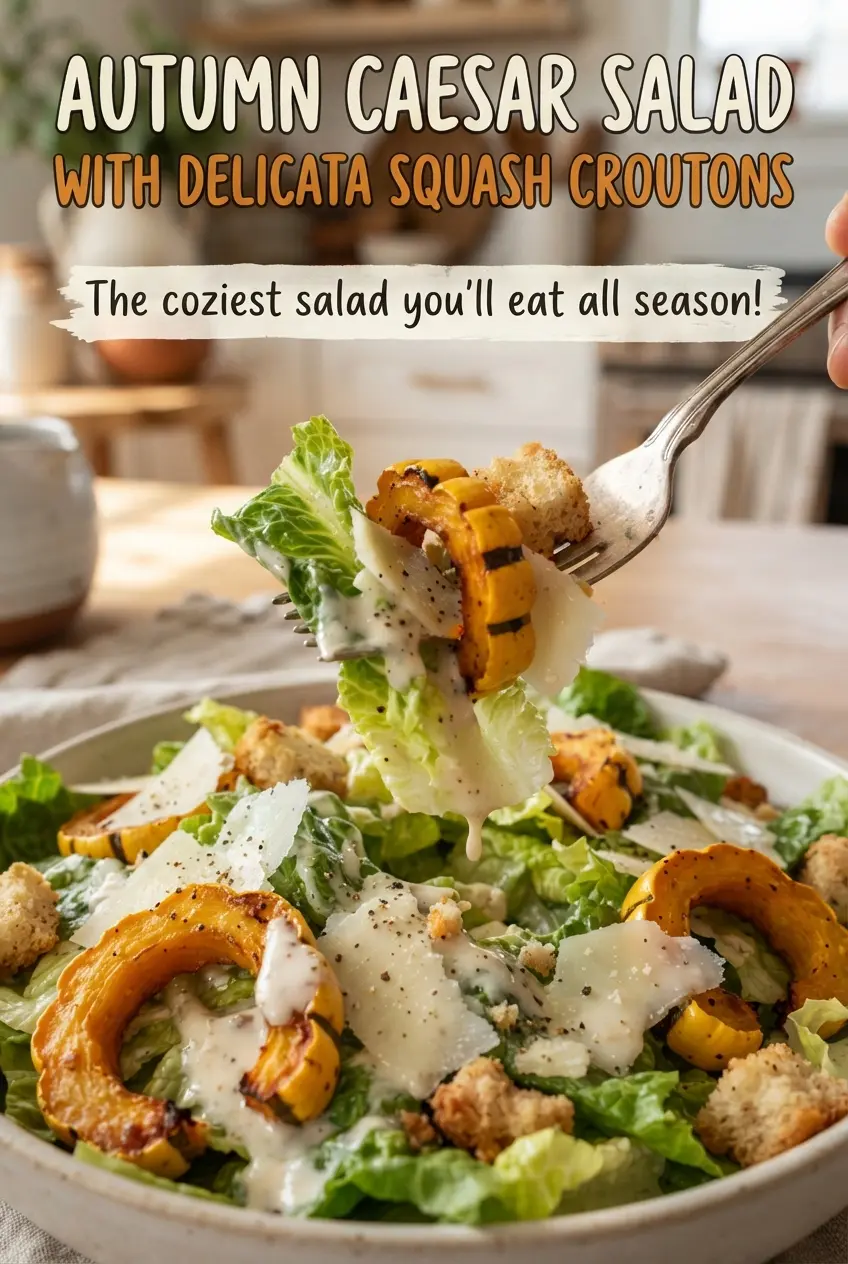
Golden roasted delicata squash gives Caesar salad the kind of crunch and sweetness that makes the whole bowl feel more complete. The squash edges caramelize in the oven, the kale softens just enough to eat easily, and the creamy dressing ties everything together without drowning the greens. It lands in that sweet spot where a side salad feels substantial enough to stand on its own.
The trick is treating the squash like a crouton, not a side vegetable. A little maple syrup helps the edges brown, smoked paprika adds depth, and the high heat keeps the slices from going soft. Massaging the kale with a bit of dressing first also matters; it takes the edge off the leaves so the salad stays tender even after tossing.
Below, I’ll show you how to keep the squash crisp, how to balance the richness of Caesar dressing with lemon, and the small prep details that keep the salad from turning limp before it hits the table.
The squash stayed crisp around the edges and the lemon at the end kept the Caesar from feeling heavy. My husband kept picking out the pepitas and roasted squash first.
Save this Autumn Caesar Salad with Delicata Squash Croutons for a crisp, creamy salad that turns roasted squash into the best part of dinner.
The Trick to Keeping Delicata Squash Crisp in Caesar Salad
Most roasted squash salads go soft because the squash starts steaming before it browns. Delicata helps here because its thin skin is edible and its shape gives you broad cut surfaces that can actually caramelize. The key is a hot oven, a light coating of oil, and enough space on the pan that the pieces roast instead of crowding each other.
The maple syrup is there for color and edge, not sweetness in the finished salad. A small amount encourages browning, while the smoked paprika gives the squash a savory note that keeps it from tasting like dessert. If your squash comes out pale, the pan was too crowded or the oven wasn’t fully heated before the tray went in.
- Delicata squash — This is the part that behaves most like a crouton. It roasts quickly, holds its shape, and turns crisp at the edges without needing peeling. If you swap in another squash, choose one that cuts into thick, even pieces and expect a softer result.
- Maple syrup — Just a little helps the squash brown and gives the edges a glossy finish. Honey works in a pinch, but it burns a bit faster, so watch the last few minutes closely.
- Smoked paprika — This is what keeps the squash from tasting flat. It adds a gentle savory note that plays well with Parmesan and Caesar dressing.
- Massaged kale — Raw kale can stay tough and chewy if you toss it straight into the bowl. Dressing it first softens the leaves enough that they blend with the romaine instead of fighting it.
What Each Ingredient Is Actually Doing in This Recipe
- Primary ingredient (the star) — Quality matters most. Choose the best you can find.
- Cooking medium (oil, butter, or broth) — This carries flavors and prevents dryness.
- Seasonings (salt, pepper, spices, herbs) — Layer flavors so nothing overpowers. Build depth gradually.
- Aromatics (garlic, onion, herbs) — Cook with fat to bloom flavors. Become the foundation.
- Supporting ingredients — Complement the main ingredient without overpowering it.
- Sauce or liquid (if applicable) — Brings flavors together. Balance richness with acid.
- Acid (lemon, vinegar, wine, or other) — Brightens and prevents flat-tasting results.
- Final finish (garnish, glaze, or sauce) — Prevents one-dimensional taste and adds visual appeal.
Roasting the Squash and Tossing the Salad Without Wrecking the Texture
Seasoning the Squash
Toss the squash slices with olive oil, maple syrup, smoked paprika, and salt until every piece looks lightly coated. You want a thin sheen, not a sticky glaze that pools in the bowl, because excess syrup can scorch before the squash browns. Spread the pieces in a single layer on the baking sheet so the cut sides can actually roast. If they overlap, they steam and the edges stay soft.
Roasting to the Edges of Crisp
Roast at 425°F for 22 to 25 minutes, flipping halfway through. The squash is ready when the edges look golden and a little blistered, and the centers are tender enough to pierce with a fork. Pull it before it turns mushy; it will keep softening as it cools on the pan. If your oven runs cool, add a few minutes instead of lowering the temperature, because the high heat is what builds the crust.
Building the Greens
Massage one tablespoon of Caesar dressing into the kale for about a minute until the leaves darken and feel more supple. That step matters because raw kale can taste sharp and dry if it isn’t loosened first. Then toss the kale with the romaine and the remaining dressing just until coated. The salad should look glossy, not heavy.
Finishing the Bowl
Layer the roasted squash on top with the Parmesan and pepitas right before serving. That keeps the squash from getting buried and lets the pepitas stay crunchy. Finish with lemon wedges so each plate can get a little extra brightness at the table. If the salad tastes a little rich, the lemon is what brings it back into balance.
How to Adapt This Caesar Salad for Different Tables
Make It Dairy-Free
Use a dairy-free Caesar dressing and swap the Parmesan for a salty vegan Parmesan or nutritional yeast. You’ll lose a little of the sharp, nutty finish from real Parmesan, so keep the lemon wedges on the plate to help the salad stay bright.
Make It Vegetarian-Friendly Without Anchovy Notes
Choose a vegetarian Caesar dressing that leans on garlic, Parmesan, and mustard instead of anchovy. The salad still tastes bold, but it will be a little less briny, so don’t skip the pepper and lemon at the end.
Swap the Greens for What You Have
Romaine can be replaced with little gem, green leaf, or even shaved Brussels sprouts for a sturdier salad. If you use a tougher green, keep the dressing amount modest at first and let the acid work for a minute before adding more.
Storage and Reheating
- Refrigerator: Store the components separately for up to 2 days. The greens will hold best if they aren’t dressed until serving time.
- Freezer: This salad doesn’t freeze well. The greens go limp and the squash loses its roasted texture after thawing.
- Reheating: Rewarm the squash on a sheet pan in a 400°F oven for a few minutes if you want it crisp again. Don’t microwave it, or the edges will turn soft and the squash will collapse.
Answers to the Questions Worth Asking
Autumn Caesar Salad with Delicata Squash Croutons
Ingredients
Equipment
Method
- Preheat the oven to 425F. Toss the delicata squash with olive oil, maple syrup, smoked paprika, and salt until evenly coated (coat visible on all surfaces).
- Spread the squash on a sheet pan in a single layer. Roast for 22-25 minutes, flipping halfway, until golden and crisp at the edges (look for browned rims and firm texture).
- Massage the chopped lacinato kale with 1 tablespoon of Caesar dressing for 1 minute to soften (kale should look darker and slightly wilted).
- Toss the chopped romaine and softened kale with the remaining Caesar dressing (the leaves should be glossy and evenly coated).
- Top the salad with the roasted squash croutons, shaved Parmesan, and roasted pepitas (croutons should sit on top for crunch).
- Serve immediately with lemon wedges on the side (slices should be bright yellow and ready to squeeze).