Apple fritter bread bakes up with the same cozy pull as a bakery fritter, but in a loaf you can slice cleanly and serve without any fuss. The crumb stays soft and buttery, the apples turn tender without disappearing, and the cinnamon sugar winds through the middle in sweet ribbons that make every slice feel a little different from the last. A thin vanilla glaze on top finishes the whole thing with that classic fritter look and just enough extra sweetness.
What makes this version work is the way the apples get tossed with part of the cinnamon sugar before they go into the batter. That little move keeps their flavor from getting lost and helps the filling stay layered instead of sinking into the loaf. The batter itself is kept simple: creamed butter for structure, alternating milk and dry ingredients so the crumb stays soft, and just enough vanilla to round out the apples and spice.
Below, you’ll find the small details that keep the loaf from turning dense or gummy, plus a few smart ways to adapt it if you’re missing an ingredient or want to change up the fruit.
The cinnamon sugar stayed layered instead of melting into the batter, and the loaf sliced beautifully once it cooled. My kitchen smelled like an apple fritter shop for hours.
Save this apple fritter bread for the days when you want bakery-style swirls, tender apples, and a thick vanilla glaze in one loaf.
The Trick to Keeping the Apple Layers From Sinking
Apple-filled loaves often fail in the same way: the fruit drops to the bottom and leaves the top plain, or the middle turns wet where the apples pooled. The fix here is not more flour. It’s layering the batter, apples, and cinnamon sugar in stages so the loaf supports itself as it bakes. That gives you pockets of fruit instead of one heavy seam.
Swirling only once or twice matters too. If you drag the knife through too much, the layers blur and you lose the fritter effect. If you don’t swirl at all, the center can bake up in blunt bands instead of the marbled look that makes this bread special.
What the Apples, Cinnamon Sugar, and Glaze Are Each Doing
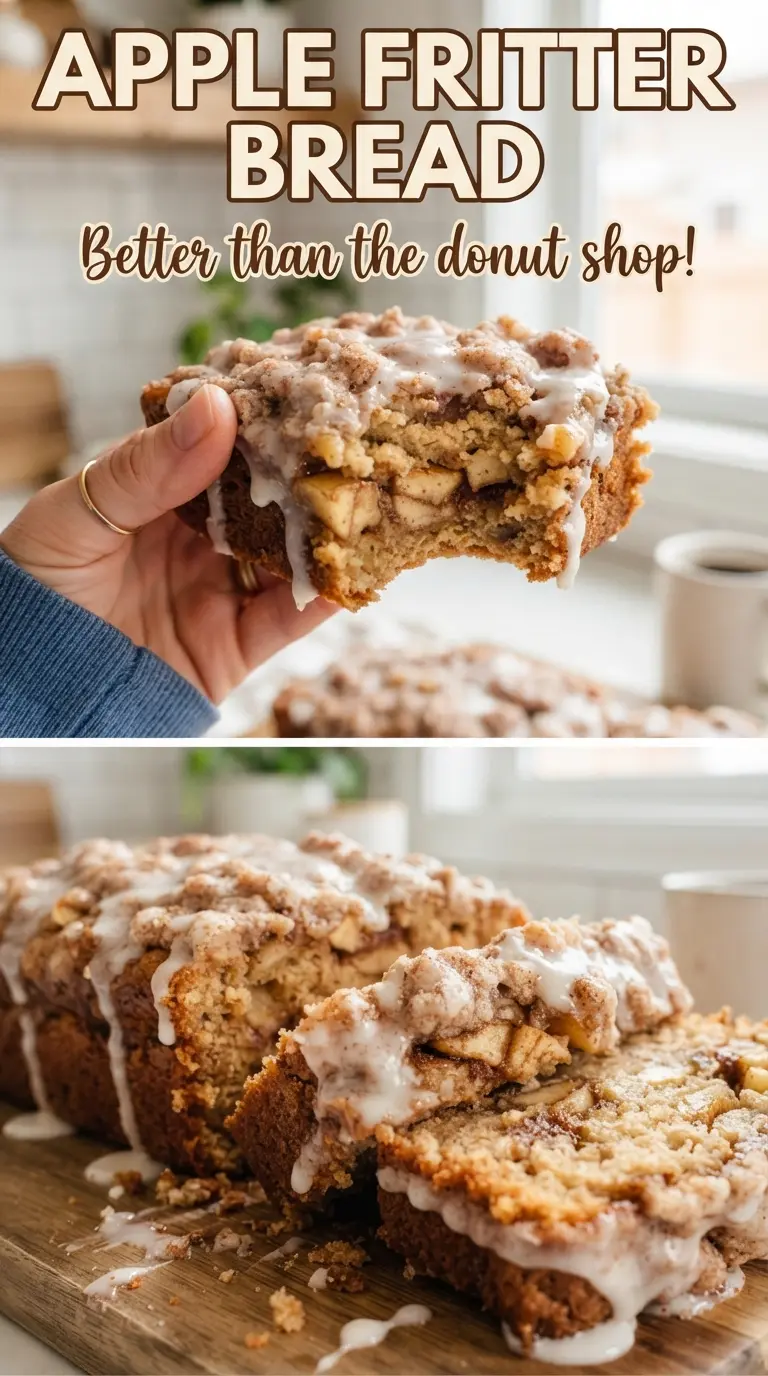
- Apples — Use a firm baking apple if you can. Granny Smith gives you sharper flavor and keeps its shape, while Honeycrisp or Fuji brings more sweetness and a softer bite. The important part is chopping them small enough that they bake through without creating wet pockets.
- Brown sugar and cinnamon — This is the backbone of the fritter flavor. Tossing some of it with the apples helps draw out a little moisture and coats the fruit so the spice runs through the loaf instead of settling in one spot. If you only use white sugar here, the filling tastes flatter and less like a fritter.
- Butter and eggs — Softened butter beaten with sugar gives the loaf its tender, cake-like crumb. The eggs add structure so the bread slices cleanly once cooled. Cold butter won’t cream properly, and that usually means a denser loaf with less lift.
- Milk — This loosens the batter just enough to keep it spoonable. Whole milk gives the best richness, but 2% works fine. The key is alternating it with the dry ingredients so the batter stays smooth instead of overmixed.
- Powdered sugar glaze — The glaze is more than decoration. It seals in the bakery-style look and gives you that final sweet finish. Add the milk a little at a time so it drips, not floods, the loaf.
Building the Batter in Layers So It Bakes Evenly
Cream the base until it turns pale
Beat the butter and granulated sugar until the mixture looks fluffy and lighter in color. That step traps air, which helps the loaf rise instead of baking up heavy. If the butter is too cold, it won’t blend smoothly and you’ll see little lumps that don’t disappear later.
Keep the dry and wet ingredients in balance
Whisk the flour, baking powder, and salt first, then add them to the butter mixture in stages with the milk. This keeps the batter tender and prevents overworking the gluten. Stop mixing as soon as the flour disappears; a stiff, smooth batter is the goal, not a whipped one.
Layer the filling, then barely swirl
Spread half the batter in the pan, add half the apples and cinnamon sugar, then repeat. A thin knife or skewer should make just a few visible turns through the loaf. If you swirl aggressively, the filling blends into the batter and you lose the ribbons; if you leave it untouched, the middle can bake unevenly.
Glaze after a short rest
Let the loaf cool for about 15 minutes before you drizzle the glaze. If you pour it on too soon, it melts straight in and disappears. If you wait until the loaf is completely cold, the glaze will sit more on top and stay whiter and thicker.
Three Useful Ways to Adjust This Loaf Without Ruining It
Make it dairy-free
Use a plant-based butter that bakes well and swap in an unsweetened non-dairy milk. The loaf will still be tender, though the flavor will be a little less rich and the crumb slightly less silky. Choose a neutral milk like oat or almond so the apple and cinnamon stay front and center.
Use pears instead of apples
Firm pears work well if apples are out of reach. The loaf will taste a little softer and more floral, and you may want to bake it on the full end of the time range because pears release more juice. Chop them small so they don’t turn the middle soggy.
Cut the sugar a little
You can reduce the granulated sugar in the batter by a couple of tablespoons without breaking the structure. The loaf will be less sweet and the crust a touch less tender, but the apple-cinnamon swirl and glaze still carry the dessert side of it. I wouldn’t cut the brown sugar filling much lower or the fritter effect starts to fade.
Storage and Reheating
- Refrigerator: Store covered for up to 4 days. The crumb firms up a little in the fridge, but the flavor stays good.
- Freezer: Wrap slices tightly and freeze for up to 2 months. Freeze without glaze if you want the cleanest texture, then glaze after thawing.
- Reheating: Warm slices briefly in the microwave or a low oven until just soft. Long reheating dries out the edges and makes the glaze sticky instead of glossy.
Answers to the Questions Worth Asking
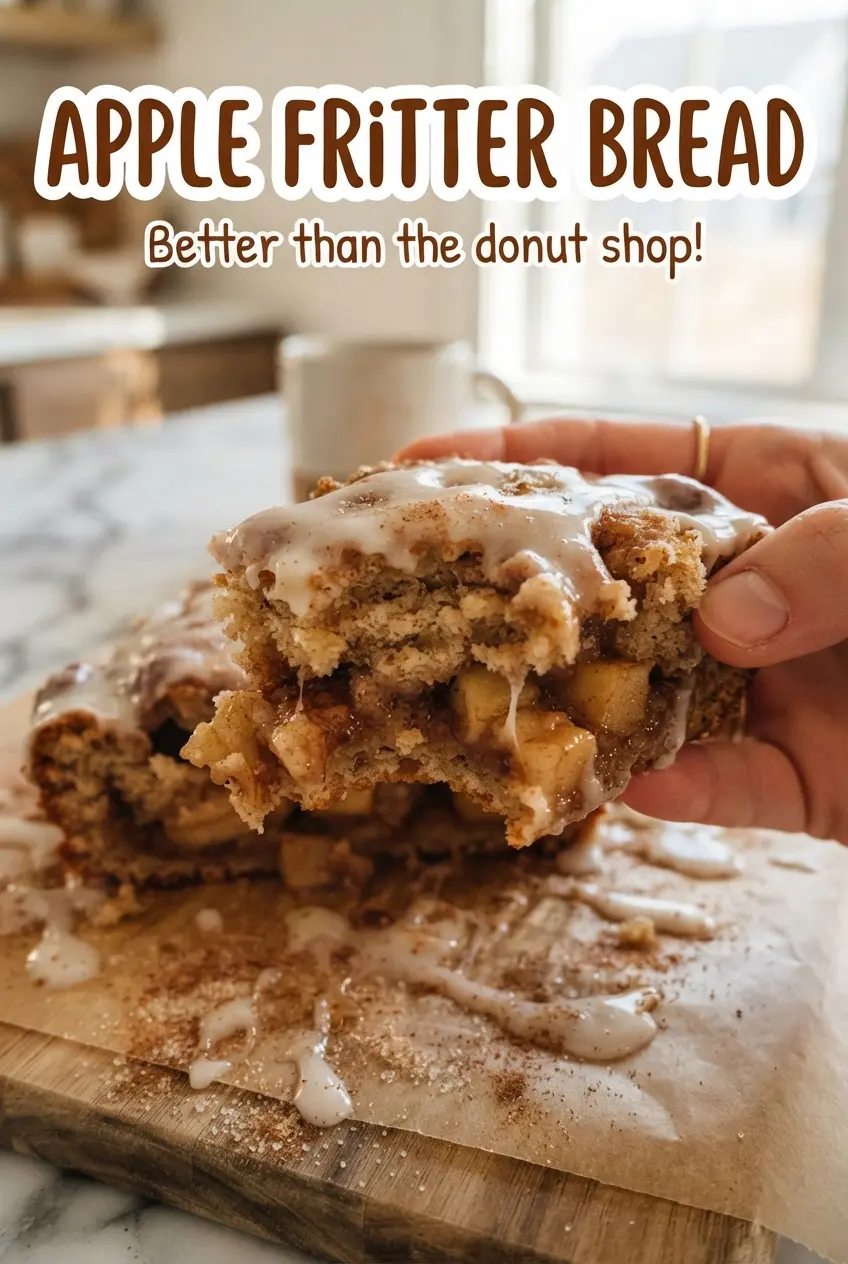
Apple Fritter Bread
Ingredients
Equipment
Method
- Preheat oven to 350°F. Grease and line a 9x5-inch loaf pan.
- Mix brown sugar and ground cinnamon in a bowl. Toss the apples in 2 tablespoons of the cinnamon brown sugar mixture.
- Beat the softened butter and granulated sugar until fluffy. Beat in the eggs and vanilla extract.
- Whisk the all-purpose flour, baking powder, and salt in a separate bowl. Add the dry mixture to the batter alternately with the milk, mixing just until combined.
- Spread half the batter in the loaf pan. Top with half the apples and half the remaining cinnamon sugar, then repeat the layers.
- Swirl the top gently with a knife to create cinnamon streaks through the loaf.
- Bake at 350°F for 50-55 minutes, until a toothpick comes out clean.
- Cool the loaf for 15 minutes. Whisk powdered sugar with milk to make a thick glaze and drizzle it over the loaf.