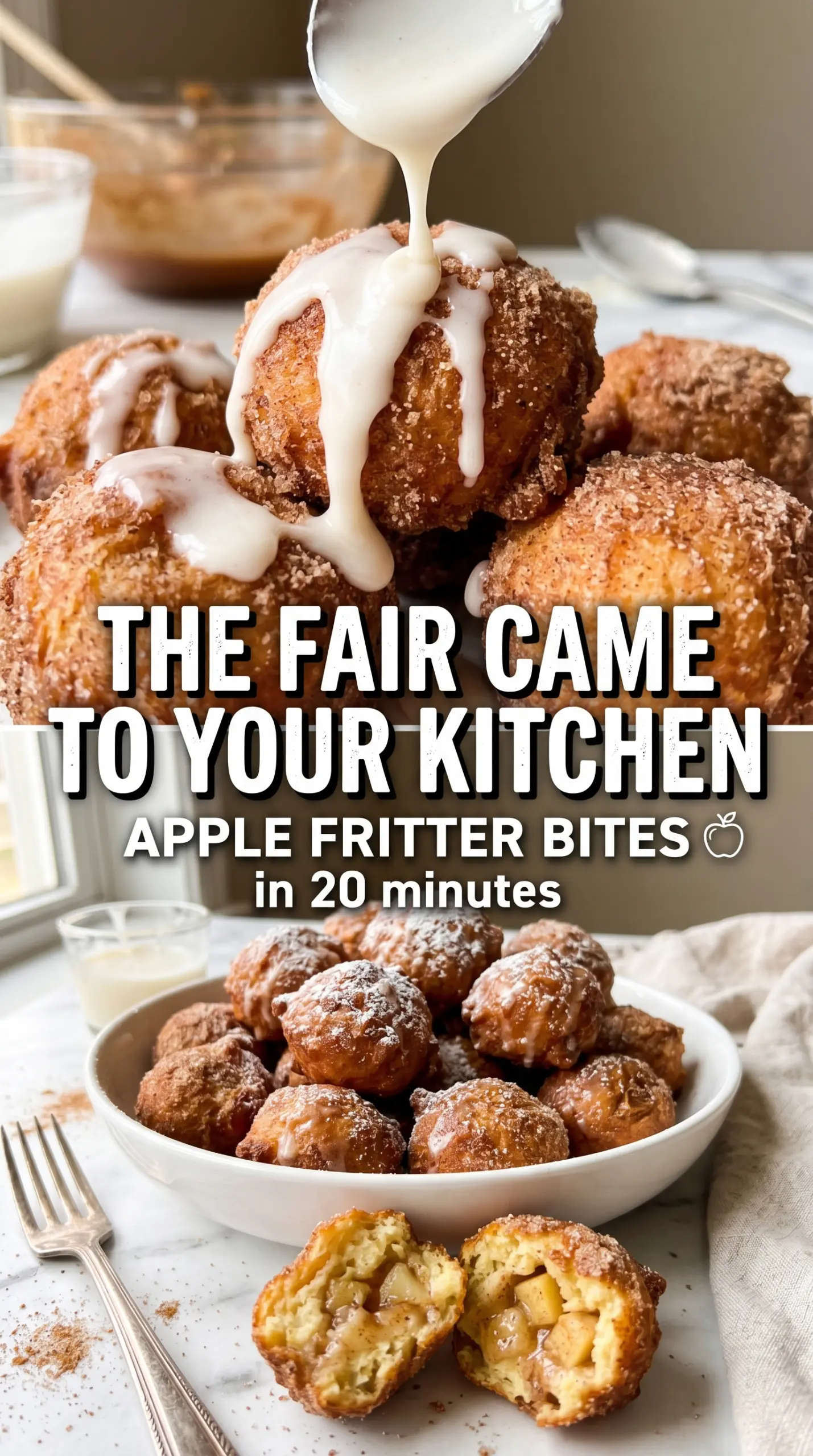
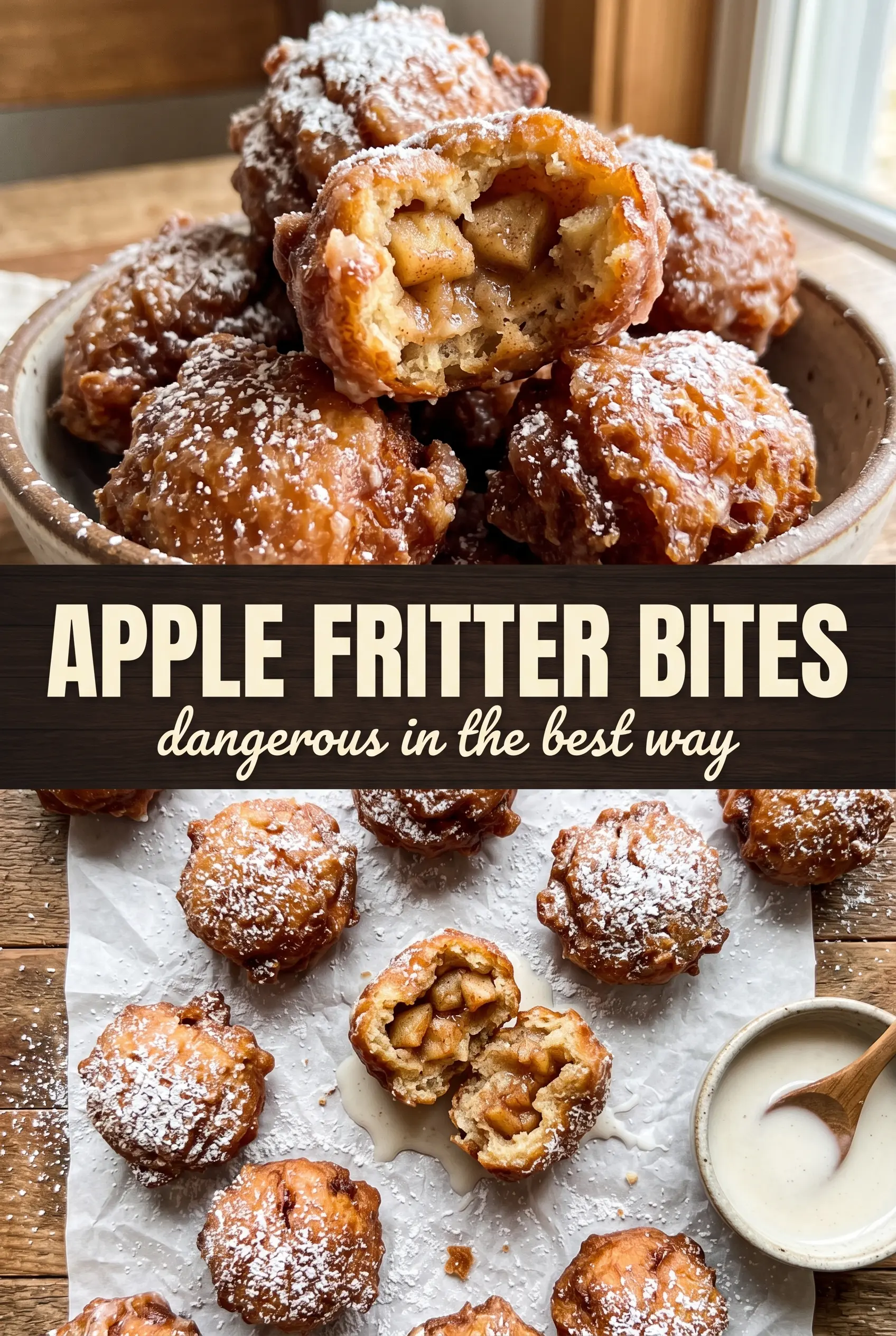
Golden apple fritter bites hit the sweet spot between crisp edges and soft, cakey centers, with little pockets of tender apple in every bite. They fry up fast, glaze nicely while still warm, and disappear faster than a full pan of anything should.
What makes these work is the balance: enough flour to hold the batter together, enough milk and egg to keep it light, and apple pieces cut small enough to cook through before the outside gets too dark. The batter should look thick and spoonable, not pourable. That keeps the fritters rounded instead of spreading into flat, greasy patches in the oil.
Below, I’ve included the oil temperature that matters most, the glaze texture to aim for, and a few swaps that still give you a proper fritter-style bite instead of a heavy apple pancake.
The fritters came out crisp on the outside and fluffy inside, and the glaze set just enough that they weren’t sticky. I used Honeycrisp apples and the little chunks stayed tender without turning mushy.
Like these apple fritter bites? Save them to Pinterest for a fast fried breakfast or snack with crisp edges and warm apple centers.
The Oil Temperature Is What Makes These Fritters Light Instead of Greasy
Apple fritter bites can go wrong fast if the oil runs too cool. The batter sits in the oil longer, drinks up fat, and turns heavy before the centers set. At 350°F, the outside firms up quickly while the apple pieces soften just enough to taste cooked, not raw.
The other thing people miss is size. Table spoonfuls are the sweet spot here. Too large, and the outside darkens before the middle cooks through. Too small, and you lose the round, craggy fritter shape that gives these their appeal.
- Keep the oil steady at 350°F — a thermometer matters here. The temperature drops as soon as you add batter, so work in small batches and let it recover between rounds.
- Cut the apples small — 1/4-inch dice cooks through quickly and keeps the batter from tearing when you scoop it.
- Do not overmix the batter — a few dry streaks are fine. Overmixing builds gluten and makes the fritters tough instead of tender.
- Glaze while warm — the coating sets into that thin crackled shell only when the fritters are still warm enough to absorb a little of the glaze.
What the Apples, Spice, and Glaze Are Each Doing Here
- Apples — use firm baking apples or crisp sweet-tart apples like Honeycrisp, Granny Smith, or Fuji. Soft apples collapse into mush before the fritters finish frying.
- All-purpose flour — this gives you the structure to hold the apple pieces in place. Cake flour makes the batter too fragile for frying; bread flour makes it bouncy.
- Milk and eggs — these create the batter that puffs and sets. Whole milk gives a better fried texture than skim because the batter tastes richer and browns more evenly.
- Cinnamon and nutmeg — these are not background spices. They turn the batter into something that tastes like a real fritter instead of fried apple batter.
- Powdered sugar glaze — the glaze should be thin enough to drizzle but thick enough to cling. If it runs off completely, add a little more powdered sugar; if it turns paste-like, a teaspoon of milk loosens it back up.
From Batter to Glaze Without Losing the Crunch
Mix the Dry Ingredients First
Whisk the flour, baking powder, sugar, cinnamon, nutmeg, and salt together until the spices are evenly blended. That matters more than it sounds like it should, because cinnamon clumps in pockets if you rush this part. You want the batter flavored all the way through, not streaked in one bite and plain in the next.
Bring the Batter Together Gently
Beat the eggs, milk, and vanilla in a separate bowl, then stir them into the dry ingredients just until combined. Fold in the diced apples at the end so they stay intact. If you keep stirring after the flour disappears, the batter tightens up and the fritters turn chewy instead of light.
Fry in Small Batches
Drop tablespoon-sized scoops into the hot oil and give them space. Crowding the pan drops the temperature and keeps the fritters from sealing quickly, which is how you end up with greasy, pale edges. They’re ready to turn when the bottoms are deep golden and the edges look set and slightly rough.
Finish Warm, Not Hot
Drain the fritter bites on paper towels for a minute, then glaze or dust them while they’re still warm. Too hot, and the glaze slides off. Too cool, and it won’t cling in that thin, crackly layer that makes these taste like bakery fritters instead of plain fried dough.
How to Adapt These Apple Fritter Bites Without Losing the Texture
Use gluten-free flour with a fryer-friendly blend
A 1:1 gluten-free baking blend works here if it already contains xanthan gum. The fritters will be a little more delicate, but the apple pieces and glaze still give you the same bite-sized result. Avoid almond flour alone; it won’t set into the same fritter structure.
Swap the milk for buttermilk
Buttermilk adds a slight tang and a softer crumb. The batter may thicken a touch more, so splash in an extra tablespoon if it looks too stiff to scoop cleanly. The finished fritters taste a little more like old-fashioned cake donuts.
Go dairy-free with unsweetened plant milk
Oat milk or almond milk both work in the batter and glaze. Oat milk gives the closest texture to whole milk; almond milk is a little thinner and a little less rich. Keep the glaze on the thicker side so it still sets instead of soaking in.
Make them cinnamon-heavy for a fair-food finish
Add an extra 1/2 teaspoon cinnamon and a pinch more nutmeg if you want a stronger bakery-style spice note. This doesn’t change the texture, but it gives the fritters that unmistakable fairground smell the second they hit the hot oil.
Storage and Reheating
- Refrigerator: Store leftovers in an airtight container for up to 2 days. The glaze softens and the crust loses some crunch, but the flavor stays good.
- Freezer: Freeze the unglazed fritter bites on a tray, then move them to a freezer bag for up to 1 month. Glaze after reheating for the best texture.
- Reheating: Warm in a 325°F oven or air fryer until the outside dries out again. The common mistake is microwaving them, which makes the crust rubbery and the apples watery.
Answers to the Questions Worth Asking
Apple Fritter Bites
Ingredients
Equipment
Method
- Heat 2 inches of oil to 350°F in a deep skillet or pot, so it stays at a steady fry temperature.
- Whisk all-purpose flour, baking powder, sugar, cinnamon, nutmeg, and salt together until evenly combined.
- Beat large eggs, whole milk, and vanilla extract together, then stir into the dry ingredients until just combined.
- Fold in diced apple until the batter is studded with apple chunks.
- Drop tablespoon-sized balls of batter into the hot oil and fry for 2–3 minutes per side until deeply golden and set.
- Drain the fried bites on paper towels to remove excess oil.
- While still warm, drizzle or dip the apple fritter bites into glaze.
- To make the glaze, whisk powdered sugar with 2–3 tablespoons milk or apple cider and vanilla until smooth enough to coat.