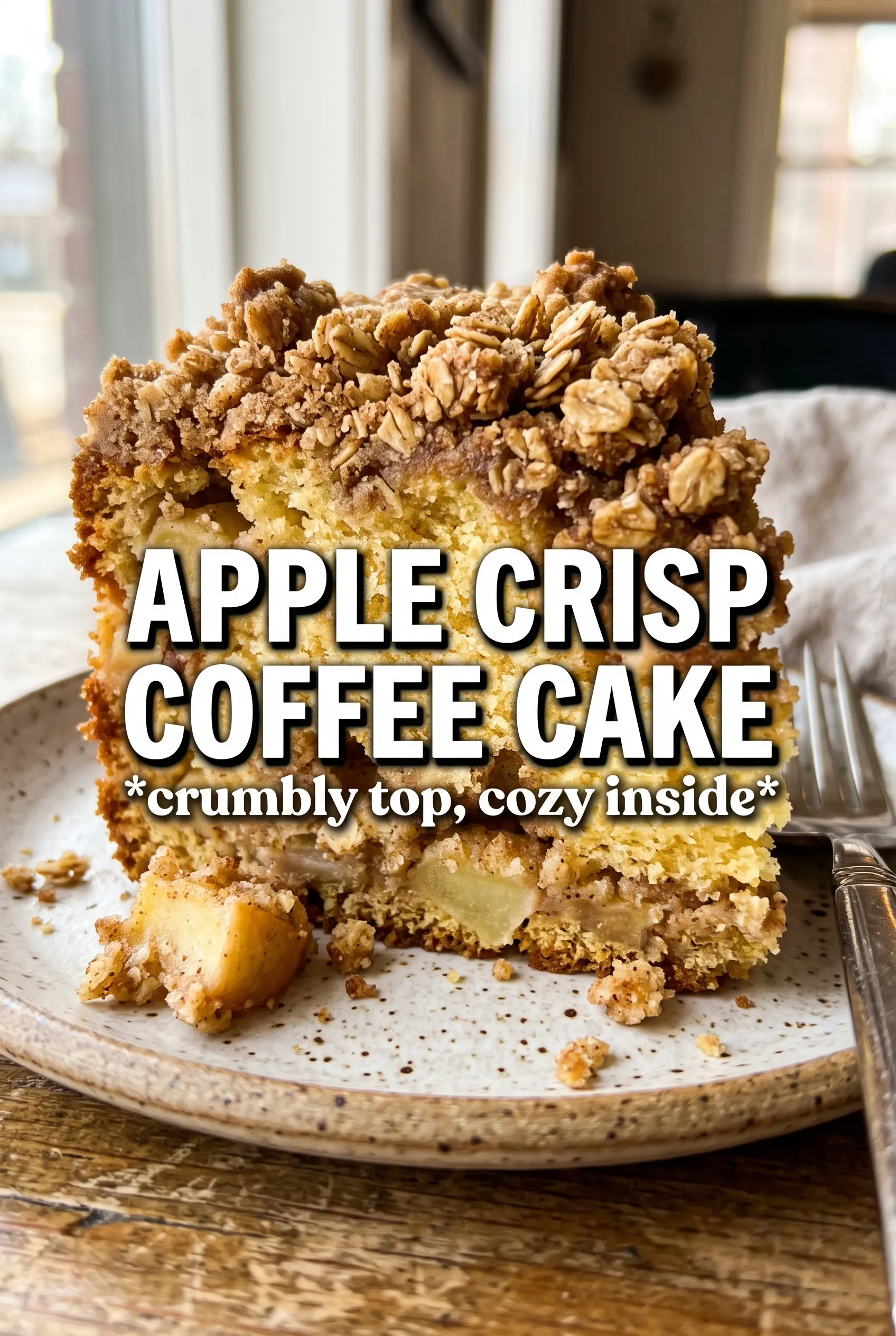
Apple Crisp Coffee Cake bakes up with the best parts of two breakfast favorites in one pan: a moist, cinnamon-scented cake under a thick oat crumble that turns deeply golden at the edges. The apples soften just enough to melt into the batter without disappearing, so every slice gives you tender crumb, spiced fruit, and that nubby, buttery topping in one bite.
The trick is treating the topping like real crisp topping, not a quick sprinkle. Cold butter cut into the oats and flour gives you those clustered crumbs that brown instead of dissolving into the batter. Sour cream does the other heavy lifting here, keeping the cake plush and giving it enough tang to balance the brown sugar and cinnamon.
Below, I’m walking through the one detail that keeps the crumb from sinking, plus the easiest way to keep the apple layer juicy instead of wet. If you’ve ever wanted a coffee cake that eats like apple crisp without getting soggy, this is the version to keep close.
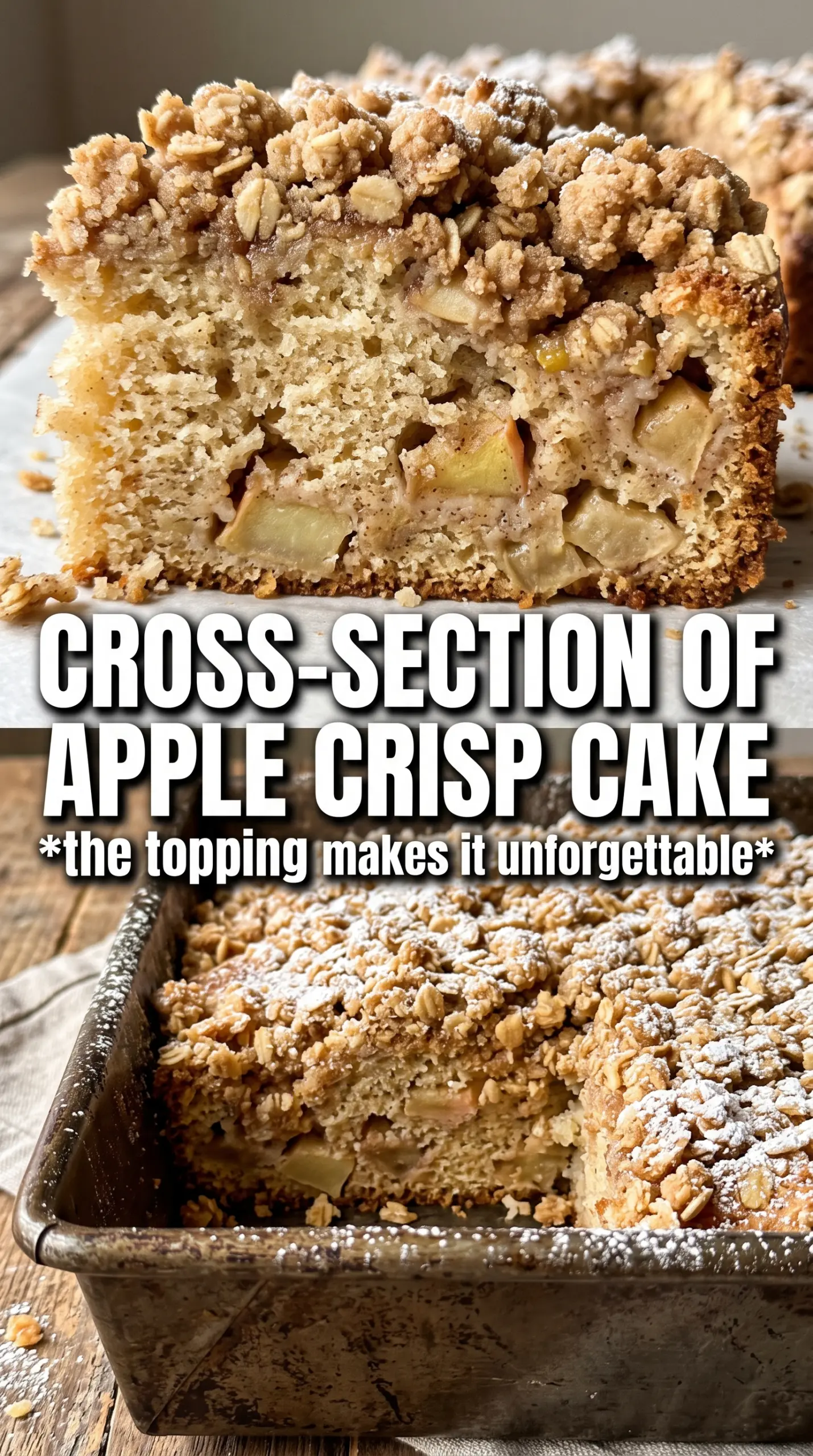
The topping baked into perfect little clusters and the center stayed moist without turning gummy. I used Granny Smith apples and the cinnamon layer tasted like a bakery coffee cake.
Save this Apple Crisp Coffee Cake for the mornings when you want a buttery oat crumble and tender spiced apples in one pan.
The Detail That Keeps the Crumble Crisp Instead of Sinking In
The biggest mistake with coffee cake toppings is letting the butter get too warm before it hits the oven. When that happens, the oat mixture turns pasty and disappears into the batter instead of staying crumbly and distinct. Cold butter, cut in until the mixture looks like rough gravel with a few bigger clumps, is what gives you that crisp, bakery-style lid.
The other thing that matters here is how you layer the batter. The cake batter is thick enough to hold the apples and support the topping, but if you overmix after adding the flour, it gets dense and the apples can release too much juice into the pan. Fold just until the flour streaks disappear, then stop. That keeps the crumb tender and gives the topping a clean place to sit.
What Each Ingredient Is Actually Doing in This Cake
- All-purpose flour — This gives the cake structure and also builds the topping. Standard all-purpose flour works best here because it balances tenderness with enough strength to hold the apples and crumble.
- Sour cream — This is what keeps the crumb soft and rich. Plain Greek yogurt can stand in if that’s what you have, but use full-fat yogurt so the cake doesn’t bake up tight or dry.
- Apples — Peel and dice them into small, even pieces so they soften at the same rate. A firm, tart apple like Granny Smith gives you the best contrast against the sweet topping, but Honeycrisp works if you want a softer, sweeter bite.
- Rolled oats — These are what make the topping taste like apple crisp instead of basic streusel. Quick oats can work in a pinch, but the texture is finer and less craggy.
- Cold unsalted butter — Cold butter is nonnegotiable for the topping. It melts in the oven and creates those crisp, sandy clusters; softened butter just blends in and gives you a paste.
How to Build the Layers So the Cake Stays Tender
Mix the Crumble First
Start with the topping so it has time to chill while you make the batter. Cut the cold butter into the oats, flour, sugar, cinnamon, and salt until the mixture forms uneven clumps, not a smooth dough. Refrigerating it keeps the butter cold, which helps the topping bake into crisp clusters instead of melting flat. If it starts looking greasy in your hands, it’s too warm and needs a few minutes back in the fridge.
Whisk the Dry Ingredients Separately
Whisking the flour, baking powder, baking soda, cinnamon, and salt before they meet the wet ingredients keeps the leavening even throughout the cake. Baking soda needs the sour cream’s acidity to do its work, so don’t dump everything together at once. This step prevents bitter pockets and gives you a consistent rise from edge to center.
Cream, Then Fold Gently
Beat the butter and sugar until pale and fluffy, then add the eggs, vanilla, and sour cream. The mixture may look a little curdled after the sour cream goes in, and that’s fine; it smooths out once the flour is added. Fold the dry ingredients in just until no flour streaks remain, then fold in the apples. Overmixing is what turns coffee cake tough, especially once the fruit is in the bowl.
Finish with a Generous Top Layer
Spread the batter evenly in the prepared pan, then scatter the crumble over every inch. Don’t press it down. You want the topping to sit loose so it bakes up jagged and crisp instead of compacted. Bake until the top is deeply golden and a toothpick comes out clean from the center, not with wet batter clinging to it. A few moist crumbs are fine; raw batter is not.
How to Adapt This for Different Pans, Diets, and Sweetness Levels
Make it dairy-free
Use a good plant-based butter in both the cake and topping, and swap the sour cream for a thick dairy-free yogurt. The cake will still be moist, but the topping may brown a little faster, so start checking it a few minutes early.
Use a tighter, tarter apple
Granny Smith gives you the strongest apple contrast and keeps the cake from leaning too sweet. If you use a softer apple, dice it small so it disappears into the crumb instead of turning mushy in the oven.
Bake it in a different pan
A 9×13 pan gives you a thinner cake with more crumble in every bite. If you want a taller coffee cake, move it to a 9-inch square pan and add a little extra baking time; the center should be set before you pull it or the middle will sink as it cools.
Reduce the sweetness a bit
If you want the apple layer to stand out more, cut the brown sugar in the topping by a couple of tablespoons. The crumble will still crisp, but the cake reads more breakfast than dessert.
Storage and Reheating
- Refrigerator: Store covered for up to 4 days. The topping softens a little, but the cake stays moist.
- Freezer: Freeze individual slices tightly wrapped for up to 2 months. Thaw overnight in the fridge for the cleanest texture.
- Reheating: Warm slices in a 300F oven or toaster oven until the crumble wakes back up. The microwave works in a pinch, but it softens the topping and makes the edges lose their crunch.
Questions I Get Asked About This Recipe
Apple Crisp Coffee Cake
Ingredients
Equipment
Method
- Preheat oven to 350F and grease a 9x13 baking dish, so the cake releases cleanly after baking. Set aside the pan while you prepare the layers.
- Combine rolled oats, all-purpose flour, brown sugar, cinnamon, and salt in a bowl. Cut in the cold cubed butter until the mixture turns clumpy, then refrigerate while you mix the cake.
- Whisk together all-purpose flour, baking powder, baking soda, cinnamon, and salt until evenly blended. This keeps the spice distribution uniform in every bite.
- Beat softened butter and granulated sugar until fluffy, about 2 minutes, then add eggs and vanilla. Mix until smooth, then beat in the sour cream.
- Fold the flour mixture into the wet ingredients just until no dry streaks remain. Fold in the diced apples to distribute them through the batter.
- Spread the batter in the prepared 9x13 baking dish and scatter the oat crumble generously over the top. Make sure the crumble covers the surface for an even golden crust.
- Bake for 50–55 minutes at 350F until a toothpick comes out clean and the crumble is golden. The topping should look set with caramelized edges.
- Let the cake cool briefly, then dust with powdered sugar if desired. Slice after it’s cool enough to hold its apple and crumble layers.