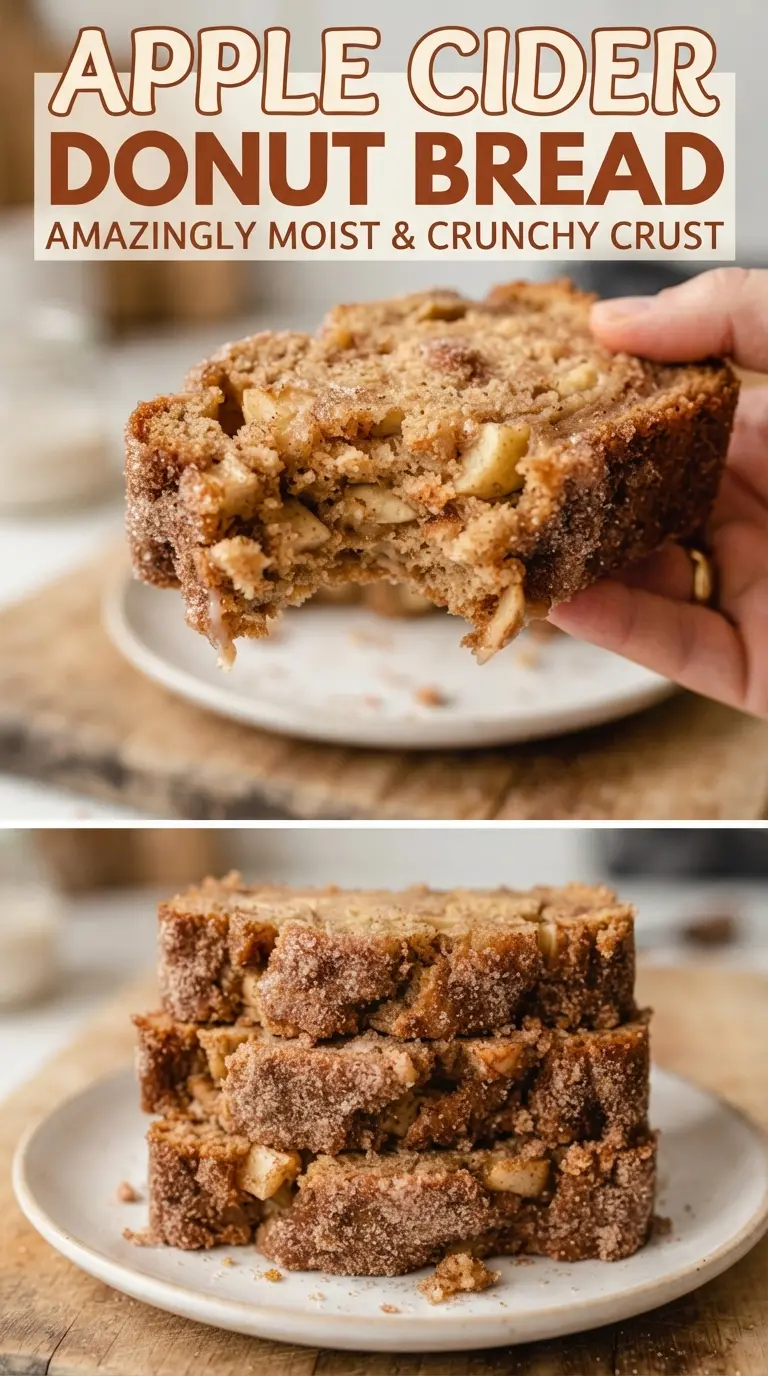
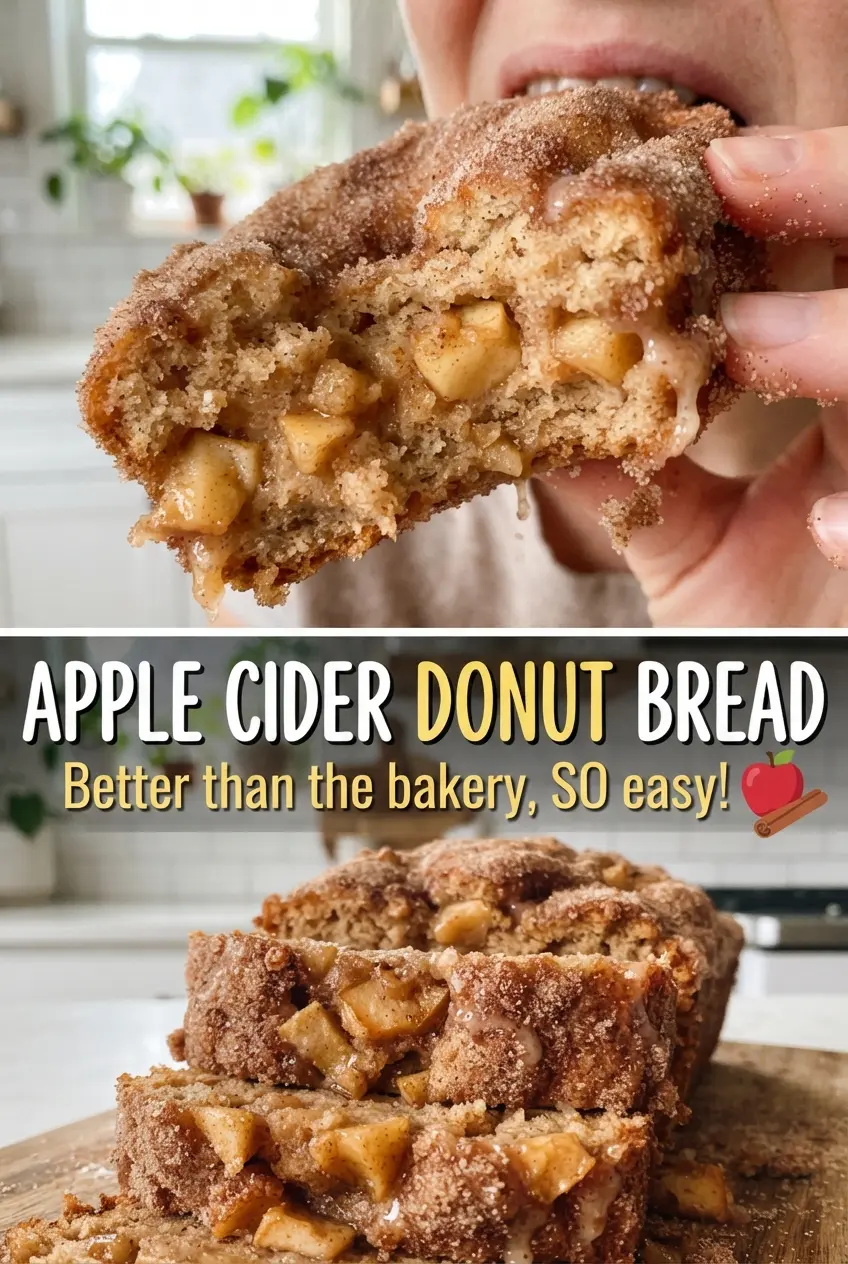
Apple Cider Donut Bread bakes up with the same cozy cinnamon-sugar crust you expect from a fresh cider donut, but in a soft loaf you can slice all week long. The crumb stays tender and lightly tangy, and the buttery coating on the outside gives every slice that classic bakery-style finish without needing a fryer.
The key is reducing the cider before it ever hits the batter. That step concentrates the apple flavor instead of leaving the loaf tasting flat, and it also keeps the batter from getting too thin. Sour cream helps the bread stay moist and plush, while the final brush of melted butter gives the cinnamon sugar something to cling to instead of sliding off.
Below, I’ll walk through the cider reduction, the loaf texture to look for before baking, and the best way to get that crunchy donut-style coating to stick while the bread is still warm.
The cider reduction made the apple flavor taste baked-in instead of watered down, and the sugar crust stayed crisp even after the loaf cooled. My kids kept sneaking slices all afternoon.
Love that crunchy cinnamon-sugar crust and tender apple cider crumb? Save this Apple Cider Donut Bread for the next time you want bakery-style loaf cake with a donut finish.
The Cider Reduction Is What Keeps This Loaf from Tasting Flat
Most apple cider breads lean too far toward sweet spice and not enough toward actual apple. The fix is simple: simmer the cider down until you have about half a cup left. That concentrated reduction carries the whole loaf, and it also gives the batter enough flavor to stand up to the cinnamon-sugar topping.
The other place people go wrong is overmixing once the flour goes in. This is a quick bread, not a cake you want to whip airy and smooth. Stir only until the dry streaks disappear, and stop there. If you keep going, the loaf turns tight and bready instead of soft and sliceable.
- Reduced apple cider — This is the flavor engine. Fresh cider or unsweetened cider both work, but the reduction must cool before it goes into the batter or it can melt the butter and throw off the texture.
- Sour cream — It keeps the crumb moist and adds a gentle tang that makes the apple flavor taste brighter. Full-fat sour cream gives the best texture, but plain Greek yogurt works in a pinch if you want to use what you have.
- Brown sugar — This adds a deeper caramel note that white sugar can’t replicate. It also helps the loaf stay soft for days.
- Butter for the topping — Brush it on while the loaf is still warm so the cinnamon sugar sticks in a thick crust instead of falling off onto the cutting board.
What Each Ingredient Is Doing in the Loaf and the Crust
- All-purpose flour — This gives the loaf structure without making it heavy. Bread flour would make it chewier than you want here.
- Baking powder and baking soda — The combo gives enough lift for a tall loaf and also balances the acidity from the cider and sour cream. Don’t swap in extra baking powder to replace the soda; you’ll lose the mellowing effect and the loaf can taste sharper.
- Ground cinnamon and nutmeg — These should support the apple, not bury it. Nutmeg matters here because it nudges the loaf toward that donut-shop flavor.
- Eggs and softened butter — They build the rich, tender base. The butter should be soft enough to beat fluffy with the sugar, but not greasy or melted.
- Vanilla extract — It rounds out the cider and spice. Use real vanilla if you can; the flavor shows up more than you’d expect in a simple loaf like this.
Building the Batter and Getting the Sugar Crust to Stick
Reducing the Cider First
Pour the cider into a small saucepan and simmer it until it drops to about 1/2 cup. You want it actively bubbling but not exploding up the pan. The color deepens a little and the smell turns from sharp and fruity to concentrated and almost caramel-like. Cool it completely before adding it to the batter, or it can soften the butter too early and make the loaf dense.
Making the Batter Light, Not Tough
Beat the butter and brown sugar until the mixture looks fluffy and lighter in color. That step traps air and helps the loaf rise without becoming dry. Add the eggs, sour cream, vanilla, and cooled cider one at a time so the mixture stays smooth. When the dry ingredients go in, fold just until the flour disappears. If you still see a few streaks, stop stirring and let the oven finish the job.
Baking Until the Center Springs Back
Spread the batter into the prepared loaf pan and bake until a toothpick comes out clean from the center, usually 50 to 55 minutes. The top should look set and lightly domed, and the edges will pull slightly from the pan. If the top browns too quickly, tent it loosely with foil for the last part of baking. Let the loaf cool for 10 minutes before topping so it’s still warm enough for the coating, but not so fragile that it falls apart.
Coating It Like a Real Donut
Brush the warm loaf all over with melted butter, then press the cinnamon sugar on instead of just sprinkling it. Pressing gives you that thick, crunchy exterior that clings to the crust. Work on all sides, not just the top, because the edges are what make this taste like a donut loaf instead of plain spice bread.
Three Ways to Make This Loaf Fit What You’ve Got
Dairy-Free Version
Use a plant-based butter in both the loaf and the topping, and swap the sour cream for an unsweetened dairy-free yogurt with a thick texture. The loaf will still be moist and flavorful, but the crumb may be a touch less rich than the original.
Extra-Spiced Bakery Style
Add a pinch more nutmeg and a little cardamom to the dry ingredients if you want a warmer, more pronounced donut-shop flavor. Keep the balance gentle; too much spice can bury the cider and make the loaf taste like spice cake instead of apple cider bread.
Gluten-Free Adaptation
Use a 1:1 gluten-free baking flour that already includes xanthan gum. Stir even less than you would with regular flour, since gluten-free batters can get gummy fast, and let the loaf cool fully before slicing so the crumb sets cleanly.
Make It More Like a True Donut Coating
If you want a thicker crust, brush on half the melted butter, press on half the sugar mixture, then repeat with the remaining butter and sugar. That builds a heavier coating with more crunch and gives the loaf a more bakery-style finish.
Storage and Reheating
- Refrigerator: Store covered for up to 4 days. The sugar crust softens a bit in the fridge, but the loaf stays moist.
- Freezer: Freeze the unsugared loaf tightly wrapped for up to 2 months. Add the butter and cinnamon sugar after thawing so the coating stays crisp.
- Reheating: Warm slices in a low oven or toaster oven for the best texture. The microwave softens the crust and makes the sugar coating sticky instead of crunchy.
Answers to the Questions Worth Asking
Apple Cider Donut Bread
Ingredients
Equipment
Method
- Simmer apple cider for 15-20 minutes until reduced to 1/2 cup, then cool. Keep it at a steady simmer and look for the volume to visibly drop.
- Preheat the oven to 350°F. Grease and line a 9x5-inch loaf pan so the loaf releases cleanly.
- Whisk all-purpose flour, baking powder, baking soda, salt, ground cinnamon, and nutmeg until evenly combined. Break up any spice clumps so the crumb bakes uniformly.
- Beat softened butter and packed brown sugar until fluffy, then beat in eggs, sour cream, vanilla extract, and the reduced cider. Stop and scrape the bowl as needed for a smooth, thick batter.
- Fold the dry ingredients into the wet just until combined, then spread the batter into the prepared pan. Mix only until you no longer see dry flour for a tender crumb.
- Bake for 50-55 minutes at 350°F until a toothpick comes out clean. Watch for the top to look set and lightly golden, not wet or glossy.
- Cool the loaf for 10 minutes. It should be warm to the touch before brushing so the coating adheres.
- Brush the warm loaf all over with melted butter and press on the cinnamon sugar. You should see the surface turn into a thicker, crunchy coating.