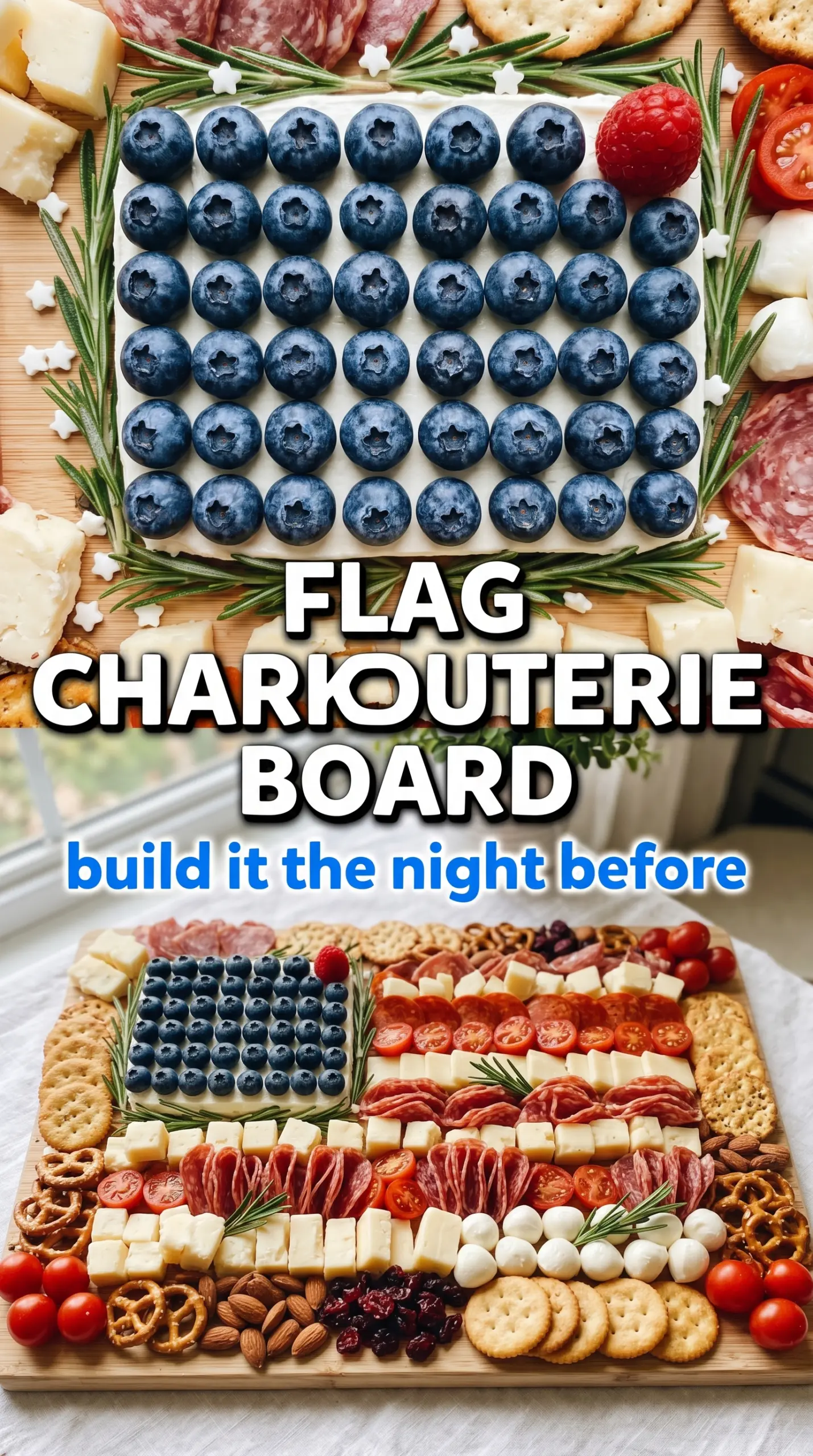
Cold, crisp, and built to stop people in their tracks, an American Flag Charcuterie Board turns simple snack ingredients into the kind of centerpiece guests circle back to all party long. The layout does the heavy lifting here: blueberries stay tight and jewel-like in the canton, rolled salami gives the top-left corner shape and texture, and the red-and-white stripes stay readable from across the table. It looks festive without needing any cooking, which is exactly why it works for a crowd.
The trick is treating the board like a design, not just a pile of snacks. Packing the blueberries tightly keeps the blue corner from looking loose or patchy. Using a mix of sliced cheese, mozzarella balls, pepperoni, prosciutto, and strawberries gives you stripes with different shades and textures, so the board looks full and intentional instead of flat.
Below, I’ll show you how to keep the flag shape clean, which ingredients matter most for the visual effect, and how to adapt the board when you need to feed a bigger group or swap in what you already have.
I made this for our neighborhood block party and the board stayed intact for almost an hour because everything was packed so tightly. The rolled salami in the blue corner was the first thing people noticed, and the stripes looked sharp even after everyone started digging in.
Like this American Flag Charcuterie Board? Save it to Pinterest for your next patriotic party spread with crisp stripes and a bold blueberry canton.
The Part Most Flag Boards Get Wrong: Loose Layout
The biggest mistake with a themed board is spacing everything too far apart. A flag has clean blocks of color, not scattered clusters, so the ingredients need to be packed in tight rows and sections. If the blueberries are floating around with gaps, the canton stops reading as blue. If the stripes are skinny and uneven, the whole board starts to look messy before anyone takes a bite.
Think of this as a visual assembly job first and a snack board second. The board should feel full from edge to edge, with the top-left corner clearly defined and the stripes running straight across the width. It helps to build the blue section first, then lay the red and white stripes underneath in long bands so you can adjust as you go instead of chasing the pattern at the end.
- Blueberries — These do the work of the blue field, so use enough to pack the corner tightly. Fresh berries hold their shape and color better than anything else here.
- Rolled salami — The rolls add height and break up the smooth blueberry texture. Thin slices work best because they curl cleanly without springing open.
- White cheddar or provolone — Sliced cheese gives you broad, readable white stripes. Provolone is softer and folds a little more; cheddar gives you a cleaner block.
- Prosciutto and strawberries — These reinforce the red stripes with two different textures, which keeps the board from looking one-note. If you only use one red ingredient, the stripes can look flat.
What Each Ingredient Is Actually Doing in This Recipe
- Primary ingredient (the star) — Quality matters most. Choose the best you can find.
- Cooking medium (oil, butter, or broth) — This carries flavors and prevents dryness.
- Seasonings (salt, pepper, spices, herbs) — Layer flavors so nothing overpowers. Build depth gradually.
- Aromatics (garlic, onion, herbs) — Cook with fat to bloom flavors. Become the foundation.
- Supporting ingredients — Complement the main ingredient without overpowering it.
- Sauce or liquid (if applicable) — Brings flavors together. Balance richness with acid.
- Acid (lemon, vinegar, wine, or other) — Brightens and prevents flat-tasting results.
- Final finish (garnish, glaze, or sauce) — Prevents one-dimensional taste and adds visual appeal.
Building the Stripes So the Board Reads Like a Flag
Mark the Canton Before You Start
Set the board on the table and mentally divide off the upper-left rectangle before you place anything. That corner needs to feel like a solid block, not a rough cluster, so start by filling it edge to edge with blueberries. Once the berries are in, tuck the rolled salami into the middle of that section so it looks intentional instead of sprinkled on top. If you leave too much wood showing, the canton loses its shape fast.
Lay the Red and White Bands in Long Rows
Build the stripes from left to right across the board, keeping each row as even as possible. Pepperoni makes an easy red stripe because it lays flat and overlaps neatly, while mozzarella balls or sliced provolone create a clean white band without a lot of knife work. Alternate the colors down the board and keep checking the overall shape from a step back. The board looks best when the stripes are wide enough to read immediately, not narrow lines squeezed between gaps.
Fill the Gaps Before They Show Up
Use prosciutto folds and strawberry halves to strengthen any red stripe that looks thin or broken. Prosciutto softens the hard edges of pepperoni, and strawberries add a brighter red that helps the board pop. Tuck small pieces into open spaces rather than piling them on top, because height in the wrong place makes the flag look lopsided. Finish with rosemary at the corners and edges for a fresh, green frame that also hides any awkward transitions.
Make It More Budget-Friendly
Use more pepperoni and mozzarella balls and less prosciutto if you want to keep the cost down. You’ll still get the same flag effect, just with a slightly more casual look and a little less variety in texture.
Dairy-Free Flag Board
Swap the cheese stripes for more folded prosciutto, turkey roll-ups, or even extra strawberries and sliced red fruit if you need a dairy-free board. The board will still look festive, but the white stripes will read a little softer because you’re leaning on lighter-colored meats instead of cheese.
Gluten-Free Serving Option
The board itself is naturally gluten-free as long as your crackers are, too. Set out a separate bowl of certified gluten-free crackers or crisp vegetables so everyone can build a plate without worrying about cross-contact.
How to Scale It Up for a Bigger Crowd
Keep the same flag proportions and use a larger tray instead of stretching the ingredients too thin. A bigger board still needs a dense canton and full-width stripes, or the design stops reading from a distance.
Make-Ahead Timing That Actually Works
You can slice and roll the meats a few hours ahead, but build the board close to serving time so the berries stay bright and the cheese doesn’t dry out. If you need to prep early, keep the components covered separately and assemble just before guests arrive.
Storage and Leftover Use
- Refrigerator: Store leftovers covered for up to 2 days. The berries will soften and the crackers will lose their crunch once everything sits together.
- Freezer: Don’t freeze the assembled board. The texture of the cheese, berries, and prosciutto won’t hold up after thawing.
- Leftovers: Pull the ingredients apart and store the meats, cheese, and fruit in separate containers. Use the leftovers for lunch plates or quick snack boxes so nothing gets soggy.
Questions I Get Asked About This Recipe
American Flag Charcuterie Board
Ingredients
Equipment
Method
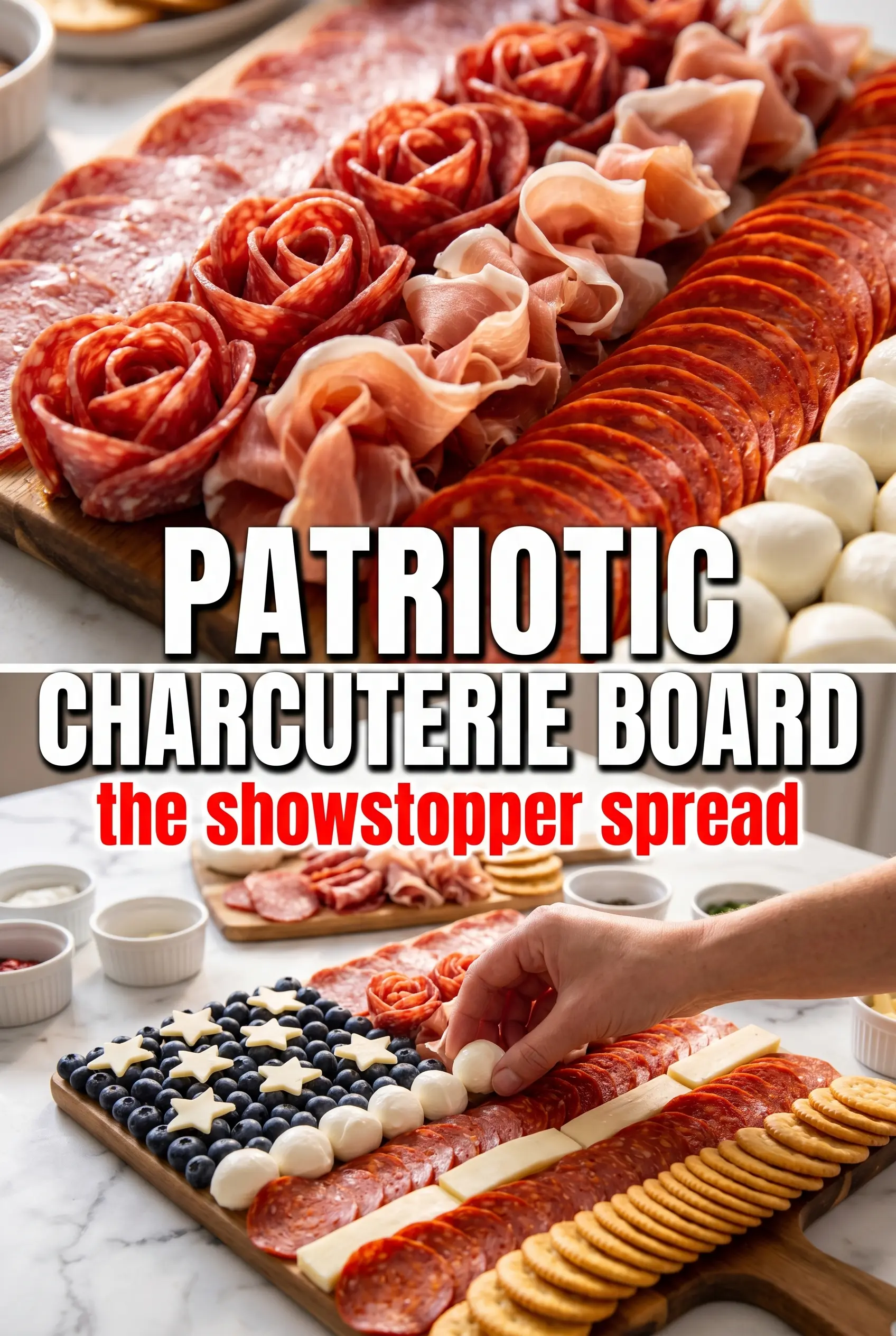
- Use a large rectangular wooden board or serving tray and mentally divide the upper left into a canton rectangle.
- Fill the canton with fresh blueberries packed tightly together, then tuck rolled salami pieces in the center to resemble stars.
- Starting from the top right of the board, layer pepperoni slices in a clean row across the full width to form a crisp red stripe.
- Create the white stripes using rows of sliced white cheddar or provolone, alternating with the red stripes down the full board.
- Add prosciutto folds or strawberry halves to reinforce the red stripes and fill any gaps between rows.
- Tuck rosemary sprigs at the corners and edges, then arrange crackers around the perimeter and serve.