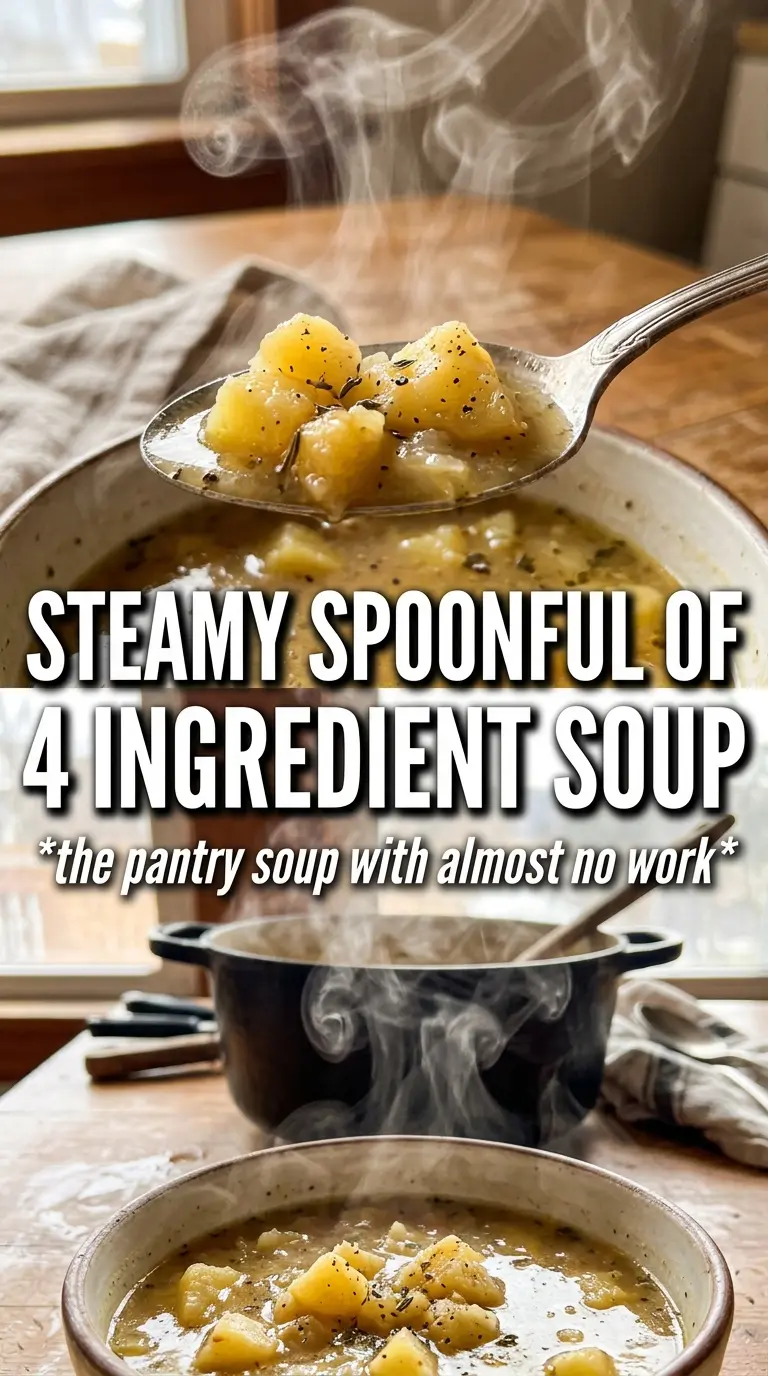
4 ingredient potato soup lands in that sweet spot between bare-minimum effort and full, cozy payoff. The potatoes turn soft enough to thicken the broth on their own, while the cream of chicken soup and sour cream give it a smooth, hearty body without needing a flour roux or a long simmer. It comes out creamy, but not heavy, with enough texture left from the potato chunks to keep every spoonful interesting.
The trick is timing. The potatoes need to be cooked until they break apart easily, because that starch is what gives the soup its body. Once the heat is low, the sour cream goes in at the end so it stays smooth instead of curdling or turning grainy. That little bit of care is what keeps this from tasting like a shortcut soup.
Below, I’ve included the small adjustments that matter most, plus the substitutions and reheating notes I’d want if I were making this on a busy night and planning leftovers for the next day.
I mashed about half the potatoes and left the rest chunky, and the soup came out thick and creamy without needing extra milk. The sour cream stayed smooth when I stirred it in off the heat, and my husband asked for it again the next night.
Creamy 4 Ingredient Potato Soup with soft potato chunks is the kind of easy bowl that tastes like you cooked longer than you did.
The Potato Texture Mistake That Makes This Soup Thin
The biggest mistake with potato soup is stopping too soon. If the potatoes are only tender at the edges, they won’t mash into the broth cleanly, and the soup stays loose instead of turning velvety. You want the cubes to break apart with almost no resistance so the starch can do some of the thickening for you.
Mashing most of the potatoes right in the pot gives you body without turning the soup into glue. Leave a handful of chunks intact so the bowl still eats like potato soup and not just cream soup with a potato afterthought. That mix of mashed and chunky is what makes this version feel hearty even with such a short ingredient list.
- Russet potatoes — These are the right choice because they break down easily and release enough starch to thicken the broth. Waxy potatoes will hold their shape too well and leave the soup thinner.
- Cream of chicken soup — This brings salt, body, and a little built-in richness without needing extra steps. If you swap it for another condensed soup, the flavor changes fast, so choose one that matches what you want the bowl to taste like.
- Chicken broth — Use a broth you’d actually drink; bland broth makes a bland soup, since there aren’t many ingredients to hide behind. Low-sodium broth is the safer pick because the canned soup and toppings already bring plenty of salt.
- Sour cream — Stir this in at the end over low heat. If it boils, it can turn grainy or split, and you lose that smooth tang that balances the soup.
What Each Ingredient Is Actually Doing in This Recipe
- Primary ingredient (the star) — Quality matters most. Choose the best you can find.
- Cooking medium (oil, butter, or broth) — This carries flavors and prevents dryness.
- Seasonings (salt, pepper, spices, herbs) — Layer flavors so nothing overpowers. Build depth gradually.
- Aromatics (garlic, onion, herbs) — Cook with fat to bloom flavors. Become the foundation.
- Supporting ingredients — Complement the main ingredient without overpowering it.
- Sauce or liquid (if applicable) — Brings flavors together. Balance richness with acid.
- Acid (lemon, vinegar, wine, or other) — Brightens and prevents flat-tasting results.
- Final finish (garnish, glaze, or sauce) — Prevents one-dimensional taste and adds visual appeal.
Building the Soup Without Breaking the Dairy
Cook the potatoes until they collapse easily
Start the potatoes in cold broth and bring everything up to a boil together. Once they hit the simmer, let them go until a fork slides through without any pushback and a cube starts to fall apart when you press it against the side of the pot. If the potatoes are still firm in the center, the soup won’t thicken the way it should and you’ll be chasing texture later.
Mash for body, not for baby food
Use a potato masher or the back of a spoon and crush most of the potatoes right in the pot. Stop before everything is smooth; you want some small pieces left for chew and visual texture. If you overmix here, the soup can turn pasty instead of creamy, especially with russets.
Stir in the canned soup off the hard heat
Add the cream of chicken soup once the potatoes are mashed and the pot is still warm, but not at a furious boil. Stir until it disappears into the broth and you don’t see streaks or lumps. This is where the base gets its richness, and keeping the heat moderate prevents the soup from tightening up oddly or scorching on the bottom.
Finish with sour cream at low heat
Turn the burner down low before the sour cream goes in. Stir it through slowly until the soup looks smooth and uniform, then warm it just until steamy. If you boil it after adding sour cream, the texture can go grainy, and that little bit of tang is one of the best parts of the finished soup.
How to Stretch 4 Ingredient Potato Soup Without Losing the Point
Make it vegetarian with one swap
Use cream of mushroom soup and vegetable broth instead of the chicken versions. The soup will still be creamy and satisfying, but the flavor becomes a little earthier and less savory-meaty. It’s the cleanest way to keep the same texture while making the dish meat-free.
Add extra richness without extra work
Stir in a handful of shredded cheddar at the end if you want a thicker, cheesier bowl. Do it off the heat so the cheese melts smoothly instead of clumping. This makes the soup a little more substantial, but it also pushes the flavor toward cheesy potato casserole territory.
Make it lighter, but expect a thinner finish
You can use light sour cream, but the soup will lose some body and taste a little less luxurious. If you go this route, mash a few extra potatoes in the pot to make up for the thinner dairy. The result still works, just with a slightly leaner texture.
Storage and Reheating
- Refrigerator: Store in an airtight container for up to 4 days. It thickens as it sits because the potatoes keep absorbing liquid.
- Freezer: It freezes, but the sour cream can separate a little after thawing. For best texture, freeze before adding the sour cream, then stir it in after reheating.
- Reheating: Warm it slowly over low heat on the stove with a splash of broth to loosen it. High heat is the fastest way to get a scorched bottom or a broken dairy finish.
Questions I Get Asked About This Recipe

4 Ingredient Potato Soup
Ingredients
Equipment
Method
- Add the cubed russet potatoes and chicken broth to a large pot, then bring to a boil over high heat. Visual cue: you should see steady bubbling across the surface.
- Reduce heat to a gentle simmer and cook for 18-20 minutes, stirring once or twice. Visual cue: potato cubes break easily when pressed with a spoon.
- Mash most of the potatoes directly in the pot, leaving some chunks for texture. Visual cue: the soup looks thicker with visible potato pieces.
- Stir in the cream of chicken soup until fully incorporated, with no dry streaks. Visual cue: the color turns evenly creamy throughout.
- Reduce heat to low and stir in the sour cream until smooth and heated through. Visual cue: the soup becomes silky and uniform, without curdled-looking bits.
- Season with salt and pepper if needed. Visual cue: taste-balanced flavor that isn’t flat.
- Ladle the soup into bowls and top with shredded cheddar, green onions, and bacon bits if desired. Visual cue: cheese melts slightly on top and garnishes add color and crunch.