Golden cinnamon rolls baked over soft apple pie filling come out with crisp edges, sticky centers, and just enough bubbling fruit underneath to keep every bite interesting. It tastes like a bakery breakfast casserole with almost no work, which is why it ends up on the table on sleepy mornings, rushed weekends, and any time I want something warm without pulling out a mixer.
The trick is spreading the apple pie filling all the way to the corners so the rolls steam and bake over the fruit instead of drying out on the edges. Cutting the cinnamon rolls into quarters matters too, because smaller pieces cook through evenly and pick up more of that syrupy apple filling. A little cinnamon and nutmeg go a long way here; they wake up the canned filling without making the whole dish taste heavy.
Below, I’m sharing the little details that keep the bottom from getting soggy, plus a few smart swaps if you want to make it a little richer, a little lighter, or just use what you already have in the pantry.
The cinnamon rolls baked up fluffy on top and the apple filling turned syrupy underneath, not runny. Cutting them into quarters was the best tip — everything cooked evenly in 30 minutes.
Save this apple cinnamon roll bake for mornings when you want warm, gooey breakfast without starting from scratch.
The Part That Keeps the Rolls From Going Doughy on the Bottom
Most casseroles like this fail because the filling gets poured in too deep or the cinnamon rolls stay in big chunks. The bottom turns soft before the centers set, and you end up with a layer that tastes underbaked even when the top looks done. Quartering the rolls gives you more surface area, which means more even baking and more places for the icing to settle later.
The apple filling also matters more than people think. It already has sugar and starch built in, so it thickens in the oven and turns into that glossy layer you want under the rolls. If your filling looks extra juicy in the can, that’s fine — just spread it in an even layer and give the bake the full time so the liquid can bubble down and reduce.
- Cinnamon roll dough — Refrigerated rolls bake up light and fluffy here, and the canned icing packet is part of the payoff. Don’t swap in homemade dough unless you’re ready to adjust the bake time and sweetness.
- Apple pie filling — This brings both the fruit and the thick syrup that holds the casserole together. If you use plain cooked apples instead, you’ll need extra sugar and a little cornstarch or the bake will feel dry.
- Cinnamon and nutmeg — These two are small but important. They sharpen the apple filling so it tastes like something intentionally made, not just opened from a can.
- Icing packets — Drizzle them over the bake while it’s still warm so they melt into the cracks. If you wait until it cools, the icing sits on top instead of seeping in.
What Each Ingredient Is Actually Doing in This Roll

- Flour (the structure base) — All-purpose creates the dough structure. Protein content matters for elasticity.
- Yeast (the rise) — This creates gas bubbles that make rolls light and airy. Proof it properly first.
- Warm liquid (milk or water) — This activates yeast and hydrates flour. Temperature matters—too hot kills yeast.
- Sugar (the yeast food) — Yeast eats sugar to ferment and create rise. A little goes a long way.
- Butter (the richness and flakiness) — This adds flavor and creates tender, flaky texture. Don’t skip it.
- Salt (the flavor and control) — Salt controls fermentation and enhances flavor. Too much slows yeast down.
- Filling (if applicable, cinnamon sugar or savory) — This adds flavor and prevents rolls from becoming one-dimensional.
- Proper proofing (rise time matters) — Underproofed rolls are dense. Overproofed rolls are gummy. Time is everything.
How to Layer It So the Center Bakes Through
Building the Apple Base
Start with a greased 9×13 baking dish and spread the apple pie filling into an even layer. Push the apples all the way to the edges so the cinnamon rolls have something moist underneath them from corner to corner. Sprinkle the cinnamon and nutmeg evenly over the top. If you leave bare spots, those areas bake drier and the flavor gets uneven.
Cutting the Rolls for Even Baking
Open the cans and cut or pull each cinnamon roll into quarters. Smaller pieces bake through faster and create more nooks for the apples to bubble up around them. Scatter them loosely over the fruit instead of pressing them flat into one tight layer. Crowding the top makes the centers gummy because the steam has nowhere to move.
Knowing When It’s Done
Bake at 350°F until the tops are golden and the centers no longer look raw, about 25 to 30 minutes. The edges should be puffed and lightly browned, and the apple filling should be bubbling around the sides. If the top browns too quickly before the middle is set, lay a piece of foil loosely over the dish for the last few minutes.
Finishing With the Icing
Let the bake sit for just a minute or two, then drizzle on the reserved icing while everything is still warm. That’s when it melts into the cracks and gives you the glossy finish people expect from a cinnamon roll bake. Serve it right away for the best texture, since the rolls are at their fluffiest straight from the oven.
How to Change It Without Losing the Gooey Apple Center
Make it extra apple-forward
Add a handful of diced fresh apples with the canned filling if you want more texture and a brighter apple bite. Use a firm variety like Granny Smith or Honeycrisp so the pieces hold their shape. The bake will need a few extra minutes because fresh fruit releases moisture as it softens.
Go dairy-free
Use a cinnamon roll brand that doesn’t contain dairy in the dough or icing, since the casserole itself doesn’t need butter or milk. The texture stays the same, and the apple filling does all the heavy lifting. Check the icing packet ingredients if you need a fully dairy-free result.
Make it richer for brunch
Drizzle a little maple syrup over the apples before baking if you want a deeper, more dessert-like finish. It won’t replace the canned filling, but it does add a darker sweetness that works well with the cinnamon rolls. Don’t add much or the bottom can turn too loose.
Storage and Reheating
- Refrigerator: Store leftovers covered for up to 3 days. The rolls soften as they sit, but the flavor stays good.
- Freezer: Freeze only if you don’t mind a softer texture after thawing. Wrap portions tightly and freeze for up to 1 month.
- Reheating: Warm individual portions in the microwave for 20 to 30 seconds or reheat the whole dish in a low oven until heated through. Don’t blast it on high heat or the icing will melt off before the center warms.
Answers to the Questions Worth Asking
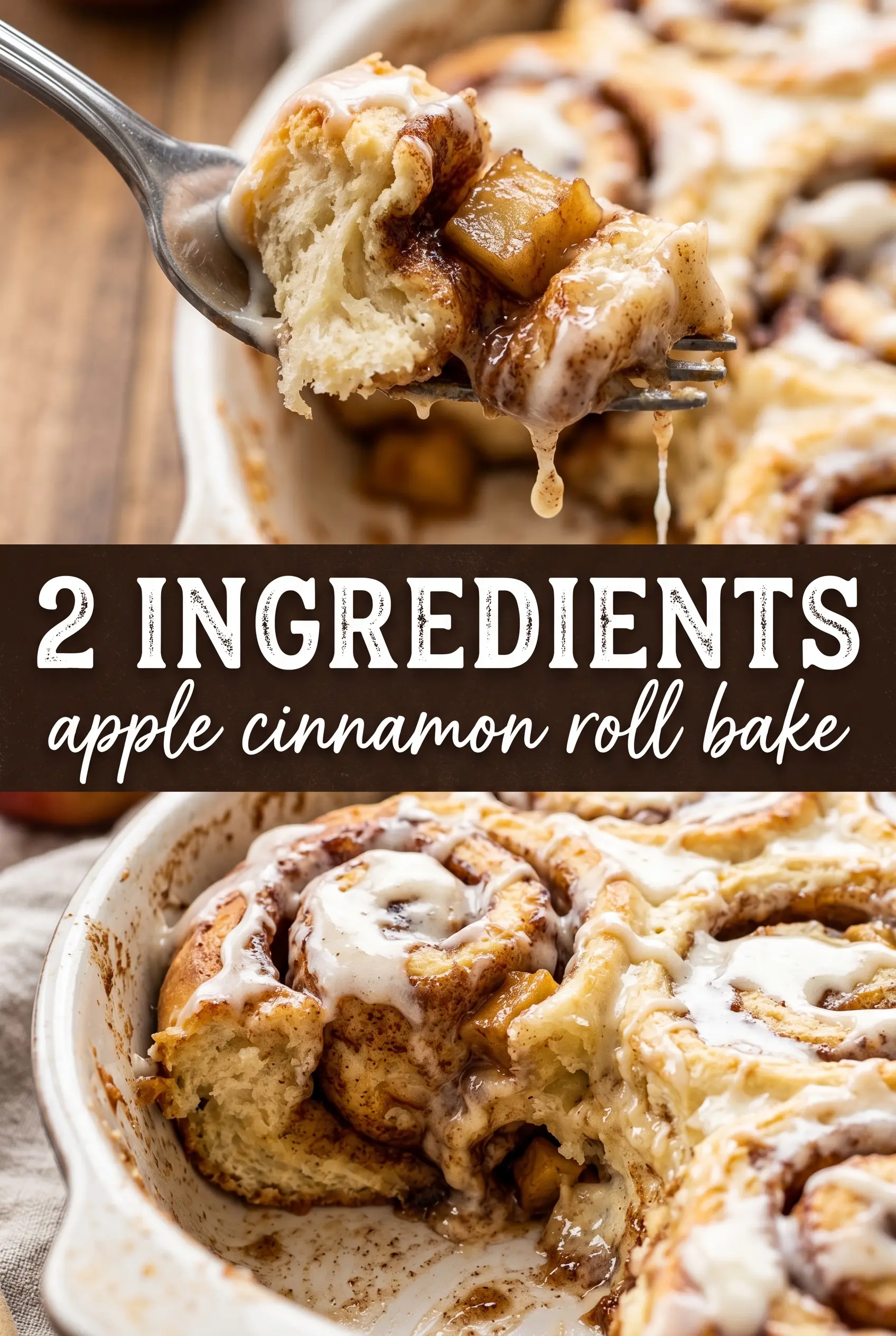
2-Ingredient Apple Cinnamon Roll Bake
Ingredients
Equipment
Method
- Preheat oven to 350°F and grease a 9x13 baking dish.
- Spread apple pie filling in an even layer across the bottom of the dish, then sprinkle cinnamon and nutmeg over the apples.
- Open cinnamon roll cans and cut or pull apart each roll into quarters, then scatter the pieces over the apple filling to cover the top evenly.
- Bake for 25–30 minutes at 350°F until the rolls are golden and cooked through, with apple filling bubbling at the edges.
- Drizzle the reserved icing over the warm bake and serve immediately.