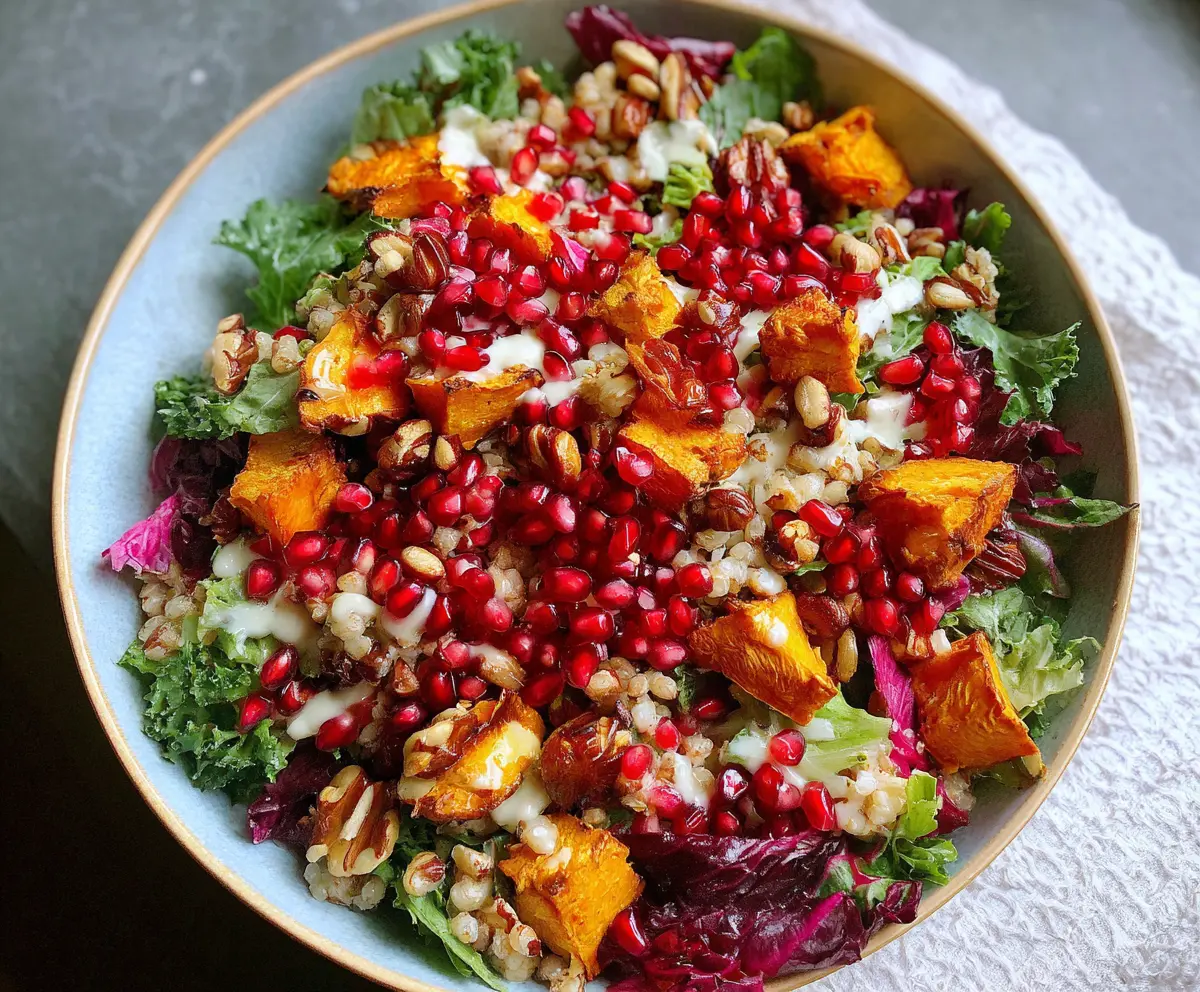
Healthy Winter Salad with Pomegranate is a fresh, colorful mix that’s perfect for the colder months. It features crunchy greens, juicy pomegranate seeds, and other crisp veggies that bring brightness to any winter meal. The pomegranate adds a sweet, tart pop that makes every bite exciting and satisfying.
I love making this salad when I want something light but full of flavor. The seeds are like little bursts of sunshine on a gray winter day, and the mix of textures keeps things interesting. I usually toss it with a simple vinaigrette that balances the natural sweetness of the fruit without overpowering the other ingredients.
This salad goes great as a side dish to roasted chicken or grilled fish, but I don’t mind eating it on its own for a nourishing lunch. It’s one of those recipes I keep coming back to because it feels fresh and healthy, even during the heart of winter when fresh greens can be hard to find.
Key Ingredients & Substitutions
Leafy Greens: I like kale, radicchio, and romaine for their mix of textures and slightly bitter notes. You can swap in spinach or arugula if you prefer a milder taste.
Roasted Butternut Squash or Pumpkin: These bring sweet, soft bites. Sweet potatoes can be used instead if squash isn’t available.
Pomegranate Seeds: They add a juicy crunch and a bright flavor. If fresh pomegranate isn’t around, dried cranberries or cherries work well too.
Grains: Barley or farro add chew and heartiness. Quinoa or brown rice can be good substitutes for a gluten-free option.
Nuts and Seeds: Toasted pecans, walnuts, and sunflower seeds add crunch and nuttiness. Feel free to try almonds or pumpkin seeds for variety.
Dressing: Greek yogurt makes the dressing creamy and tangy. For a dairy-free version, tahini is a great alternative and adds a nutty touch.
How Do I Roast Squash Perfectly for the Salad?
Roasting squash is key for deep flavor and tender texture. Here’s my easy method:
- Preheat your oven to 400°F (200°C).
- Peel and cube the squash evenly, so everything cooks at the same rate.
- Toss the cubes lightly with olive oil, salt, and pepper.
- Spread in a single layer on a baking sheet—crowding can cause steaming instead of roasting.
- Roast for 25-30 minutes until tender and edges are golden, flipping halfway to get even caramelization.
- Let cool before adding to your salad, so the greens stay crisp.
This method brings out squash’s natural sweetness while keeping cubes firm enough to hold their shape in the salad.
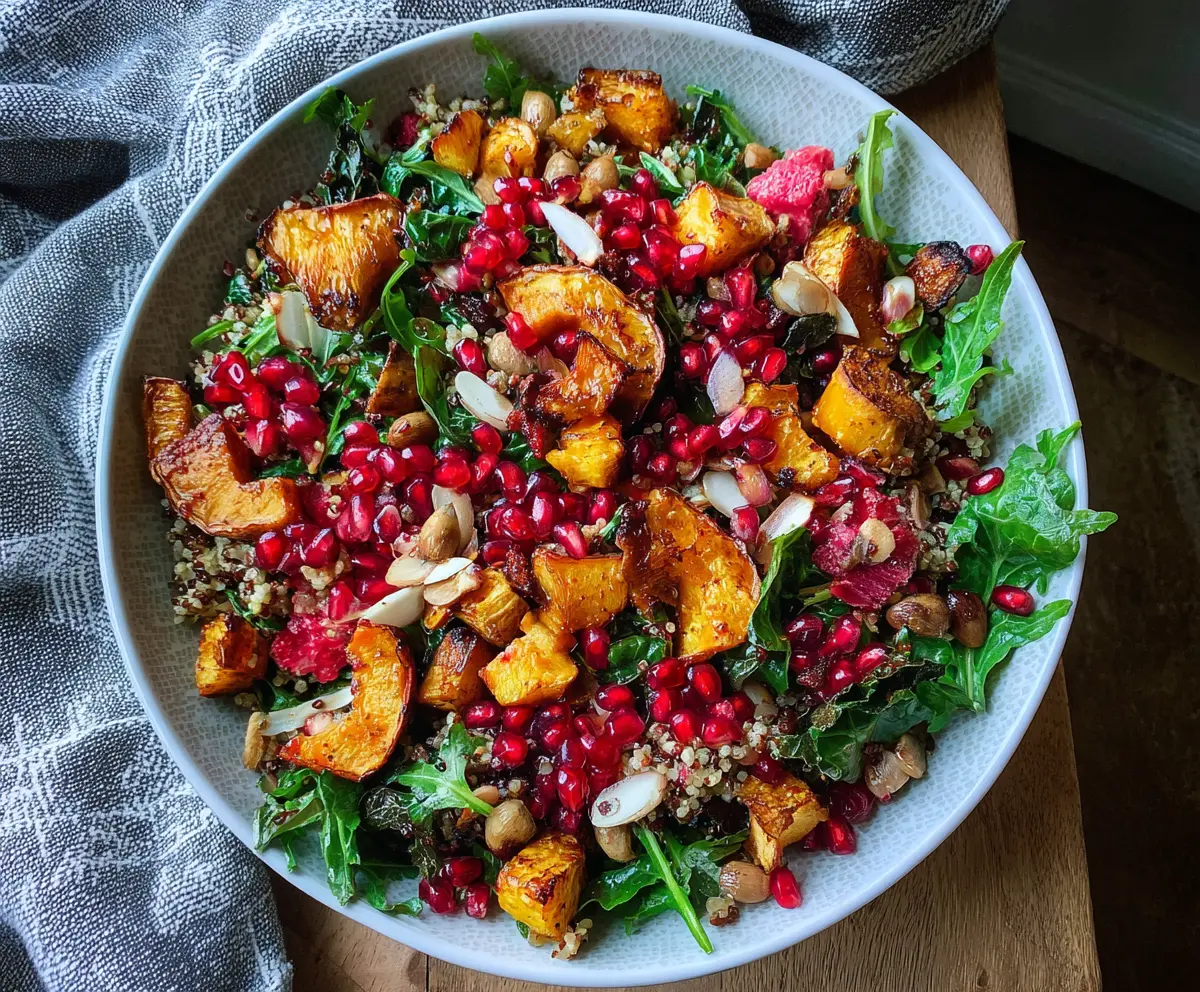
Equipment You’ll Need
- Large mixing bowl – I use this to toss all the ingredients together easily and keep everything combined.
- Baking sheet – perfect for roasting the squash evenly and getting those caramelized edges.
- Chef’s knife and cutting board – handy for peeling and cutting the squash and other veggies safely.
- Small skillet – ideal for toasting nuts and seeds to enhance their flavor and crunch.
- Whisk or fork – quick and easy for mixing the dressing until smooth and creamy.
Flavor Variations & Add-Ins
- Use crumbled feta or goat cheese for extra creaminess and tang, especially if you skip the dairy or want a sharper bite.
- Add sliced apples or pears for a touch of extra sweetness and extra crunch.
- Stir in cooked chickpeas or grilled chicken to turn this into a more filling main dish or protein boost.
- Swap lemon juice for a splash of balsamic vinegar or orange juice for a different tangy flavor profile.
Healthy Winter Salad with Pomegranate
Ingredients You’ll Need:
For the Salad:
- 4 cups mixed leafy greens (such as kale, radicchio, and romaine)
- 2 cups roasted butternut squash or pumpkin, cubed
- 1 cup pomegranate seeds
- ½ cup cooked barley or farro
- ¼ cup toasted pecans or walnuts, chopped
- 2 tablespoons toasted sunflower seeds
- ¼ cup crumbled goat cheese or feta (optional)
For the Dressing:
- 3 tablespoons plain Greek yogurt or tahini
- 1 tablespoon lemon juice
- 1 tablespoon olive oil
- 1 teaspoon honey or maple syrup
- Salt and pepper to taste
Time Needed
This salad takes about 10 minutes to prep, 25 to 30 minutes roasting time, plus about 15 minutes to cook and cool the grains and toast the nuts. Overall, expect around 45 minutes from start to finish.
Step-by-Step Instructions:
1. Roast the Squash or Pumpkin:
Preheat your oven to 400°F (200°C). Peel and cube the butternut squash or pumpkin into bite-sized pieces. Toss them lightly with olive oil, salt, and pepper on a baking sheet. Roast for 25 to 30 minutes until tender and slightly caramelized. Let the roasted pieces cool a bit before adding to the salad.
2. Cook Grains and Toast Nuts:
Cook the barley or farro according to package instructions. Once done, drain and let the grains cool. Meanwhile, toast the pecans or walnuts and sunflower seeds in a dry skillet over medium heat for about 3 to 5 minutes, stirring frequently until they smell nutty and are lightly browned. Allow them to cool.
3. Mix the Salad:
In a large bowl, combine your leafy greens, cooked grains, roasted squash, pomegranate seeds, toasted nuts, and seeds. Give it a gentle toss to spread everything evenly.
4. Make and Add the Dressing:
Whisk together the Greek yogurt (or tahini), lemon juice, olive oil, honey (or maple syrup), salt, and pepper until smooth and creamy. Drizzle the dressing over the salad and toss gently to coat. If you like, sprinkle crumbled goat cheese or feta on top for a creamy finish.
5. Serve:
Enjoy the salad fresh or chill it briefly in the fridge before serving for a refreshing, healthy winter meal.
Can I Use Frozen Squash Instead of Fresh?
Yes! Just make sure to thaw and drain the squash well before roasting. You might need to roast it a bit longer to get that nice caramelization.
What Can I Substitute if I Don’t Have Barley or Farro?
Quinoa, brown rice, or even couscous are great alternatives and cook faster. Just adjust cooking times accordingly.
How Should I Store Leftovers?
Keep leftovers in an airtight container in the fridge for up to 3 days. Add the dressing right before serving to keep the greens fresh and crisp.
Can I Make the Dressing Ahead of Time?
Absolutely! The dressing can be made a day ahead and stored in the fridge. Give it a quick stir before drizzling over the salad.